

During the day, most security cameras capture clear, usable footage. At night, in harsh glare, or when someone ducks into the shadows, that same camera might show you nothing but a dark, grainy blur.
At first glance, thermal cameras and bispectral cameras may seem like the same thing. Both detect heat signatures, so both can pick out a person or vehicle in total darkness or other challenging weather conditions like fog, rain, and snow.
A thermal camera shows you a heat signature, enough to tell that someone is there but not who. A bispectral camera pairs that thermal sensor with a standard optical sensor, giving you a second view of the same scene with the detail needed to recognize who or what you're looking at, provided there's enough light.
So the choice isn't really about which camera sees better at lowlight or in challenging weather conditions. Below, we'll break down how bispectral cameras work, what they do well, and which sites benefit most, so you can decide what fits your needs.
What is a bispectral camera?
A bispectral camera combines thermal and visible-light imaging in one camera. The sensors are factory-aligned, and some models let you view or manage both streams through a single interface. Their fields of view and how closely the images align depend on the model.
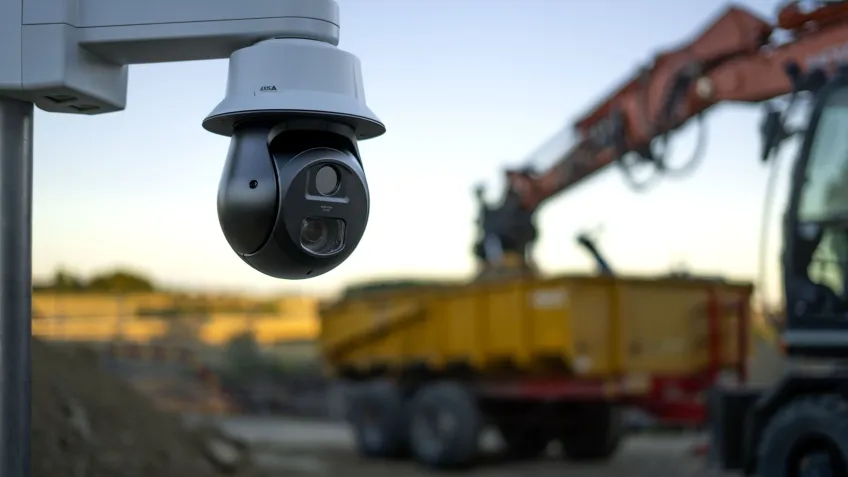
Thermal imaging can help detect heat-emitting objects, including in darkness. Visible-light imaging can provide visual detail that may help assess or identify a target. What each sensor can show depends on the camera, scene, and conditions.
Detect heat with the thermal imaging sensor
A thermal camera doesn't see light. It detects heat. The sensor turns differences in infrared (IR) radiation into an image, and most thermal security cameras use the long-wave infrared band (about 8–14 µm), so they work in complete darkness.
That makes them good at spotting people, vehicles, and running equipment at night, in shadow, or against cluttered backgrounds. But standard thermal models show relative warmth, not actual temperature. That requires a calibrated thermometric camera.
Thermal has limits. People are hard to pick out when they're close to the surrounding temperature, which is common around dawn and dusk ("thermal crossover"), or when they're heavily covered. Rain and fog cut range, shiny surfaces can reflect misleading heat signatures, and glass and walls block long-wave infrared entirely.
Check the manufacturer's detection ranges for your setup.
Capture details with the high-definition optical sensor
The optical sensor is a standard visible-light camera. It handles identification, capturing faces, clothing, vehicle details, and sometimes license plates.
When thermal analytics flag something, the optical channel helps confirm what it is. PTZ models can zoom in automatically through auto-tracking or alarm-linked presets. In low light conditions, identification depends on available light or IR illumination. IR night images are black and white, so add visible lighting if color matters. For reliable license plate reads, use a dedicated License Plate Recognition (LPR) camera, or technology such as Axis Lightfinder to capture quality images in low light conditions.
Combine thermal detection and visual verification
For truly effective security and monitoring, combine thermal detection with visual verification. A thermal camera is exceptional at detecting the presence of a person or object in complete darkness or challenging conditions like fog or smoke, using heat signatures to instantly spot a potential issue. However, a thermal image doesn't provide the detailed visual imagery needed for positive identification.
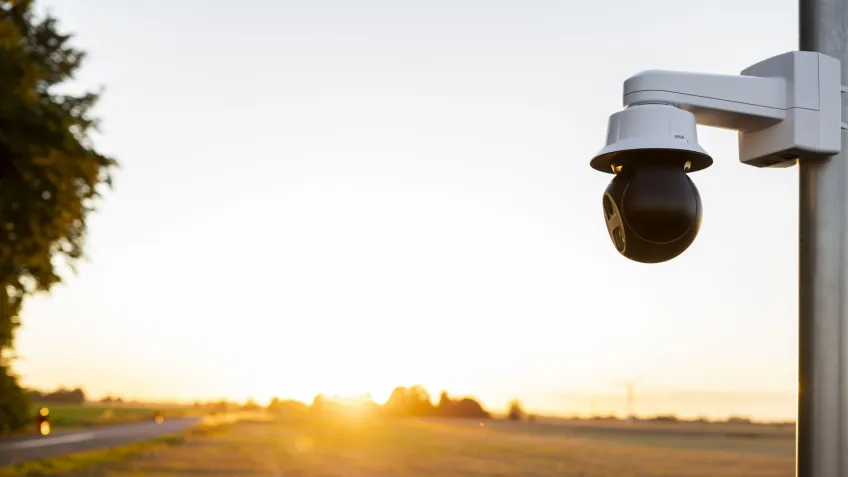
This is where a dual-sensor camera or two separate, coordinated cameras provide a powerful solution. When the thermal sensor detects activity it can, on certain models, automatically trigger a collocated visual camera to zoom in, capture high-resolution video, and alert security personnel.
4 use cases of bispectral cameras
Pairing thermal detection with visual verification makes bispectral cameras a strong fit wherever darkness, distance, or visual clutter limit conventional cameras. Each sensor covers the other's weak spots. They are most useful in four types of applications:
Secure perimeters and borders
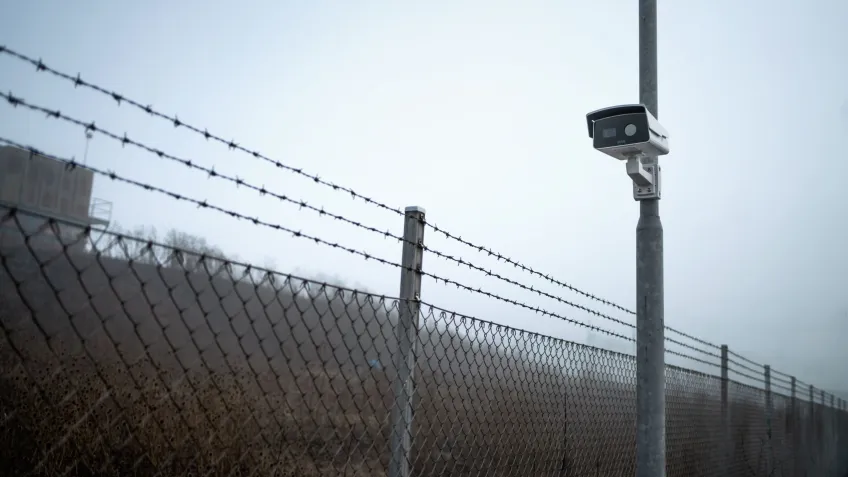
Airports, power plants, and correctional facilities often have long, exposed perimeters that are hard to light and monitor. With the right lens, a thermal sensor can detect a person hundreds of meters away in complete darkness.
Thermal analytics classify the target as a person or vehicle, which filters out the more common false alarms, such as animals and blowing debris. PTZ models with auto-tracking or alarm-linked presets can then zoom in so the optical channel can confirm what triggered the alert. Identifying a specific person usually requires the target to be much closer than the detection range
Monitor critical industrial equipment
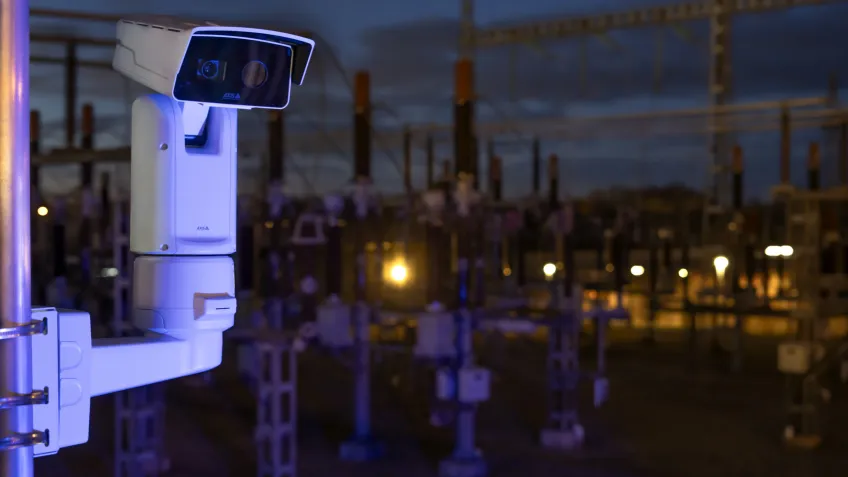
In manufacturing plants and electrical substations, overheating components often signal an impending failure. Thermometric bispectral cameras can monitor the surface temperature of transformers, motors, and exposed electrical connections and trigger an alarm when readings cross a set threshold.
This gives maintenance teams an early warning before any potential fault causes an outage. The optical image shows exactly which component is hot. Equipment must be in the camera's line of sight, and reflective metal surfaces may need emissivity adjustments for accurate readings.
Wide area surveillance
Parks, city squares, and transportation hubs are difficult to cover at night with standard cameras. A bispectral camera can spot a person's heat signature in a dark, distant corner that a visible-light camera would miss.
This helps security teams cover large spaces with fewer cameras and respond faster, whether they're locating a missing person or following someone leaving the scene of an incident. The thermal sensor detects heat signatures, and the optical sensor helps confirm details when lighting and distance allow.
Detect fires early
Thermometric bispectral cameras with early fire-detection analytics can spot hot spots and smoldering material, sometimes before smoke is visible. That early warning matters most in waste facilities, warehouses storing flammable materials, and forested areas within the camera's line of sight.
Operators can check the optical feed to confirm flames or smoke and direct responders to the exact location. These cameras supplement certified fire alarm systems rather than replacing them.
What are the main benefits of using a bispectral camera?
A bispectral camera puts thermal and optical sensors in one housing with a shared, aligned view. Compared with installing two separate cameras, that combination offers three main benefits:
Reduce false alarms with dual-sensor verification
Traditional motion detection is easily triggered by swaying trees, animals, and changing shadows, which wastes operator time and causes alarm fatigue.
Thermal analytics address this by classifying targets as people or vehicles before raising an alarm. Some models also combine data from both sensors for more accurate classification.
Because both sensors share an aligned view to the same scene, operators can switch to the optical image and see exactly what triggered the alert. False alarms won't disappear entirely, but there are far fewer of them, and the remaining ones are faster to check.
Simplify installation and reduce infrastructure costs
Two separate cameras mean two mounts, two cable runs, and two devices to aim, align, and maintain. A bispectral camera needs one mount and typically one network cable, which cuts installation time and keeps the site tidier.
The unit itself costs more than a single camera, but less than the two cameras it essentially contains, so savings come mainly from labor and infrastructure.
The trade-off is placement flexibility, with both sensors sharing one position and angle.
Maintain coverage around the clock
The thermal sensor works in complete darkness and is largely unaffected by glare, deep shadows, and light smoke or haze, all conditions that weaken visible-light cameras. That keeps detection running 24/7, while the optical channel adds identification detail whenever light allows.
Performance isn't unlimited. Heavy rain and fog shorten thermal range, and identification after dark depends on lighting or IR illumination. Even so, the two sensors cover far more conditions together than either does alone.
How Windsor Port Authority secured their river traffic with bispectral cameras
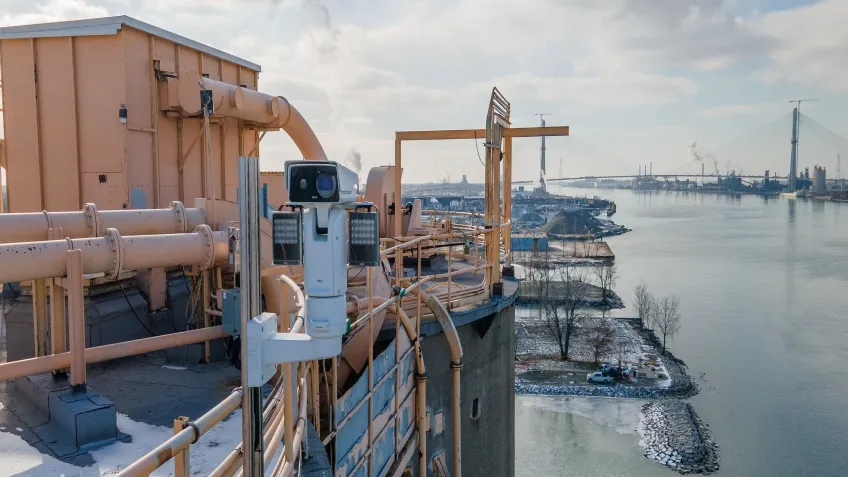
The Windsor Port Authority oversees vessel traffic on the Detroit River, a busy international waterway between the U.S. and Canada. Its radar system tracked thousands of vessels, from cargo ships to small recreational boats, but radar could only show where something was, not what it was. Harbour Master Peter Berry needed a way for operators to see what the radar was detecting.
If I don’t have detailed knowledge of the traffic going through these waters, we could have some horrific accidents,
Harbour Master Peter Berry
The port integrated Axis bispectral PTZ cameras with its existing radar platform. When radar picks up a target, it automatically cues a camera to pan, tilt, and zoom to the target's position.
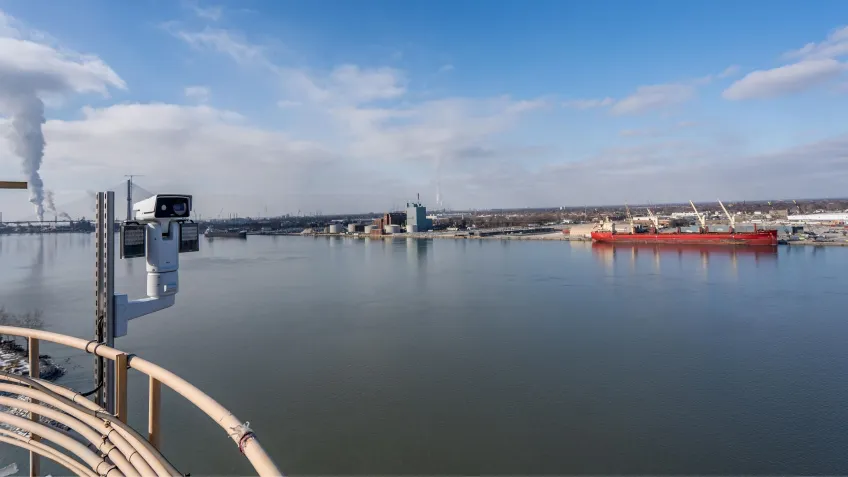
The thermal channel lets operators spot vessels at night and in low light, and the optical channel adds visual detail when conditions allow. Operators now see what radar detects instead of guessing from a blip on the screen.
Conclusion
Bispectral cameras combine two sensors that cover each other's weaknesses. The thermal sensor detects people, vehicles, and heat sources in darkness and challenging weather, shadow, and clutter, and the optical channel helps confirm what triggered an alert when distance and lighting allow. Housing both in one unit with a shared, aligned view makes verification faster and installation simpler than with two separate cameras.
They are most valuable on large or poorly lit sites, such as perimeters, substations, ports, and industrial facilities, where conventional cameras miss too much and false alarms waste operator time. Heavy rain and fog shorten range, identification still depends on distance and lighting, and temperature monitoring requires a thermometric model.
Before choosing a model, match the lens and resolution to the distances you need to cover, confirm which analytics it supports, and check how your VMS licenses it. Chosen well, a bispectral camera provides reliable around-the-clock detection with the visual context needed to act on it.
FAQs
Frequently asked questions about bispectral cameras
What is the difference between a thermal camera and a bispectral camera?
A thermal camera has a single sensor that creates images from heat. A bispectral camera combines a thermal sensor with a visible-light optical sensor in one housing, with both sharing an aligned view. Thermal handles detection, and the optical sensor captures the detail needed for identification.
Can bispectral cameras see through walls?
No. Thermal imaging detects heat radiated from surfaces, so it can't see through walls or other solid objects. It may detect a strong heat source behind a wall if it warms the wall's surface. Thermal also can't see through ordinary glass, so a camera pointed at a window shows the glass, not what's behind it.
How far can a bispectral camera see?
It depends on the model, lens, sensor resolution, and conditions. High-end models with long lenses can detect a person several kilometers away, but recognizing or identifying that person requires a much shorter distance. Rain and fog also reduce range. Compare models using the manufacturer's DRI (detection, recognition, identification) ratings. The optical sensor's identification range depends on its zoom, resolution, and available light.
Do bispectral cameras work in complete darkness?
The thermal sensor does. It needs no light and detects people, vehicles, and heat sources based on temperature differences. Detection is harder when a target is close to the temperature of its surroundings. The optical sensor needs visible light or IR illumination to capture identifying detail, and IR images are black and white.
What is thermal visual image fusion in a bispectral camera?
Thermal visual image fusion combines thermal and visual data in a single image, helping operators locate heat signatures in relation to visible scene details. This feature is available in one Axis bispectral camera, AXIS Q2802-E Bispectral Camera. Thermal temperature overlays are not available in the bispectral portfolio, as it currently has no thermometric bispectral camera.
