

Retail stores are under pressure to do more with less. Rising costs, staffing challenges, and increasing customer expectations are forcing retailers to rethink how stores operate. At the same time, the growing amount of data generated in stores creates an opportunity by turning connected retail technologies and store data into a smarter, more responsive retail environment.
Retail environments are changing fast
Today’s stores are expected to deliver seamless customer experiences, efficient operations, improved loss prevention, and better sustainability performance, often with fewer resources and tighter margins. As a result, many retailers are beginning to rethink the role of technology in the store. The physical store must now provide the same level of data as an e-commerce site to remain competitive. Traditionally, systems like video surveillance, audio, access control, sensors and analytics have often been implemented separately to solve individual challenges. But while each solution delivers value on its own, disconnected systems can limit visibility and make it harder to turn data into action.
Capgemini’s 2026 retail briefing, From Hype to How, highlights this point. Their research shows that the industry is experiencing a massive wave of consolidation, moving away from fragmented 'stacks of one-off tools' and shifting toward unified connected platforms. Retailers are realizing that infrastructure simplification is the only way to transform isolated store data into collective operational intelligence.
That’s where the idea of the Connected Store comes in. A Connected Store unites video, audio, and IoT data into a single, intelligent system. Instead of isolated technologies operating independently, connected systems create a shared layer of intelligence across the store. Cameras see what’s happening, audio systems hear and speak, and IoT sensors measure conditions throughout the environment, continuously collecting data that reveals patterns, trends, and opportunities for optimization over time. The result is a more connected, responsive and data-driven retail operation.
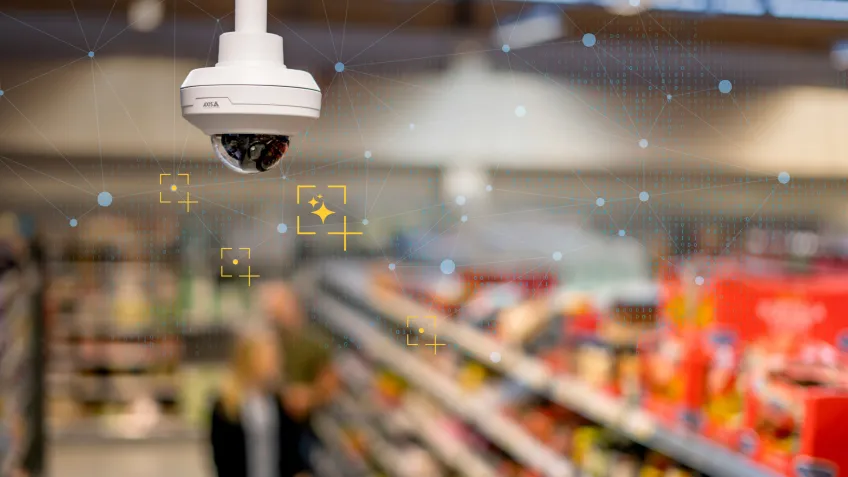
From siloed systems to shared intelligence
Most modern stores already generate vast amounts of data. Cameras monitor activity, sensors count visitors, POS systems track transactions, and access systems control movement. Yet despite this abundance of information, many retailers still struggle to answer operational questions in real time:
- Where are queues forming?
- Which areas are understaffed?
- Are shelves fully stocked?
- Why do some stores outperform others?
The challenge is often not a lack of data but a lack of connection between systems. When retail technologies and operational systems are connected, data becomes more actionable. Information that was previously isolated can support multiple business functions simultaneously, helping teams collaborate around shared insights instead of working in silos. For example, analytics from network cameras can help retailers understand customer movement patterns while also supporting loss prevention and operational planning. Occupancy insights can improve staffing decisions while also supporting energy efficiency through occupancy-aware lighting and climate control. Audio systems can deliver real-time messages to customers or staff based on live conditions in the store.
Retail technology is evolving beyond surveillance
Retail technology has traditionally been implemented in separate systems designed to solve individual operational and security challenges. But connecting technologies are enabling a more proactive approach. AI-powered analytics can help detect unusual behavior, identify congestion, monitor self-checkout activity, or trigger alerts when predefined conditions occur. Connected systems can support faster response times, improve situational awareness, and reduce operational blind spots.
At the same time, the same infrastructure can contribute to customer experience and operational performance. This is one of the key benefits behind the Connected Store concept, that technology no longer functions as isolated tools, but as a connected, cross-functional business asset.
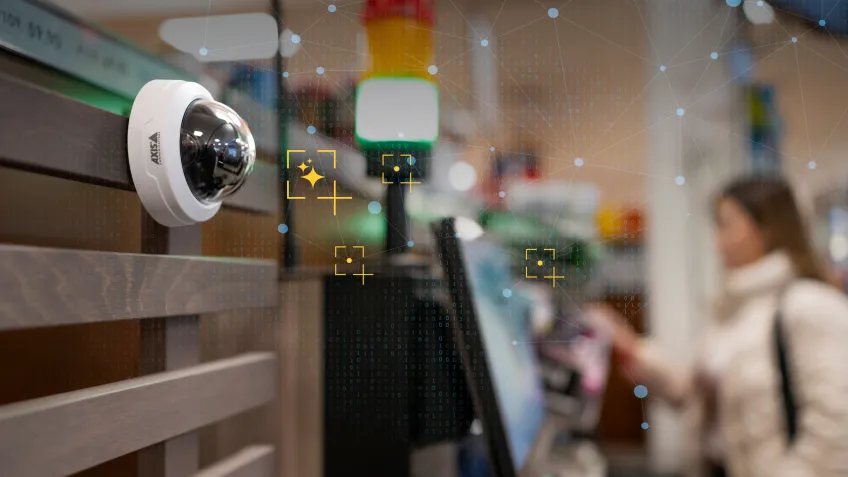
Turning insight into action
The value of connected retail technology is not only about seeing what is happening right now. It’s also about learning over time. By combining real-time visibility with long-term data analysis, retailers can begin to identify trends, recurring behaviors, and operational inefficiencies that would otherwise remain hidden. That insight can help improve store layouts, optimize staffing, reduce waste, strengthen compliance, and create smoother customer journeys.
In other words, connected intelligence supports both immediate action and long-term strategic improvement. And importantly, this evolution does not have to happen all at once. A phased approach allows retailers to start with focused use cases, prove value, and scale over time. Open platforms and interoperable technologies also make it easier to integrate existing systems and adapt as needs evolve.
A smarter foundation for modern retail
As retail continues to evolve, the ability to connect systems, share insights, and respond intelligently across the store will become increasingly important. The Connected Store represents a shift from fragmented technologies to a more unified, intelligent retail environment, one where retail technology, operations, customer experience, and sustainability can work together on the same foundation. For retailers looking to better understand what’s happening in stores and act more effectively, connected intelligence may become one of the most valuable tools they have.
Discover the Connected Store
Visit www.axis.com/solutions/retail/store-optimization to explore how connected video, audio, analytics and IoT technologies can help retailers improve efficiency, strengthen store operations, enhance customer experience, and drive smarter decision-making through connected retail technology.
