

Data center cybersecurity depends on IT, physical security and facilities teams working together. Banking, logistics, and everyday digital services rely on infrastructure that most people will never see.
Knock a data center offline, and the damage spreads far beyond one company. Regulators have noticed, and they're raising the bar on what "resilient" actually means.
So how do you keep up? Below, we'll walk through the threats that matter most right now, from ransomware crews to physical intrusions to supply-chain compromises. Then we'll lay out a layered approach to protecting your infrastructure, your data, and the operations that depend on both.
Why data center cybersecurity is now a matter of national importance
Given that data centers underpin essential services like communications, healthcare, and energy, governments now consider their security a matter of national stability and public safety. Consequently, these facilities have become high-value targets for deliberate, including state-sponsored, attacks aimed at causing significant economic and social disruption.
EU frameworks such as NIS2 recognize the importance of protecting digital infrastructure, including data center services, and place cybersecurity risk-management obligations on organizations within scope.
5 critical cybersecurity threats targeting data centers
A single breach can lead to catastrophic data loss and downtime, making a proactive security strategy non-negotiable. You must protect against everything from sophisticated ransomware attacks to insider threats that exploit trusted access.
Knowing how to prepare for these scenarios is critical to protecting your most valuable digital assets.
Uncover and block hostile reconnaissance operations
Hostile reconnaissance can help attackers identify weaknesses before attempting an intrusion. They use compromised devices to understand traffic flows, identify high-value assets, and locate security gaps, all while remaining undetected. Blocking these operations requires deep network visibility and the ability to spot anomalous behavior that signals a patient intruder.
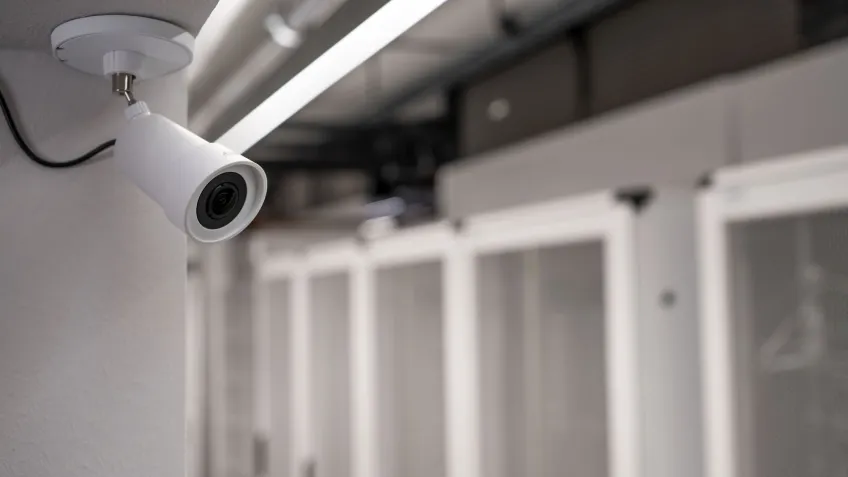
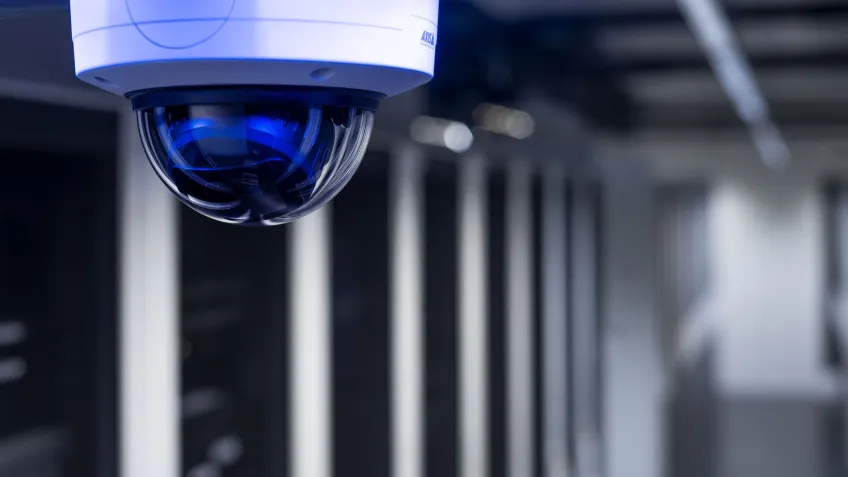
A key prevention tip is to ensure all connected devices, especially IoT systems like security cameras, are on isolated network segments and have their default credentials changed.
Defend against sophisticated ransomware and extortion
Ransomware groups may combine data theft with encryption, threatening to disclose stolen corporate or customer information as well as disrupting access to systems. The tactics and sequence vary by attack, and data theft is not present in every incident.
Even when an organization can restore systems from backups, the threat of exposing exfiltrated data can lead to serious financial, legal, and reputational consequences.
To support recovery, maintain offline or otherwise isolated, immutable backups and regularly test that critical systems and data can be restored. Backups can reduce the impact of encryption, but they cannot prevent stolen data from being disclosed.
Mitigate insider threats from employees and contractors
Insider threats can originate from several sources, including negligent employees, careless contractors, or external attackers who have compromised a legitimate user’s credentials. Because this activity may use authorized access, it can be harder to distinguish from normal behavior.
A compromised account can expose sensitive systems or data, depending on its permissions. Enforce strong access controls, monitor account activity, and promptly revoke access when it is no longer needed.
A key mitigation is the principle of least privilege. Give employees and third-party contractors only the access they need to perform their roles and review those permissions regularly.
Protect against large-scale DDoS disruptions
Through Distributed Denial of Service (DDoS) attacks, network links or services can be flooded with traffic to degrade or disrupt access. The impact and duration depend on the type of attack and the organization’s defenses. In some cases, a DDoS attack may be used to divert security teams’ attention while another intrusion is attempted.
Consider using a DDoS mitigation provider that can detect and filter malicious traffic upstream, before it reaches your network. Combine this with an incident response plan, monitoring, and protections for both network and application-layer services.
Prevent supply chain attacks
Data centers depend on a global supply chain for servers, cooling systems, software, firmware, and support services. A supply-chain attack exploits weaknesses in, or compromises, a supplier, product, or delivery process to affect downstream organizations.
This could involve tampered hardware, a compromised software update, or a vulnerable third-party component. Depending on the attack, it may enable unauthorized access, disruption, or data theft.
Reduce supply-chain risk by assessing vendors and their security practices and managing third-party access. Maintain and regularly update software bills of materials (SBOMs) to identify software components and evaluate exposure to vulnerabilities. Use additional controls for hardware, firmware, and service providers, which an SBOM may not cover.
How to build a resilient defense against cyberattacks
A resilient defense combines risk-based, layered security with proactive prevention, effective detection, and reliable recovery, all of which need to be regularly tested.
For data centers, selecting securely designed and maintained hardware supports the wider security controls and risk-management practices assessed through SOC 2 examinations and ISO/IEC 27001 certification.
This extends to every device connected to the network. Technology built with a cybersecurity-by-design approach, for example, will include features like signed firmware and a secure boot process. These controls verify that the device is running authentic, unaltered software, which helps protect the integrity of the device itself and, by extension, the facility's overall network.
The following core pillars work together to build on that secure foundation, protecting data and limiting the impact of incidents.
Implement a zero-trust architecture (ZTA)
Zero-trust architecture requires users and devices to be verified and granted access according to policy, regardless of their location.
Access controls should be built on the principle of least privilege, granting access based on verified identity, device security posture, and the specific context of the request. Communications should be protected with encryption where appropriate.
These measures can limit the impact of a compromised account or device, though they cannot guarantee that an intruder will be contained.
Strengthen network security with micro-segmentation
Micro-segmentation is a network security technique that can support zero-trust principles. It divides a data center network into small, logical zones, sometimes down to individual workloads, and applies policies to control traffic between them.

Properly implemented and monitored, these controls can make lateral movement harder and limit the spread of a breach. They cannot guarantee containment.
Enforce strict identity and access management (IAM)
Identity is a central part of modern security, alongside network, device, and application controls. Strong Identity and Access Management (IAM) helps ensure that human and machine accounts receive only the permissions they need.
Use multi-factor authentication, especially for privileged and remote access, apply secure password practices, and regularly review, update, and revoke access rights. These measures reduce the risk that compromised credentials will lead to unauthorized access or a major breach.
Integrate physical and cyber security controls
In a data center, physical security and cybersecurity are closely connected and can be coordinated as part of an overall security strategy. For example, repeated failed logins to a critical system, combined with a badge-access anomaly near a restricted area, could trigger an alert for security staff and flag relevant camera footage for review.
Integrating these systems can provide a more complete operational picture and support faster incident response, provided the alerts are appropriately configured and validated.
Apply data-centric protection with encryption
Ultimately, the goal is to protect the data itself. A data-centric approach applies appropriate safeguards throughout the data lifecycle, including when information is stored, transmitted, and processed.
Encryption at rest and in transit is an important part of this strategy. It can make stolen data difficult to read if the encryption is properly implemented, and the attacker cannot obtain the decryption keys. Access controls, key management, and monitoring are also essential, particularly when data is in use.
Conclusion
Protecting a data center in today's threat landscape requires a fundamental shift in strategy. It is only by securing the connected equipment that you can secure the facility. This means embracing a zero-trust mindset, where no user or device is trusted by default.
It also means enforcing the principle of least privilege to limit what an attacker can access through a compromised account. And it means protecting data throughout its entire lifecycle with strong encryption.
Ultimately, by coordinating your physical and cybersecurity teams into a single, unified defense, planning for a breach, and continuously testing your defenses against real-world scenarios, you move beyond simple compliance.
The goal is straightforward. To reduce the likelihood of disruption, limit its impact, and keep essential services running.
FAQs
Frequently asked questions about data center cybersecurity.
How does a vulnerable camera create a cybersecurity risk?
A network-connected camera can create cybersecurity risks if it has weak credentials, unpatched software, or insecure settings. If compromised, it may expose video or be misused to attack other devices. The risk of further access depends on the camera’s permissions and network configuration. Use unique credentials, keep firmware updated, restrict camera access, and isolate cameras from critical systems where practical.
What is a zero-trust data center?
A zero-trust data center applies zero-trust principles to access across its systems and networks. Rather than granting access based on network location alone, it verifies users and devices against defined policies and grants only the permissions needed for each task. Encryption protects communications where appropriate. These controls can make lateral movement harder and limit the impact of a compromised account or device, but they cannot guarantee that an intruder will be contained.
Why is supply chain security so important for data centers?
Data centers depend on hardware, software, and services from complex supply chains. A supply-chain attack exploits or compromises a supplier, product, or delivery process to affect downstream organizations. Examples include tampered firmware or a compromised software update.
Depending on the attack, this may enable unauthorized access or disruption, but it does not necessarily provide persistent or privileged access. Such attacks can be difficult to detect because they may exploit trusted channels. Assess vendors, verify component provenance where feasible, track software dependencies with an SBOM, and apply security controls to third-party products and access.
What are the first steps to improving data center security?
Start by building and maintaining an inventory of network-connected assets, including hardware, software, cameras, sensors, and other IoT devices. Visibility helps identify unmanaged or vulnerable assets, though no inventory is perfectly complete.
Next, apply foundational security controls, such as replacing default credentials with unique ones, enabling multi-factor authentication where supported, especially for privileged and remote access, and granting users and devices only the permissions they need.
These steps reduce common risks, but they don’t close every route attackers may use. Regularly review assets, credentials, and access rights, and keep systems updated.
What questions should you ask a supplier about data center cybersecurity?
When looking into ways to strengthen your data center cybersecurity set-up, it's important to ask questions of your potential supplier before committing. Questions such as 'How often do you release security updates, and how are they delivered?', 'How long will you provide security updates and support for this product?', and 'Can updates be tested and deployed without disrupting data center operations?' Are just a few to keep in mind. The answers to these will shape how you go about selecting and implementing the best security for you.
