

The difference between a fail-safe and a fail-secure comes down to one question: what should your door do when the power fails?
A fail-safe lock unlocks when power is lost. A fail-secure lock stays locked. Both are correct, in the right situation. A fail-secure lock on a fire exit can trap occupants during an evacuation. A fail-safe lock on a server room can leave critical infrastructure exposed during a blackout.
This guide walks you through how each system works, where to use them, and when to choose one over the other when the choice isn't obvious.
What is a fail-safe system?
A fail-safe lock requires power to stay locked. Remove the power through a fire alarm, a power outage, or a deliberate cutoff, and the door opens automatically. That’s why fail-safe locks are most commonly found on fire exits, emergency escape routes, and stairwell doors.
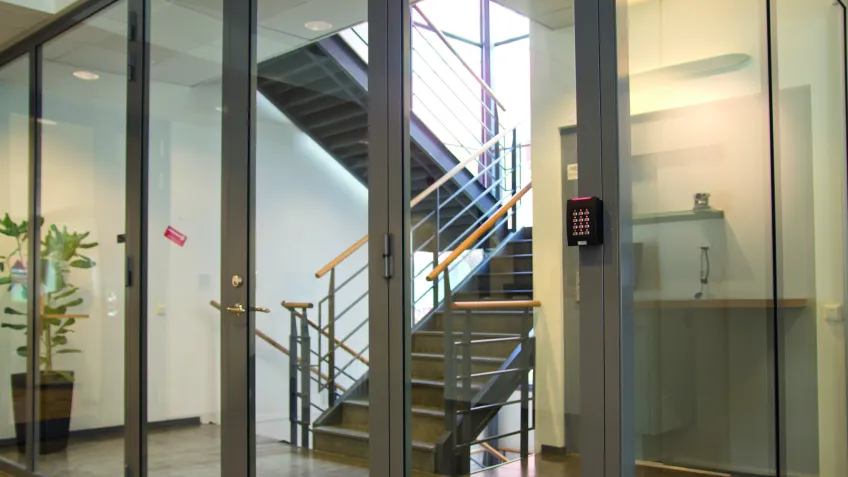
The principle is simple: in an emergency, people need to get out. A fail-safe lock guarantees they can open the door without a key, without a code, and without anyone manually releasing it.
You'll most often see fail-safe locks on emergency exit routes, fire doors, and main building entrances. In most countries, building and fire safety codes require this behavior for any door on an emergency egress path. It's not just best practice. It's the law.
The most common hardware used in fail-safe configurations is the magnetic lock, or maglock. It holds the door shut using electromagnetic force. No power, no force. No force, no locked door.
What is a fail-secure system?
Unlike a fail-safe, a fail-secure lock requires power to unlock, so when power fails, the door stays locked.
The reasoning is equally straightforward: a blackout or system failure is precisely when unauthorized access is most likely. A fail-secure lock keeps sensitive areas, such as server rooms, data closets, and storage areas, protected even when everything else goes dark.
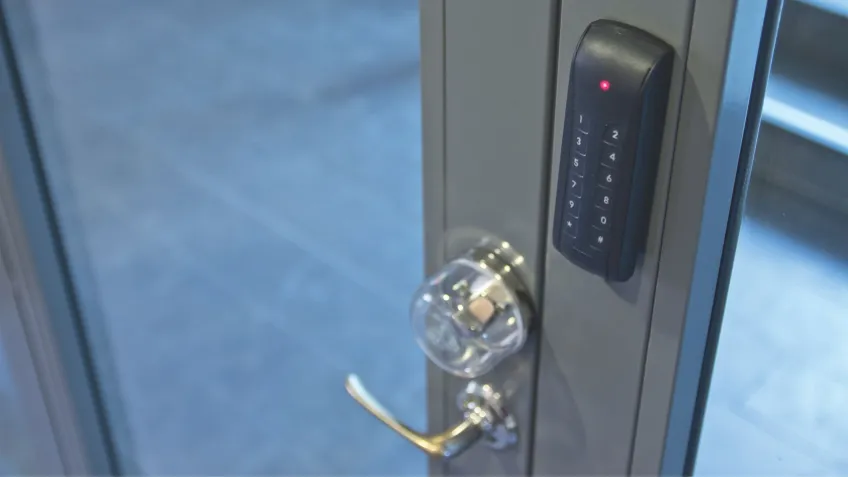
Electric strikes are the most widely used hardware in fail-secure setups. Unlike a maglock, an electric strike keeps the door mechanically latched until an unlock signal is sent.
Fail-secure doors must always include a mechanical override, such as a handle or crash bar, on the inside. This prevents anyone from being trapped in the event of a failure. In most jurisdictions, this is a legal requirement, not an option.
Key differences between fail-safe and fail-secure
As discussed earlier, the difference between a fail-safe and a fail-secure is easier to understand when you put them side by side.
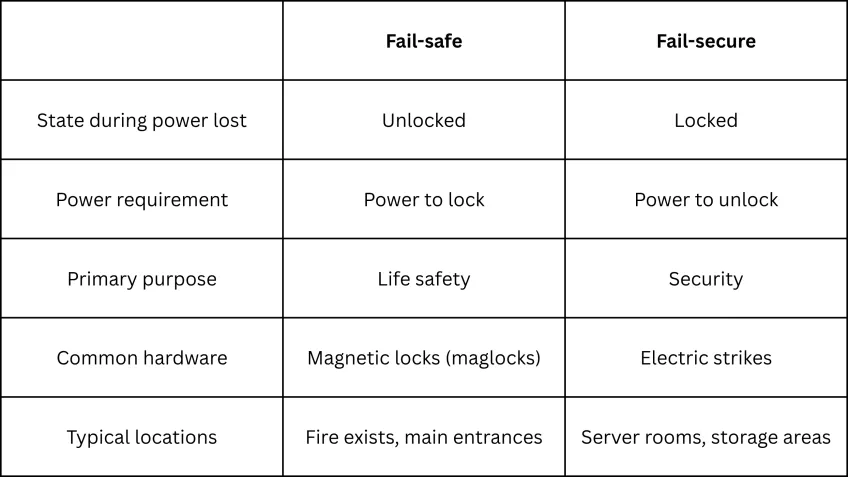
Default state during power loss
This is the defining difference. A fail-safe lock defaults to open. A fail-secure lock defaults to closed. Everything else follows from this single distinction.
Primary goal: people vs assets
A fail-safe system prioritizes people. Safe, in this context, means safe for people, ensuring no one gets trapped when it matters most.
A fail-secure system prioritizes assets. Secure means protected from unauthorized access to data, equipment, or restricted areas, particularly when standard systems are disrupted.
Understand how power is applied differently
The terminology can feel counterintuitive at first. "Fail-safe" sounds like the more secure option, but it isn't. The word safe refers to personal safety, not security. The lock is designed to fail in the safest possible state for the people inside the building.
When to use a fail-safe system
Enable free egress on fire escape routes
Fail-safe locks are required for any door where human safety takes priority. Fire exits, stairwell doors, and emergency exits all need fail-safe hardware. During a fire alarm, these doors receive a signal that cuts power, releasing every maglock along the evacuation route simultaneously. Occupants can push straight through without touching a reader, a button, or a handle.
Manage access in high-traffic public areas
Main building entrances, lobbies, and any public-use doors benefit from fail-safe locks. These areas see high foot traffic and mixed occupancy, including staff, visitors, and emergency services. A lock that releases in an emergency ensures everyone can move freely when it counts.

Comply with local building and fire codes
In most countries, regulations governing emergency egress are non-negotiable. Doors on fire escape routes must be fail-safe by law. Before specifying hardware for any exit, check local building codes and fire regulations. An access control specialist or fire safety consultant can help confirm compliance.
When to use a fail-secure system
Protect sensitive server rooms and data closets
Server rooms, network closets, and data centers contain equipment and information that's difficult to replace and expensive to compromise. A fail-secure lock ensures these rooms remain locked even if power is deliberately cut during an intrusion attempt. The asset stays protected regardless of what happens to the power supply.
Secure storage areas with valuable assets
Warehouses, supply rooms, and secure storage all benefit from fail-secure hardware. If the primary risk is unauthorized entry, not emergency evacuation, then a lock that defaults to closed is the right choice.

Control access to residential or private office doors
Private offices, executive areas, and residential entry doors often use fail-secure configurations. These doors serve in a single access direction and typically have fewer occupants, thereby reducing egress risk. The mechanical override on the inside ensures safe egress during power loss or system failure scenarios.
How to choose the right system for your doors
Assess the primary purpose of the door
Is this door primarily an exit or an entry point? Exit-focused doors, such as fire routes, stairwells, and main building exits, almost always call for fail-safe hardware. Entry-focused doors protecting restricted areas typically call for a fail-secure.
Consider the building's occupants and traffic flow
How many people use this door, and who are they? The higher the occupancy and the more mixed the user group, the stronger the case for fail-safe hardware. A door used by hundreds of people daily is a very different risk profile from one used by three IT staff.

Review mandatory safety and security regulations
Local building codes, fire regulations, and industry standards may dictate your choice before you even get to the design phase. Emergency exits are often legally required to be fail-safe. High-security areas may have their own compliance requirements. Always verify before installing. For a complete system that handles both scenarios, an end-to-end access control solution can simplify design and compliance.
Why most buildings use both
Most real-world buildings use a hybrid approach. A fail-secure electric strike on the entry side controls who gets in. A fail-safe maglock on the exit side ensures everyone can get out. This combination delivers access control without compromising life safety, and.
Conclusion
The fail-safe vs fail-secure choice isn't purely technical; it's the difference between protecting people and protecting assets. Most buildings need both, and getting the balance right means understanding which priority applies at every door. When in doubt, start with your local regulations and work from there.
FAQs
Still got unanswered questions? Here are answers to some of the frequently asked questions about fail-safe and fail-secure.
Is a magnetic lock (maglock) a fail-safe or a fail-secure?
Maglocks are almost always fail-safe. They require a continuous power supply to hold the door shut. Cut the power, and the door opens. This makes them suitable for fire exits and high-traffic areas, and unsuitable for rooms where security must hold during a power failure.
Can you use a fail-secure lock on a fire exit?
Generally, no. Most buildings and fire codes require emergency exits to be fail-safe, meaning the door unlocks automatically during a fire alarm or power failure. Installing a fail-secure lock on a fire exit could trap occupants during an emergency. Always check local regulations before specifying hardware for any exit path.
What is more common, a fail-safe or a fail-secure?
Fail-safe systems are more common in large commercial buildings, public spaces, and environments with multiple occupants. Fail-secure is more common in smaller, restricted areas. Most buildings use both.
How do electric strikes relate to fail-safe and fail-secure?
Electric strikes can be configured as either fail-safe or fail-secure, but they're most used in fail-secure setups. In fail-secure mode, the strike holds the latch mechanically until an electrical signal releases it. In fail-safe mode, the reverse applies – power holds the lock and cutting power releases it.
What happens if the wrong system is installed?
The consequences range from security gaps to serious safety risks. A fail-secure lock on a fire exit could trap occupants during an evacuation – with potential legal and liability implications. A fail-safe lock on a server room means the room is unlocked every time there's a power interruption. Work with a qualified access control integrator to ensure every door gets the right hardware.
