

In an era defined by unpredictable and often severe weather, events like flash floods, tornados, and wildfires are becoming increasingly common. The impact on lives and communities that these real-world events have can cause billions in damages.
While we can't stop a storm from coming, we can change how we prepare for its impact. When it comes to flooding, early warning is the key to protecting lives and property.
For years, we've relied on traditional security technology to keep our physical assets safe. But what if that same technology could be repurposed to protect us from environmental threats?
This blog explores how a powerful combination of video surveillance cameras and AI is creating a new frontier in flood detection. We will explain how these technologies work together to provide the advanced notice needed to turn a potential catastrophe into a manageable situation.
The role of security technology as a flood monitoring system
The idea of using a security camera for more than just surveillance is not a new concept. As climate change continues to fuel more frequent and intense weather events, public safety officials are looking for smarter ways to prepare.
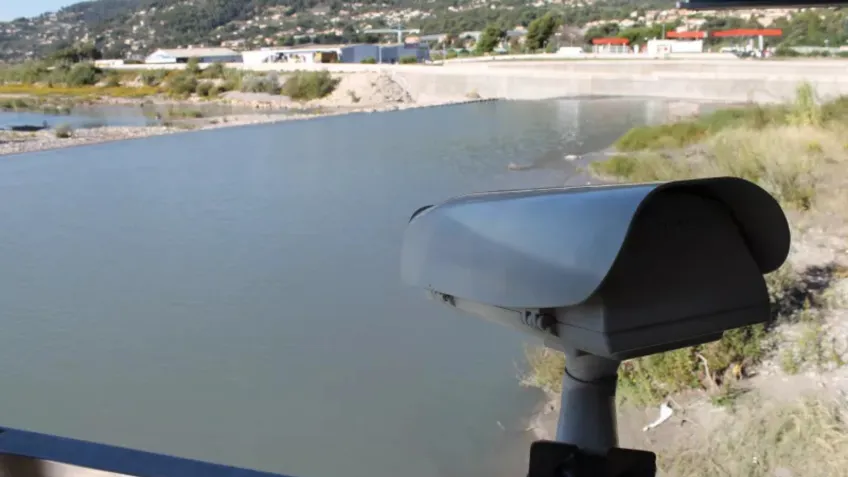
This has led to an innovative shift where traditional security infrastructure is now being leveraged for environmental and public safety monitoring.
Video surveillance is a big driver of this transformation. A camera system and its infrastructure installed to monitor a bridge for traffic, or a building for unauthorized access can also provide invaluable real-time information about rising water levels.
Early detection can save lives, so the sooner authorities know a flood is imminent, the more time they have to close roads, evacuate residents, and deploy emergency resources. Using existing technology for this purpose has become a critical component of modern disaster preparedness.
How does flood detection work?
A reliable flood detection strategy can’t be built around a single device, instead it requires an intelligent system where different technologies work together. Video cameras and AI, each with a specific job, combine to give you a clear, complete view of a potential flood.
The camera captures the raw video feed, providing a constant eye on the environment. The AI then analyzes this feed in real time, trained to spot the specific visual cues that signal a developing flood. This ensures you understand that a threat exists, and exactly what it looks like in real time.
When you put them together, you get a flood monitoring system that is smarter, faster, and more effective than any single component could be on its own.
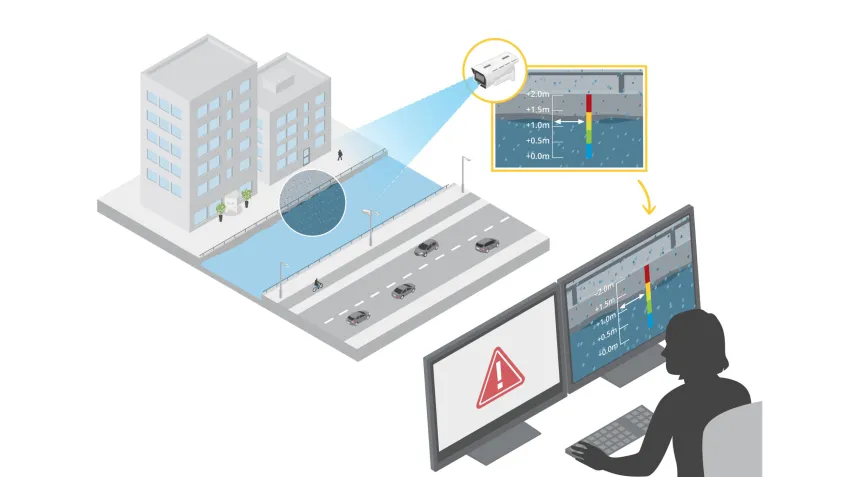
AI-powered video surveillance
With the addition of AI video analytics, the camera’s function expands to automate water level and flood monitoring. When strategically positioned along waterways, in underpasses, or near coastal floodplains, video cameras provide real-time visual alert and context that raw data alone cannot offer.
While cameras are powerful, adding specific sensors creates a more resilient system. If a camera ever fails or has its view compromised by severe weather, these other sensors ensure you continue to receive critical data.
Some sensors use ultrasonic waves to measure rising water levels with extreme precision. Others are designed as flow meters to monitor the speed and force of the water's movement. At the same time, connected rain gauges provide crucial information on the actual amount of rainfall in the area.
AI
AI processes the constant stream of information contained in the images. It can analyze this data in real time to identify significant patterns and decide when to raise an alarm.
The AI can be trained to recognize anomalies, such as a rise in water levels beyond a preset threshold. It then automatically triggers alerts, ensuring that human operators are only notified of credible threats.
Using video surveillance to monitor high-risk flood zones
Deploying a flood detection system starts with identifying the areas most vulnerable to rising waters. These high-risk zones, which include everything from critical public infrastructure to low-lying commercial districts, require constant monitoring. By installing a network of cameras and sensors in these locations, authorities gain a persistent, 24/7 watch over the environment.
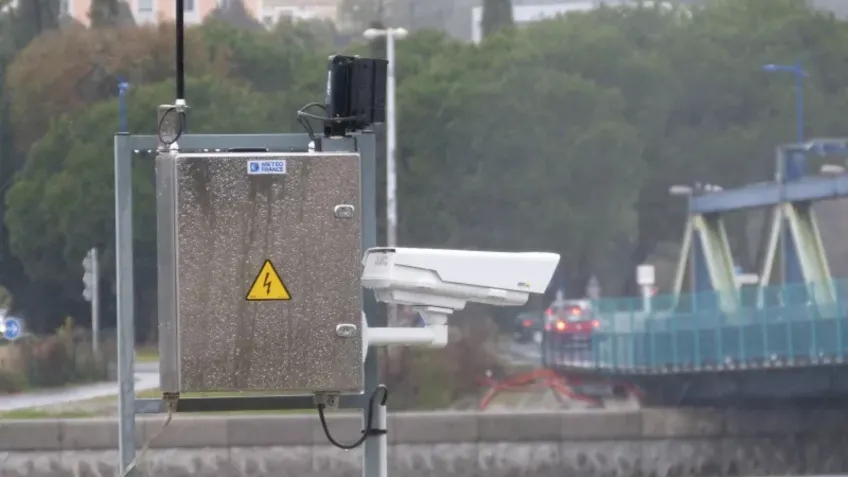
This benefit applies to every stage of a flood. In the beginning, it helps you keep up with rapidly developing threats. Later, as the waters recede, it allows for constant surveillance of the outflow, which is critical for spotting debris that could create further blockages or damage.
A camera equipped with edge analytics can be configured to detect, in real time, both rising river levels and dangerous accumulations of water on the road. This allows for immediate action, such as updating public warning systems or rerouting traffic before a river floods.
When a camera alert comes in, the system can automatically display the feed from the nearest camera. The operator can see the situation with their own eyes to confirm the rising water, observe its speed, and look for contributing factors.
This video verification step is crucial for building confidence in the system and ensuring that emergency responses are based on accurate, validated information. It bridges the gap between raw data and decisive action.
Using AI analytics for predictive flood detection
The benefit of a modern flood monitoring system lies in its ability to predict what will happen next. When integrated with AI analytics, you are able to look beyond what is happening now, and ahead to the coming hours.
By processing enormous volumes of data from cameras, and even external sources like weather services, machine learning models can identify subtle patterns. This predictive capability allows emergency services and authorities to prepare ahead of time.
Integrate weather forecast data for better predictions
A sensor can tell you a river is rising, but it can't tell you why it's happening. By integrating real-time weather forecast data, the AI gains a much deeper understanding of the situation.
It can correlate a predicted downpour in the upper watershed with the water levels it's seeing downstream. This allows the system to predict if a river will flood, when, and by how much. This advanced warning enables more strategic and effective emergency planning.
Identify abnormal patterns in water levels
Every body of water has its own natural ebb and flow based on the season, time of day, and recent weather. An AI system learns this baseline rhythm and constantly watches for anomalies.
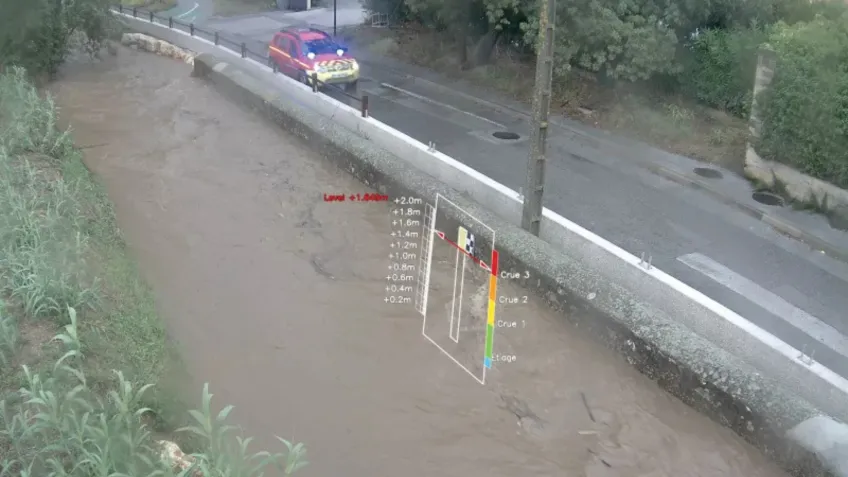
It can distinguish between a normal, slow rise after a light rain and a dangerously rapid surge that indicates a flash flood. By focusing on these abnormal patterns, the AI can deliver the alerts that truly matter.
Trigger automated alerts for emergency teams
When a credible threat is identified, an AI-driven system can trigger automated alerts that are sent directly to the relevant emergency response teams. An alert could include the location of the threat, the current water level, the predicted crest time, and a live video link.
This ensures that first responders have all the critical information they need to act quickly and effectively, arriving on the scene prepared for the exact situation they are about to face.
It is advisable to consider using public audio systems and displays to inform those present of the imminent danger and urge them to leave the area.
Real-world applications of flood detection
An intelligent flood detection system moves beyond theory to offer tangible protection for communities and infrastructure. In practice, this technology is being deployed to safeguard critical areas in several key ways.
How WaterView use edge analytics to improve flood response
Since the cameras function as distributed proximity sensors across a territory, it is crucial that each device operates autonomously and independently, placing minimal demands on the infrastructure.
One example is WaterView’s video analytics algorithms for flood monitoring, which operate directly on Axis cameras via the ACAP platform, processing the video stream "at the edge" in real time.
The analytics detect the presence of water and correlate it with regions of interest that the user defines directly on the image. This applies both on horizontal surfaces, such as a road lane or the central section of an underpass or tunnel, or on vertical surfaces, to track the height of a water level inside a natural or artificial watercourse, or a reservoir.
This makes it possible to flag unwanted water exactly where it matters, whether that’s standing water spreading across a carriageway or a river level climbing past a defined threshold.
This approach is implemented in different ways based on different topography and hydrogeological challenges. In some cases, the operator uses floodCAM across road sections at the points where two urban rivers re-enter culverted stretches beneath the city center. These are precisely the locations most at risk of overflowing onto nearby streets.
In case of cities along coastlines, the task is to monitor streams that run dry for most of the year through steep, narrow catchments squeezed between buildings. The system is tuned to automatically recognize the moment water crosses one of two successive alert thresholds inside the riverbed, triggering alerts for the central monitoring platform.
Probably one of the most defined and reoccurring scenarios is when the same analytics protect large road underpasses and tunnels that are prone to flash flooding during intense rainfall. This gives operators the seconds they need to close access before water becomes a hazard.
How Météo-France improved flood prediction
Météo-France, the French national weather service, needed a safer and more reliable way to monitor waterways for flood risks. Their traditional method of using underwater sensors was often dangerous and difficult during the fast-rising floods when data was most critical.
In partnership with TENEVIA, Météo-France transformed their monitoring capabilities using AXIS P1357-E Network Cameras. TENEVIA’s RiverBoard® software analyzes the live video feed from the Axis cameras to accurately measure both water levels and surface flow speed from a safe distance, eliminating the need to send personnel into hazardous conditions.
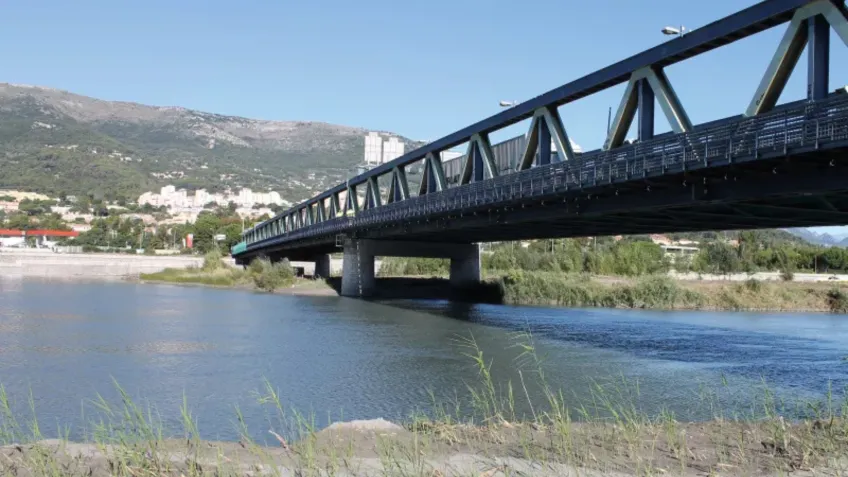
The system provides Météo-France with a 24/7 view of at-risk waterways, combining real-time visual evidence with precise scientific data. This allows for faster, more confident decision-making.
Providing flood management crisis supervisors with images of the situation in real time is a definite improvement,notes M. Martin, project manager at Météo-France. “Having an image in addition to the measurement is a real advantage.”
This innovative solution enables the agency to more effectively manage crises and provide early warnings to communities in the path of a potential flood.
Conclusion
When it comes to effective flood management, time is the most important factor. The more advance warning you have, the more lives and property you can save. The powerful combination of cameras offering data, alerts and visual proof, and AI delivering predictive insights gives communities that precious time
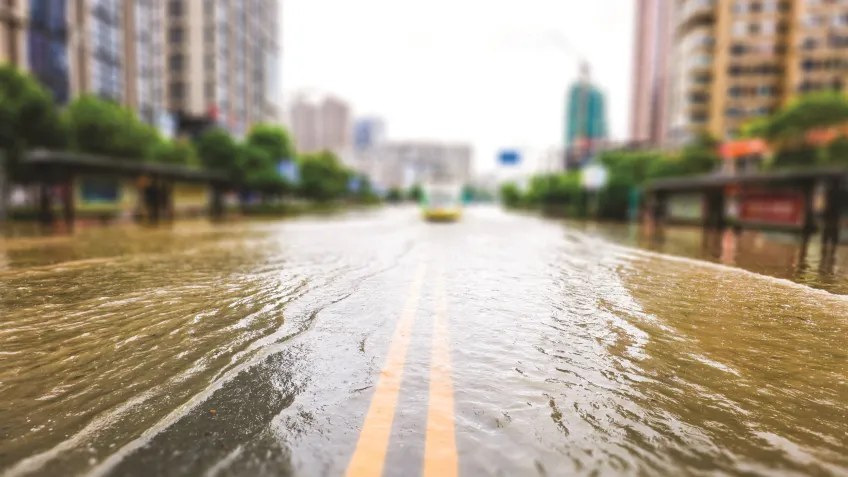
This shift from reacting to a flood to being able to predict it hours in advance is the new reality of flood detection and management. By harnessing these technologies, we can build a more resilient world where we are better prepared for whatever the weather brings.
FAQs
Here are answers to some common questions about using technology for flood detection.
Can video analytics detect floods at night?
Yes. Modern security cameras equipped with advanced low-light technologies, such as thermal imaging or infrared (IR) illumination, are designed to see clearly in complete darkness.
At night, in situations where there is still some ambient light (such as in many urban settings), Axis technologies like Lightfinder make it possible to maintain a color image that is highly legible. regardless of the time of day. This ensures that the system can reliably measure water levels and detect flooding 24/7.
How does the system differentiate between heavy rain and an actual flood?
The system looks at multiple data points, not just one. While a rain gauge will report heavy rainfall, the AI correlates this with data from other sensors. It checks the water level sensors in the river and analyzes the video feed to see if the water is physically rising and overflowing its banks.
A flood alert is only triggered when these different sources confirm a genuine threat, not just during a downpour.
What happens when a sensor or camera goes offline?
System reliability is a core part of the design. The central management system continuously monitors the health and connectivity of every camera. If a device goes offline due to a power outage or network issue, the system immediately sends a maintenance alert to the operators so they can address the problem. This ensures the integrity of the network and minimizes any gaps in coverage.
How are false alarms minimized in an AI-driven system?
False alarms are reduced through a process of continuous learning and data fusion. The AI is trained on vast amounts of data to understand what a real flood looks like versus a non-threat, like a plastic bag floating past a sensor.
Can this technology be used for other weather events?
Yes. While this system is configured for flood detection, its core components, cameras and AI, are versatile. The same infrastructure can be adapted to monitor for other environmental risks.
For example, video analytics can detect the smoke plume from a wildfire, and various sensors can monitor for dangerous wind speeds, landslides, or extreme temperatures, making it a multi-purpose public safety solution.
