

Installing a security camera seems straightforward until you're on a ladder, trying to get the field of view just right. This process is time-consuming and may often require a return visit for minor adjustments, adding to the total cost of ownership.
Even with the camera perfectly positioned, what happens when the scene changes? If construction work is required, or the layout of the site changes, suddenly your camera is less effective.
This is where PTRZ (Pan-Tilt-Roll-Zoom) cameras transform the setup and maintenance process from a physical chore into a simple, remote task.
This article explores how PTRZ cameras simplify installation, reduce maintenance costs, and ensure your cameras are always aimed perfectly at what matters most.
What is a PTRZ camera and how does it work?
PTRZ is an installation feature that allows users to remotely adjust a camera's field of view through its user interface. A benefit of this is that it eliminates the need for manual, hands-on adjustments.
A misaligned camera or incorrect zoom level means either lost pixel detail or missed activity outside the field of view. PTRZ makes it easy to precisely dial in the correct alignment and optical zoom so that every pixel counts.
How PTRZ features shorten security camera installation time
Traditional camera installation can be a frustrating cycle of mounting the hardware, checking the view, and then getting back on the ladder to make tiny physical adjustments. PTRZ features eliminate this inefficiency by separating the physical installation from the optical configuration.
The process becomes much simpler. An installer mounts the camera where it needs to be, connects it to the network, and moves on to the next one. Later, from a central location, you or another technician can remotely fine-tune the exact field of view for every camera on the system.
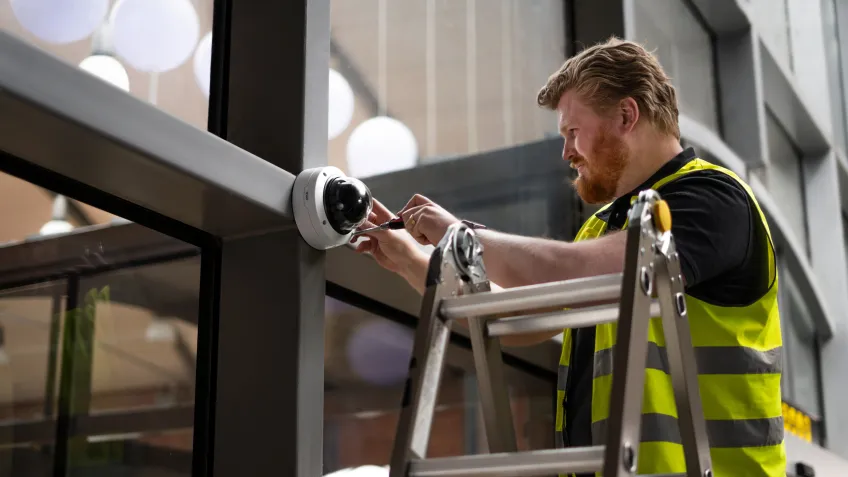
Achieve the perfect viewing angle without a ladder
Once a PTRZ camera has been mounted, you can pan, tilt, roll, and zoom to frame the exact scene you need to monitor, all from your computer. This means whether you are covering a specific entry point, a cash register, or a car park, you can find and maintain the perfect viewing angle.
Correct the image orientation with one click
With a PTRZ camera, correcting the image orientation is as simple as clicking a button in the software. The remote rotation function allows you to level the image perfectly from your control room.
It’s a little considered fact, but a crooked image can actually interfere with the camera's analytics. Video analytics tools like occupancy measurements, object detection, people counting, and line-crossing alerts are all calibrated assuming a properly oriented frame.
A quick roll correction keeps everything aligned the way the software expects, so your analytics actually perform the way they're supposed to.
Set the optimal zoom level from your computer
Setting the right zoom level is a critical part of camera setup. You need to balance a wide overview with the ability to capture important details like faces or license plates. During a traditional install, this often involves one person at the camera and another in the control room, communicating back and forth to get it right.
A PTRZ camera makes this a one-person job. From your computer, you can zoom in and out to find the ideal focal length for the camera’s purpose. This allows you to confirm that the level of detail meets your operational requirements.
3 ways PTRZ cameras are beneficial for security camera maintenance
The benefits of PTRZ technology extend far beyond the initial installation. Over the life of a security system, cameras often require readjustment. Occurrences like reorganizing high-value items on shelves in a retail environment, or scene changes on a construction site can make maintaining the correct field of view a constant challenge.
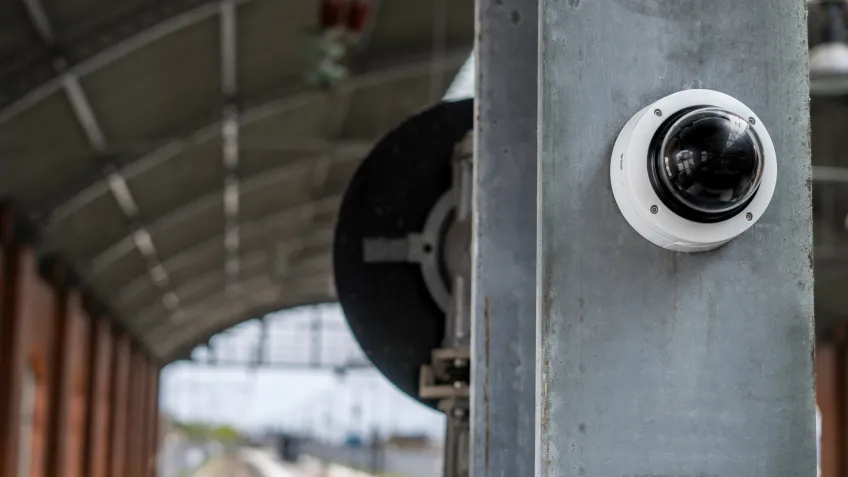
PTRZ cameras transform security camera maintenance from a costly, manual task into a quick, remote action. This ability to make immediate adjustments without dispatching a technician can reduce long-term operational costs and system downtime.
Readjust camera views after accidental bumps instantly
Should a forklift accidentally reverse into a mounting pole or if the pole is moved as a result of building work it no longer takes time and money to readjust.
With a PTRZ camera, the solution is instantaneous. As soon as you notice the view is off, you can log in, remotely pan, and readjust the camera back to its correct position.
Adapt the field of view to environmental changes remotely
The world outside your building is not static. A tree branch may grow to obstruct a cameras view, or a parking lot layout could be reconfigured. Suddenly, your camera’s view is ineffective.
PTRZ cameras provide the flexibility to adapt to these evolving environments without physical intervention. If a new landscape feature is blocking your sightline, you can remotely adjust the tilt and pan to look around it. If a new interior wall is built, you can re-aim the camera to monitor the new layout.
This adaptability ensures your investment in the security system continues to deliver value as your environment changes.
Reduce technician call-outs for simple fixes
For any organization, reducing operational expenses is a top priority. Technician call-outs for simple camera adjustments represent a significant and often unnecessary cost. Each visit for a minor fix involves labor, travel time, and potentially the use of special equipment like lifts.
PTRZ cameras virtually eliminate these expenses a frees up your skilled technicians to focus on more critical tasks. The ability to handle common adjustments remotely means you only need to dispatch technicians for hardware failures or more complex issues.
5 use cases where PTRZ capabilities are essential
While PTRZ cameras offer benefits in almost any setting, they become truly essential in environments where camera access is difficult, costly, or disruptive. The ability to install a camera once and manage it remotely for its entire lifespan provides a powerful return on investment.
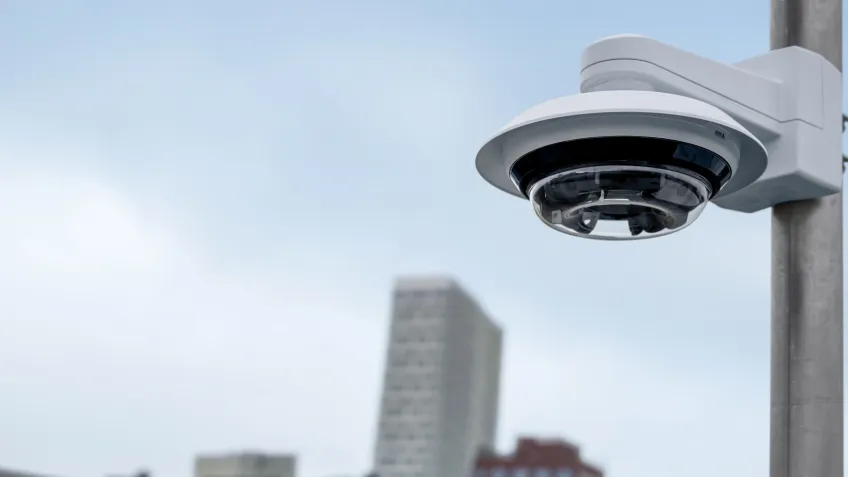
From high ceilings in industrial settings to hard-to-reach exterior locations, PTRZ technology overcomes significant physical limitations. These are the kinds of challenges that can make traditional camera installation and maintenance difficult.
Monitor large areas with high ceilings
In buildings like warehouses, manufacturing plants, and airport hangars, cameras are often mounted on high ceilings or rafters to provide a broad overview. Accessing these cameras for adjustments requires specialized lifts and careful coordination to ensure the safety of technicians and anyone below.
PTRZ cameras are the ideal solution for these environments. You can perform the initial installation and then manage the pan, tilt, roll, and zoom settings from the ground. This eliminates the need for repeated use of lifts, reducing both the cost and the operational disruption associated with maintenance.
Secure locations that are difficult to access
Think about your camera's location. Sometimes they need to be placed in areas that are inherently difficult and dangerous to access. For example, for a camera placed along a major highway, a minor adjustment can turn into a major operation.
By allowing all adjustments to be handled remotely, PTRZ cameras drastically reduce the need for physical access. This enhances the safety of maintenance personnel and lowers the total cost of ownership over the camera’s lifetime.
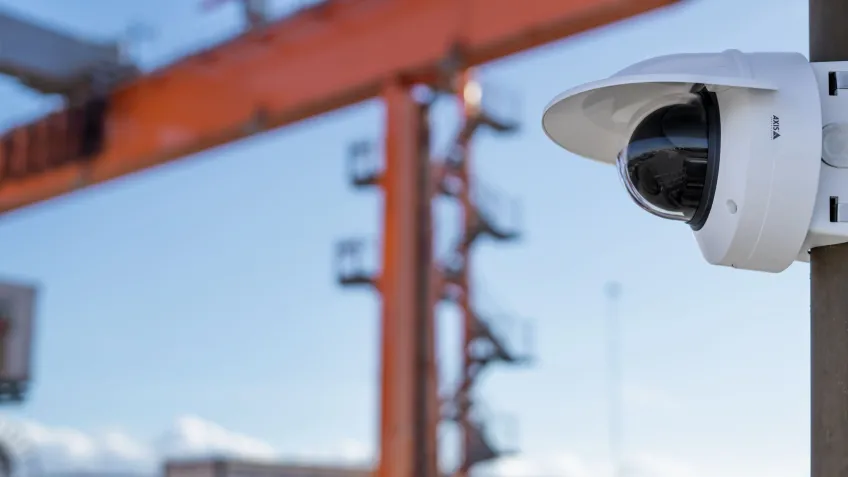
Cover evolving environments like construction sites
Construction sites are the perfect use case for a PTRZ camera. The layout of a construction site can change almost every day. As new structures are built, or large equipment repositioned, effectively safeguarding sites can be difficult.
The flexibility of PTRZ cameras in such environments means security managers can remotely re-aim cameras as the site evolves. This adaptability allows the security system to keep pace with the project without requiring constant physical camera relocations.
Manage multi-camera systems efficiently
PTRZ cameras bring a new level of efficiency to managing large-scale deployments. This is especially true in areas such as a large campus or a city-wide surveillance system.
Adjust views for temporary events or threats
Sometimes, you need to change a camera’s focus for a short-term need. PTRZ cameras allow you to dynamically respond to any situation. This could be keeping an eye on a specific area during a protest or focusing on a vulnerable entry point following a threat.
You can temporarily adjust a camera’s view to focus on the event or threat, then easily revert to its original position after. The flexibility of a PTRZ camera means maintaining situational awareness, without neglecting your wider security posture.
Conclusion
As we’ve covered, an unexpected adjustment to your camera’s view can have costly effects. PTRZ cameras offer a smarter way forward. Giving you a more flexible approach to both security camera installation and long-term maintenance.
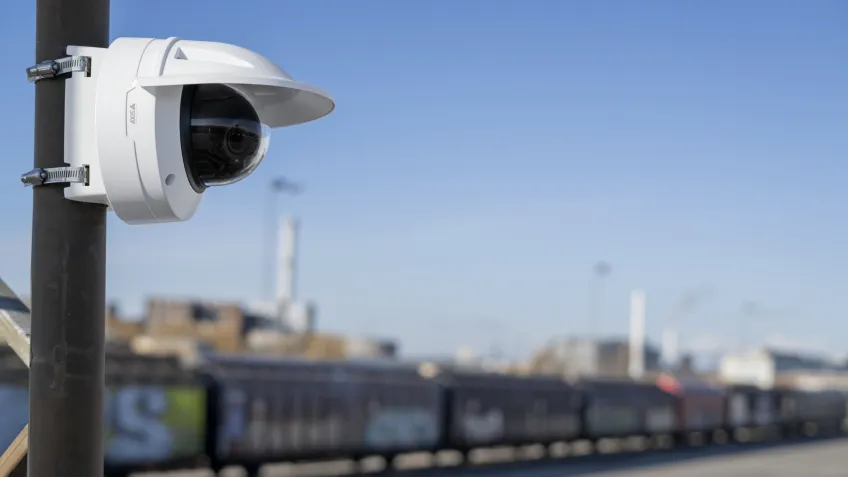
Your security and surveillance needs are ever changing, so your system should be able to keep up. By taking full control of your camera’s ability to pan, tilt, roll, and zoom, PTRZ technology provides you with the ability to adapt your system to your needs.
FAQs
To help you better understand this transformative technology, here are answers to some common questions about PTRZ cameras.
What is the main difference between a PTZ and a PTRZ camera?
A PTZ camera offers full, flexible control for live situations. An operator can smoothly pan, tilt, and zoom to track activity, and these cameras have a much higher zoom capacity.
A PTRZ camera is different as it is often a feature that you use once during installation. Once set, it rarely needs adjustment. However, it can also be used for maintenance if such issues arise.
Are PTRZ cameras more expensive than fixed cameras?
Yes, PTRZ cameras typically have a higher upfront cost than fixed cameras due to the additional motors and components required for the remote adjustment capabilities.
However, this initial investment is often quickly offset by significant savings in installation and maintenance costs. The reduction in technician call-outs or the need for lifts or other special equipment can lead to a lower total cost of ownership.
Can I integrate a PTRZ camera with my existing security system?
Yes. A camera with PTRZ features can be added to your existing network and VMS just like any other IP camera. However, the PTRZ functionality itself is not controllable through any VMS. It is accessed exclusively through the camera's own user interface and serves purely as an installation feature for framing and adjusting the field of view during setup.
How much time can you save on installation with a PTRZ camera?
The time savings can be dramatic, especially on large projects. By allowing an installer to simply mount the camera and move on, you can cut the installation time significantly.
The fine-tuning, which can be a time-consuming back-and-forth process, is handled efficiently from a central location. For a multi-camera installation, this can reduce the total project time by hours or even days.
