

What if your cameras could tell you exactly why your lunch rush is slower on Tuesdays - and fix it before Friday? The quick service restaurant (QSR) industry has always been shaped around speed, accuracy, and quality service. Today, a new wave of technology is redefining what that means.
This technology shift is driven by the need to streamline and improve operational efficiency, combat staff shortages , and find new, smarter ways to enhance the customer experience. To achieve this, the industry is turning to innovative technology for smarter solutions. Here AI powered analytics is moving the industry from guesswork to smart, data-driven decisions, with the goal to make every second count, from the kitchen to the customer.
In this blog, we'll walk you through what QSR video analytic solutions are, how they can transform your operations, highlight some use cases, and outline how to choose the right solution for your needs.
What are QSR video analytics?
AI-powered video analytics acts as a smart brain for your cameras, automatically understanding what's happening in the scene that the camera is monitoring. This allows you to instantly get real-time alerts and discover patterns for things you care about.
While traditional CCTV cameras record events for later review, video analytics technology interprets what’s happening in real-time. This can, for example, flag when a car has been sitting at your drive-thru pickup window for too long or when queues are forming at the front counter, and only one register is open.
By automatically detecting specific scenarios and triggering instant alerts to speakers or staff, you can resolve concerns and guest needs the moment they arise. In a nutshell, improve your QSR operations to turn these quick wins into quicker service.
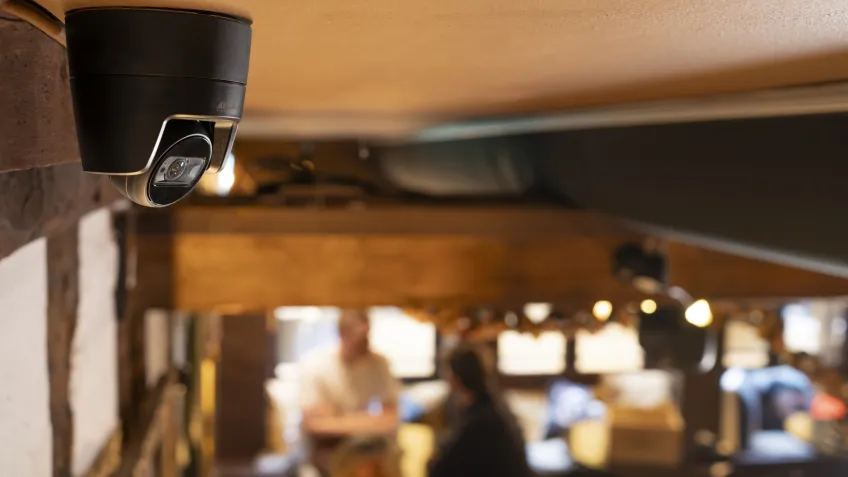
Analytics are also used for long term analysis and identifying patterns over time, especially within operational efficiency. It can measure drive-thru times and monitor food-safety compliance without a manager needing to catch bottlenecks as they form.
This moves cameras away from their traditional role as security tools. Integrating video and audio turns passive monitoring into proactive action.
4 ways video analytics solutions can transform your QSR operations
Now that we’ve outlined what QSR analytics are, let’s look at four ways in which video analytics can help to elevate your daily operations:
Optimize speed and order accuracy
As the QSR industry is built around operational excellence, it is ideal to monitor and measure the customer journey from entrance to exit to get insights of potential bottlenecks and wait times. This applies not only to the restaurant but also the drive-thru, the heart of most QSRs. This allows you to measure key metrics like total service time, time spent at order station and time at pickup.
Enhance the customer experience
If video analytics detect a long queue in the restaurant, pre-recorded audio messages can be triggered to inform customers of approximate wait times or promote special offers. Keeping customers engaged can reduce order abandonment.
By understanding the customer experience inside your restaurant, you can make changes that lead to a smoother, more enjoyable service.
Ensure food freshness
To ensure every customer receives fresh food, the system monitors how long prepared items sit waiting to be picked up. By analyzing this kind of data, managers can see average production times for food and drinks and, most importantly, track the wait time between when an order is ready and when it's collected.
Automatic audio messages can be used to alert when food is ready. This allows the restaurant to reduce delays, ensuring a higher quality and a fresher product reaches the customer.

Accurate food deliveries
Once an order is picked up by a food delivery service, the restaurant loses all visibility. This creates a significant problem when customers report missing items, as the delivery company often refunds the order first and asks the restaurant for proof afterward.
Without a way to verify the original order, the restaurant cannot dispute these claims and suffers the loss.
A simple solution is to install a camera over the packing station. By linking the video footage to the order number in a Video Management System (VMS), an associate can instantly search for and review a specific order to confirm its contents.
Key challenges in quick serve restaurants and how to address them
Diving deeper, let's explore the practical, day-to-day applications of this technology and the specific problems they solve in a busy QSR environment.
Optimize drive-thru and service-line efficiency
- Problem: Long wait times lead to frustrated customers and lost sales.
- Solution: AI can analyze the entire drive-thru process. It tracks how many cars are in line, how long each step takes (ordering, payment, pickup), and when a car leaves the line without ordering. If wait times exceed a certain threshold, managers can receive an instant alert, allowing them to redeploy staff to break the logjam. Speakers can be used to inform drivers that they will be assisted shortly.
- Benefit: Real-time alerts allow managers to immediately address bottlenecks. Historical data helps optimize staffing schedules for peak hours and measure the impact of any process changes.
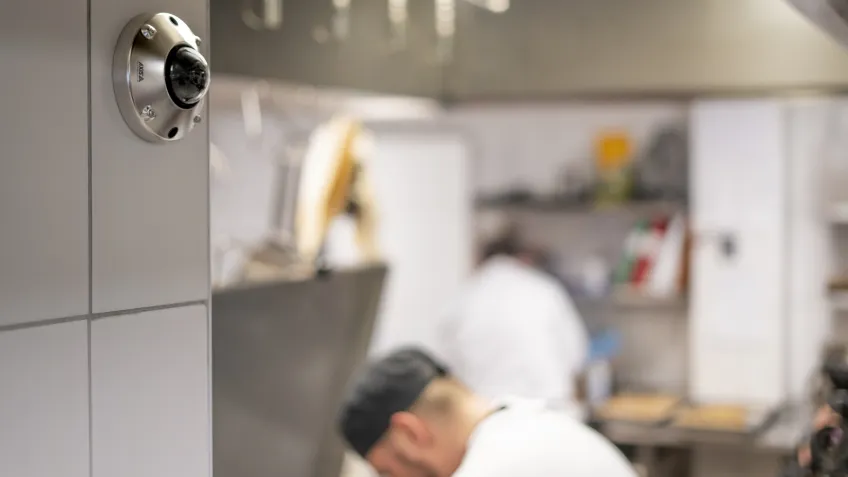
Analyze customer behavior and traffic flow
- Problem: Long waiting times, inefficient customer flow, and delays in order processing can lead to customer dissatisfaction and reduced sales.
- Solution: By analyzing the customer’s journey from entry to exit, between stations and POS transactions, the total store journey and speed of service can be measured. Integrated audio messaging keeps customers informed of their status, reducing perceived wait times and improving the overall service flow.
- Benefit: This solution offers quick serve restaurants insights into order time at POS, customer wait time and help to optimize their service speed, enhance customer satisfaction, and drive business growth.
Validate cleaning and hygiene protocols
- Problem: Maintaining cleanliness in restrooms, drink stations, and dining areas is crucial for customer perception and public health.
- Solution: When footfall data reaches a set number in a specific area (e.g., outside restrooms), the system automatically alerts staff or is used to optimize cleaning schedules based on actual demand, not fixed intervals.
- Benefit: This provides auditable proof of hygiene compliance, ensures a safer and more pleasant environment for customers. Also, reinforcing your brand's commitment to quality.
Streamline staff allocation and workflows
- Problem: Staff efficiency is key in streamlining processes and workflows. Limited visibility into how employees move and perform tasks often leads to inefficient processes, wasted time, and suboptimal resource allocation.
- Solution: By capturing anonymous staff data to identify areas of inefficiency and productivity bottlenecks, this solution provides insights into workstation utilization and station departures.
- Benefit: By analyzing these metrics, QSRs can optimize staff efficiency, improve resource allocation, and enhance order preparation process compliance.
How to choose the right QSR video analytics solution
Selecting the right vendor who can provide the right solution can be a challenge. Here we can outline five of the key considerations to look at in the selection process:
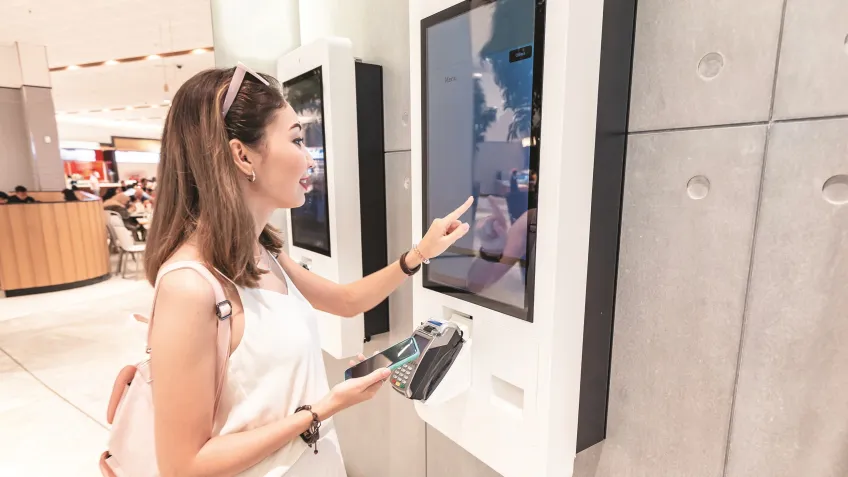
Evaluate integration with your existing infrastructure
Your video analytics solution should enhance, not replace, your current systems. A key feature to look for is the ability to integrate with your existing CCTV cameras and POS system.
This saves you from a potentially costly "rip and replace" scenario. Ask potential vendors about their integration capabilities and ensure they can work seamlessly with the hardware and software you already own.
Assess the quality of AI and reporting
The value of the solution depends entirely on the accuracy and relevance of its analytics. Ask for a live demonstration using a scenario relevant to your restaurant. How well does AI detect cars, people, and specific actions?
The reporting should be just as good. Make sure it is clear, intuitive, and focused on the metrics that matter most.
Inquire about data security and privacy
Ask vendors how they protect your data, both in transit and at rest. Is the data stored on-prem, in the cloud, or hybrid? What measures are in place to protect the privacy of your customers and employees? Look for solutions that offer features like face and body redaction.
Check for scalability and support
Your business will grow, and your technology should be able to grow with you. Can the solution easily scale from one location to ten or evolve according to your needs?
Look for a partner who understands the QSR industry and provides the right kind of support to ensure you get the most out of your investment.
Conclusion
In a competitive landscape where every second counts, relying on guesswork is no longer enough to succeed. Video analytics solutions transform your standard surveillance system from a passive security tool into an active, intelligent partner for your business.

By providing real-time alerts and long-term data on everything from drive-thru speed to food freshness and staff performance, it gives you the concrete insights needed to take the right actions and make impactful changes.
Ultimately, this technology empowers you to perfect the core QSR promise of speed, accuracy, and quality service, ensuring you not only meet customer expectations but consistently exceed them.
FAQs
Frequently asked questions about QSR video analytics.
How does video analytics respect customer and employee privacy?
Modern video analytics solutions are designed with privacy in mind. Many systems include features like AI-powered face and body redaction to protect the identity of individuals in video clips.
The goal is to analyze behavior and operational patterns, such as queue length or service duration, not to identify specific people.
Can video analytics integrate with my current POS system?
Yes, in most cases, integrating video analytics with POS systems is a significant advantage for modern QSRs because it provides context to transaction data. However, it isn’t necessarily straight-forward and depends on the POS system.
Is the technology difficult to install and use?
Leading providers have made installation and usability a top priority. Installations based on open platforms are specifically designed to work with third-party software. This ensures that most video analytics can integrate with the systems you have in place.
What is the typical return on investment (ROI)?
The ROI for QSR video analytics can be shown in several areas. Reduced food waste and theft, which directly cuts losses, optimized staffing, and improved drive-thru speed and customer experience, which increases sales and builds loyalty.
By identifying just a few instances of theft or saving a few seconds on every drive-thru order, the system can quickly pay off.
