

In the rapidly evolving world of surveillance, technological advancements continue to redefine the boundaries of security and monitoring. One such innovation poised to revolutionize the industry is the integration of video analytic overlays.
Overlays, which involve superimposing digital information onto live or recorded video feeds, offer a myriad of benefits that can significantly enhance surveillance capabilities.
In addition to analytics, overlays can also be system data, geocoordinates, and other contextual elements not related to analytics.
However, as with any technological advancement, there are challenges to consider, such as the potential for cluttering the view.
Let's delve into how the video surveillance industry will benefit from overlays in the future and address some of the associated challenges.
3 benefits of video analytic overlays
Video analytics turn data into insight. Overlays support that intelligence, bringing real-time insights to life directly in the video feed so you can act faster and with greater clarity.
Here are 3 ways you can benefit from that:
1. Enhance situational awareness
Overlays can display real-time data and highlight relevant details directly in the video feed, giving operators better situational awareness.
For instance, vehicle speed data from a radar can be displayed in the camera's view, and overlays on objects or attributes can highlight suspicious activity or areas that require attention.
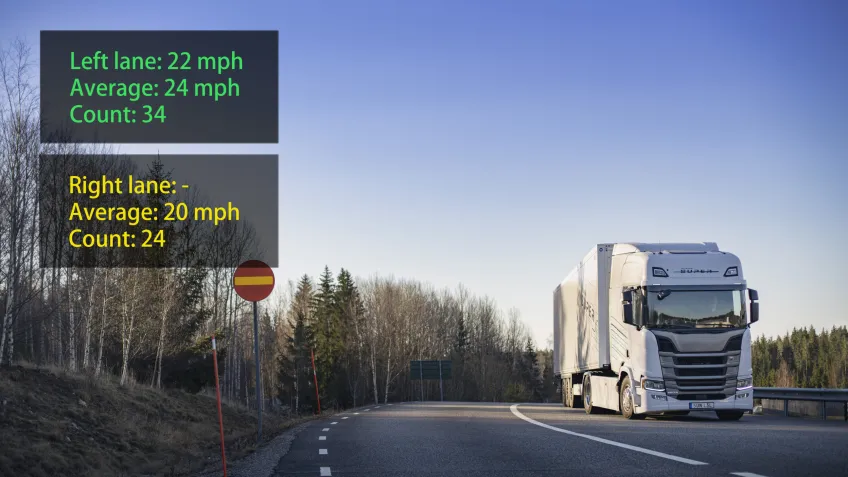
Immediate access to critical information enables faster decision-making and more effective responses.
2. Improve operational efficiency
By integrating overlays, surveillance systems can streamline operations and reduce the need for multiple monitoring screens.
For example, thermal imaging overlays can display temperature variations directly in the video feed, making it easier to detect anomalies.
Consolidating information saves time and reduces cognitive load, helping operators utilize video analytics more efficiently.
3. Provide deeper insights
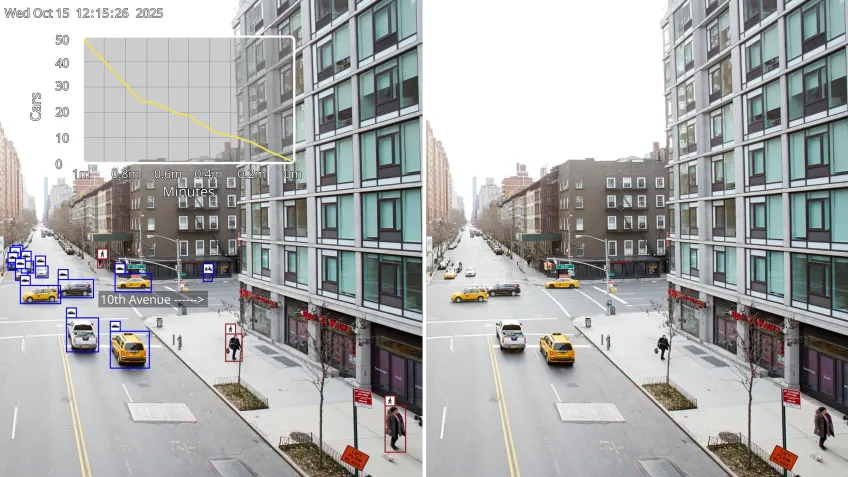
Video overlays can enhance how analytics results are presented and understood in surveillance systems. Overlaying data such as foot traffic patterns, heat maps, or predictive analytics provides deeper insights into activities and trends.
This information can be invaluable for proactive security measures, such as identifying potential hotspots for criminal activity or optimizing the placement of security personnel.
Main challenge of video analytic overlays
While the benefits of overlays are substantial, there are challenges that need to be addressed to ensure their effective implementation. One of the primary concerns is the potential for cluttering the view.
Overloading a video feed with too much information can make it harder for operators to identify critical details, leading to confusion and reduced effectiveness.
3 ways to mitigate the challenge of video analytic overlays
To mitigate this issue, it’s essential to design overlays that are intuitive and user-friendly. This can be achieved through careful consideration of the following factors:
1. Customizable Interfaces
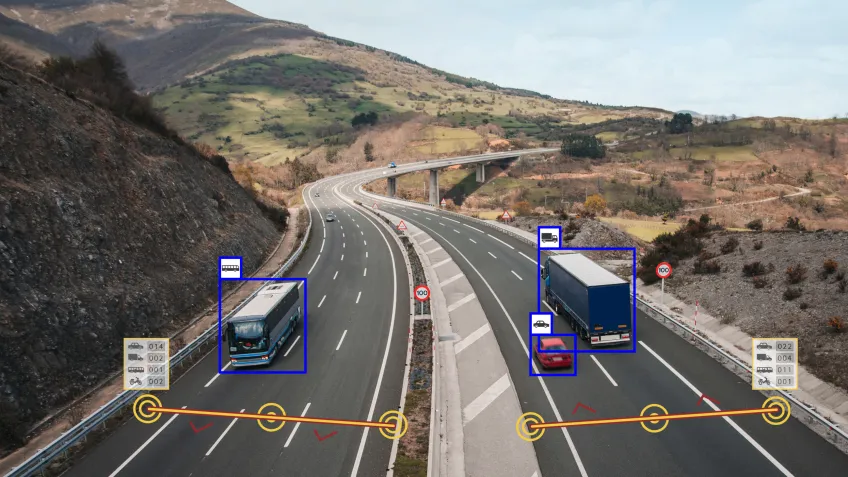
Overlays can be configured to display relevant information, including analytics results, events, or system data, directly in the video. This flexibility ensures that operators can focus on the data most relevant to their tasks without unnecessary distractions.
2. Dynamic Overlays
Implementing dynamic overlays that appear only when needed can help maintain a clear view. For example, vehicle speed could be highlighted only when above speeding limits, to emphasize important information.
3. Togglable overlays
The AV1 feature of togglable overlays plays a crucial role in addressing the challenge of cluttering the view. This functionality allows operators to seamlessly switch between a clean video view without graphical elements, and operational video view, with analytic overlays such as bounding boxes and text overlays. This works on both live and recorded videos. By providing the flexibility to toggle overlays on and off, the AV1 feature enhances the overall usability without compromising with the evidential value and effectiveness of surveillance or monitoring systems.
Conclusion
The value of video analytic overlays depends entirely on how well they are implemented.
The three benefits explored above demonstrate that overlays can transform passive surveillance feeds into active, intelligence-driven tools, with overlays helping visualize and act on those insights.
Organizations already deploying them across retail, critical infrastructure, and urban monitoring are seeing measurable improvements in response times and operational clarity.
However, each piece of data added to a video feed introduces a trade-off. Without careful design, overlays risk creating the very problem they were built to solve, potentially obscuring critical details rather than surfacing them.
With togglable overlays, supported by AV1, the operators have the flexibility to toggle overlays on and off.
Ultimately, the most effective overlays are not those that display the most information, but those that deliver the right information at the right moment while preserving a clean, actionable view for the operator.
