

Nurses are on the front lines of patient care. Often the first point of contact for patients, nurses maintain direct and ongoing contact throughout their hospital stay. It’s a crucial job.
But nursing is evolving. Digital transformation is changing what healthcare looks like, and has led to the increased adoption of ‘virtual nursing’.
In this blog we explain the benefits of virtual nurses and the value it brings to intensive care units, described as ‘tele-ICU’, as well as patient sitting, or ‘telesitting’.
What is virtual nursing?
Virtual nursing refers to the integration of video, audio, smart displays and AI models solutions into wider communication systems to augment patient care delivery.
Delivering quality patient care now depends on developing more proactive and efficient ways of working, and supporting safe and sustainable workplace conditions, and makes communication and collaboration simpler.

Doing so helps ensure that healthcare providers are where they’re needed when it matters most.
Virtual nurses are already significantly changing the way hospitals operate. In fact, most hospitals in North America are expected to install virtual support systems over the next three to five years.
What is the difference between telehealth, tele-ICU and telesitting?
Telehealth, tele-ICU and telesitting are all different terms for remote healthcare designed to meet different needs.
Telehealth
Telehealth is the broader term for remote healthcare and is the use of digital information and communication technologies to access and manage healthcare services remotely.
It includes services like virtual doctor visits, remote patient monitoring, allowing patients to receive care without being physically present at a healthcare facility.
Tele-ICU
Tele-ICU (Tele-Intensive Care Unit) is a form of telehealth that uses audio-visual technology and remote patient monitoring tools to provide critical care services to patients in intensive care units from a centralized location.
It allows critical care specialists to monitor and manage ICU patients, often across multiple hospitals, improving access to expert care and enhancing patient outcomes.
Telesitting
Telesitting is a remote patient monitoring service that uses audio-visual technology to observe patients, typically in healthcare settings like hospitals or senior living facilities.
It allows caregivers to keep an eye on patients from a distance, ensuring their safety, providing companionship, and alerting on-site staff if immediate assistance is needed.
5 benefits of virtual nursing
Reduce costs
Bedside staff allocation represents a significant challenge for healthcare providers. One of the costliest expenses for hospitals, for instance, is to place a nurse in a room with a patient to monitor their health and execute tasks that can be virtualized.
This is where intelligent network solutions and virtual nursing come in.
Provided systems operate on an open architecture, which enables them to be integrated as part of a hospital’s existing software, this technology can help radically transform and accelerate workflows, while still delivering the highest standards of care.
This prevents you from being ‘locked in’ to costly proprietary solutions.
Increase operational efficiency
The installation of in-room two-way video cameras makes it possible for nursing staff to continuously monitor and communicate with multiple patients from a central or decentralized location.
Given that highly skilled nurses are often in high demand due to the level of their expertise, this remote solution enables them to provide high-quality care to multiple patients, irrespective of location.
Enhance patient experience
Built-in audio capabilities in video cameras can further enhance patient experience.
Preconfigured with high-quality sound and enabling two-way communication with high audio intelligibility, patients can see and speak directly with nurses, and vice versa.
This is particularly useful to help facilitate the following:
- Clinical video conferencing and consultations, whereby nurses and clinicians share a care plan with the patient and discuss their treatment
- Dual medication validation for the administration of medicines
- Remote admissions and discharge
- Virtual rounding
- Virtual visitations
Reduce the risk of infection
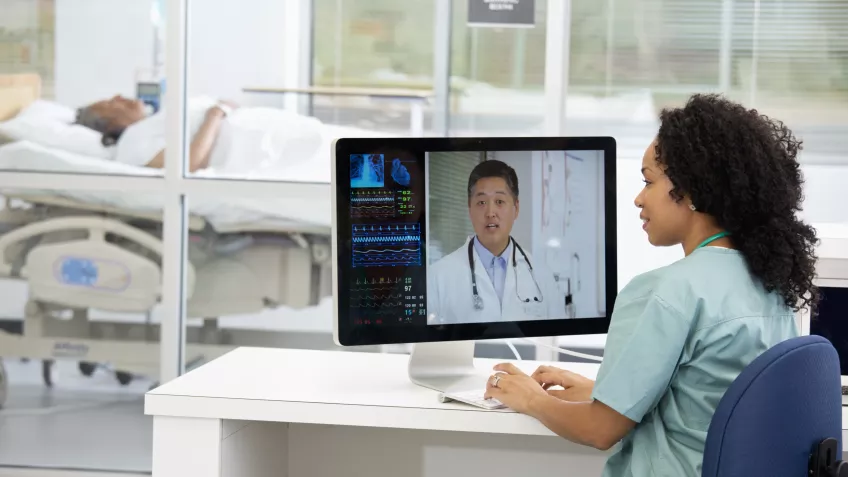
Virtual nursing minimizes physical contact and can thereby reduce the risk of spreading infections.
By leveraging telehealth technologies, healthcare providers can conduct consultations, monitor patient vitals, and deliver care remotely, significantly decreasing the need for in-person interactions.
This is particularly crucial in managing contagious diseases, where limiting direct contact can prevent the transmission of pathogens between patients and healthcare workers.
Additionally, virtual nursing helps in maintaining a sterile environment, as fewer people are physically present in healthcare facilities.
This reduction in physical contact not only protects patients but also safeguards healthcare professionals, ensuring a safer healthcare ecosystem overall.
Improve health outcomes
Virtual nursing significantly contributes to improved health outcomes by enabling continuous and proactive patient monitoring.
Through the use of advanced telehealth technologies, nurses can remotely track vital signs, medication adherence, and overall patient well-being in real-time.
This constant oversight allows for early detection of potential health issues, facilitating timely interventions that can prevent complications and hospital readmissions.
Furthermore, virtual nursing ensures that patients have consistent access to healthcare professionals, reducing delays in care and enhancing the management of chronic conditions.
The ability to quickly consult with specialists and share patient data seamlessly across healthcare providers leads to more accurate diagnoses and personalized treatment plans.
Consequently, patients benefit from a higher standard of care, resulting in better health outcomes and an overall improvement in their quality of life.
The value of virtual nursing in the ICU
Intensive care is particularly crucial when integrating network solutions to deliver patient care. At-risk patients require near constant monitoring, with specially trained nursing staff responsible for checking vital signs and administering treatment.
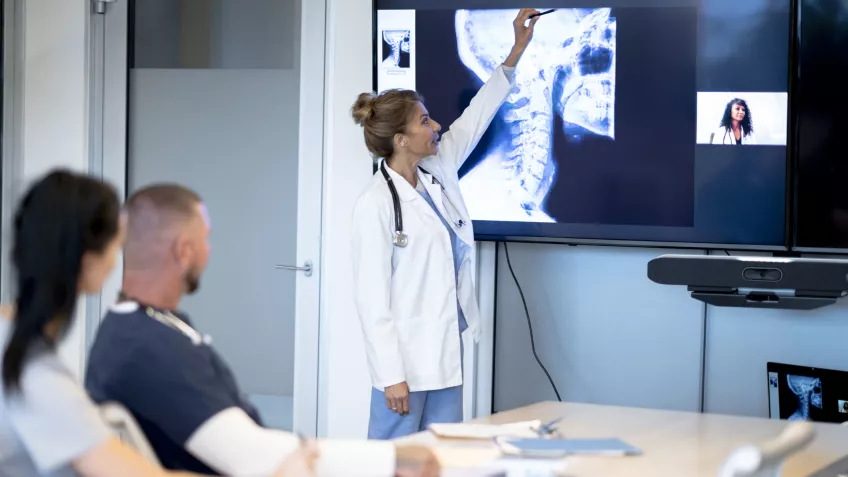
With the use of network cameras, healthcare facilities can provide nurses with a stable feed with the sharp, detailed, true-to-life images needed for ICU care, which is referred to as ‘tele-ICU’.
These solutions empower nurses to establish and maintain robust situational awareness across their entire patient population no matter where they are or what they’re doing.
As an example, Nemours Children’s Hospital in Orlando, Florida, has created a Tactical Logistics Center (TLC), where a rotating team continually checks patient vital signs through a central monitoring system.
This integrates both clinical data and live streaming video in each patient’s room to ensure they receive 24/7 care, enabling nursing staff to provide essential consistent monitoring while not being physically present.
This can be integral for wards that require highly skilled, specialist nurses, enabling them to combine in-room and virtual nursing to improve patient outcomes.
Improved remote patient monitoring through telesitting
Patient sitting is an indispensable part of ensuring safety and providing quality care. However, many healthcare providers struggle to secure enough personnel for this time and resource-intensive form of care.
As a complement to virtual nursing, telesitting can be used to monitor patients remotely to ensure they are not at risk.
With the use of in-room network cameras, remote staff members, like patient safety technicians, can continuously monitor multiple patients from a central location.
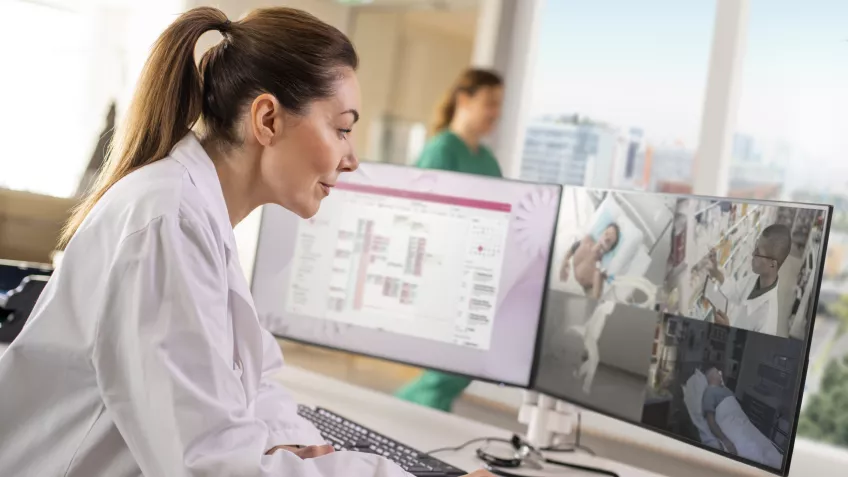
This helps to ensure adequate coverage, even with minimal staff present.
Adding intelligent video analytics helps you to prevent and detect falls or flight-risk patients who have left their beds.
While audio analytics on a speaker or audio-equipped cameras can provide a minimally intrusive way of identifying audible sounds that may indicate a problem, such as sudden increases in noise levels.
Meanwhile, convenient ad hoc two-way communication options make it easy for sitters to speak with patients as needed.
Furthermore, with a multi-tenant architecture, multiple departments can use the same system.
This enables greater return on investment (ROI) as one system can offer multiple uses across a hospital, fostering greater collaboration and efficiencies.
Protecting patient data privacy
Virtual nursing and remote patient monitoring doesn’t come without its challenges, particularly in relation to protecting patients.
Of course, it is important to match hardware to the patient population here. If a camera is placed in a room in a behavioral health area, precautions must be taken to enhance patient safety, so they do not use the equipment to harm themselves.
It is also important to select the right hardware in relation to video quality.
High-quality imagery is critical when it comes to ensuring patient safety, as healthcare practitioners can clearly see the patient and monitor for any observable signs that may indicate a problem or changes to their state of health.
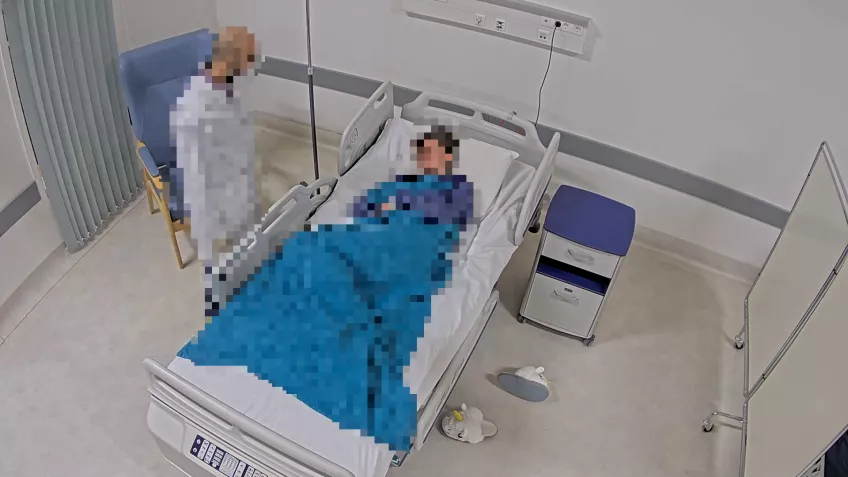
By installing tailored cameras for the specific use case, you can improve patient care and outcomes – both within a hospital setting and in wider care facilities.
An integral part of virtual nursing is aligning with Health Insurance Portability and Accountability Act (HIPAA) compliant architecture, which ensures your hospital is adhering to healthcare data regulations.
The National Defense Authorization Act (NDAA) and the Trade Agreements Act (TAA) requirements are also important considerations for all forms of healthcare related critical infrastructure.
Patient privacy can be safeguarded using edge-based analytics within cameras. These capabilities enable the dynamic masking of people’s faces and bodies in real-time, allowing the observer to see movements while safeguarding the patients’ identity.
Devices must also have cyber protection in place, to ensure that patient data is encrypted and protected.
Summary
Throughout this blog we have seen that healthcare is continually evolving, with new, innovative solutions helping to shape the future of the sector.
The use of virtual solutions will become an even more essential part of healthcare.
It not only optimizes workflows through better-allocated resourcing but increases overall patient satisfaction levels. With more technological support available to monitor patients, nurses can safeguard patients and improve the quality of care.
