

Rising campus violence, vaping, cyber threats, and staffing shortages are reshaping school security. Today’s institutions need more than surveillance—they need AI-powered search, resilient cybersecurity, and proactive tools that strengthen safety, accelerate response times, and support operational excellence.
The reality is that many campus security systems rely on solutions that attempt to address today’s risks with yesterday’s technology, whether through disconnected security platforms, limited visibility, or incident follow-up workflows that force teams to react rather than respond proactively.
The real question remains: Is your system quick, responsive, secure, and intelligent enough to keep up with modern challenges? Here are five silent vulnerabilities that may indicate it's time to reassess your existing system.
Gap #1: You’re losing time switching between systems
Every day on campus brings a new set of challenges—giving faculty access to rooms, checking visitors at the entrance, handling student altercations, and making campus-wide announcements. Imagine spending nearly 15 minutes piecing together footage from three different systems after a hallway incident, losing precious time that could have been used to de-escalate the situation. If you and your team are jumping between dashboards, switching platforms, and manually cross-checking video for each scenario, your response is already delayed and your daily operations become less efficient.
A modern security system with a strong video management platform gives you everything in one place. Granting access to faculty, monitoring video, responding to incidents, or sending campus-wide messages—everything happens in a single, intuitive interface, just like flipping between tabs in your web browser. Most importantly, you don’t lose time when it matters most. When functionalities are integrated, your system can act in the moment instead of piecing evidence together after the fact. This kind of seamless integration pays off in real ways: students feel safer walking the halls, teachers can focus on teaching instead of distractions, and parents get the reassurance they need. When everyone benefits, trust across your campus grows stronger.
And in school security, every second counts. When your systems are disconnected, you’re not just slower—you’re more likely to miss what matters most.

Gap #2: Reviewing footage post-incident is convoluted
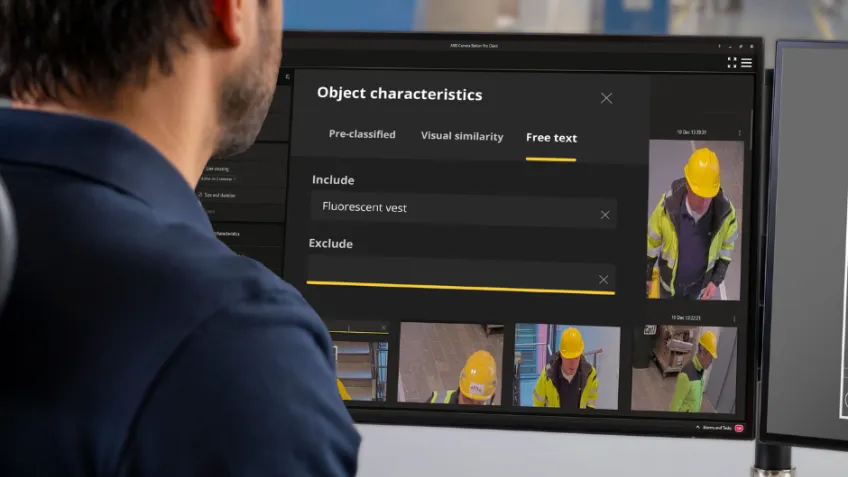
Picture this: parents and teachers report a stranger with a blue backpack near your campus. You do your due diligence—gather statements, interview witnesses, and consult your team. But when it’s time to review security footage, do you spend an hour or more scrolling through endless video just to find the moment in question? That lost time can cost you the chance to intervene early or give clear answers to your community.
This is where modern security systems raise the bar. AI-powered search tools can find a specific person—like someone with a blue backpack—in seconds. Instead of spending hours searching footage, your team can type what you’re looking for and instantly review only the relevant clips, freeing them up to share accurate information with law enforcement, district officials, and guardians.
Beyond incident response, AI-powered analytics highlight trends in campus activity, including where students gather, which times are busiest on campus, and which entrances see the most traffic. This data helps you make informed decisions about staffing, training, and where to invest in additional resources.
Ultimately, AI-based features don’t just speed up investigations—they build trust with parents, empower staff, and streamline operations.
Gap #3: Your campus security system is reactive instead of proactive
You’ve installed network video cameras in hallways, stairwells, and around campus buildings to monitor activity and capture critical incidents in real time. However, to truly safeguard a campus, security systems must evolve beyond traditional camera surveillance and actively detect, communicate, and respond to threats in real-time. This is where intelligent automation and detection devices make the difference.
Automated triggers instantly notify staff when unusual activity is detected, helping security teams and admin act before situations escalate. By integrating unique devices —such as air quality monitors—surveillance evolves beyond traditional visual monitoring, leveraging real-time detection of smoke, pollutants, and invisible atmospheric anomalies to provide critical context that high-definition video alone cannot capture.
When paired with audio devices, these automated responses can go a step further by issuing real-time verbal warnings to deter inappropriate behavior before staff even arrives. Together, automation and advanced detection tools transform campus security from passive surveillance into an active, responsive system—one that helps create a smarter, safer and more accountable school environment.
Gap #4: You’re unsure of what cybersecurity protocols are in your system
While we often judge campus safety by visible cameras and heavy locks, the foundation of your security is the network video recorders. This silent engine does more than just store footage; it serves as the repository for your campus community’s most sensitive data. Yet, without hardware-level encryption and clear supply chain protocols, that engine becomes an epicenter of risk rather than a core of protection—leaving you dangerously exposed to violations of government policies, such as the Family Educational Rights and Privacy Act, and data breaches.
Mitigating these threats requires a shift from passive trust to active ownership. This looks like demanding equipment that meets stringent government benchmarks, such as National Defense Authorization Act (NDAA) and Trade Agreements Act (TAA) compliance. By prioritizing "secure-by-design" hardware, you ensure that student and staff data are stored in a verified, cryptographic vault. In today’s landscape, if you cannot definitively vouch for the integrity of your recording systems, you aren't just managing risk...you’re hosting it.
Gap #5: Expanding your security system is a headache rather than simple
True campus security is never static; it must evolve alongside the physical footprint of the campus. As you expand your campus or commission new buildings, your security infrastructure shouldn't require a total overhaul to keep pace. By investing in network video recorders designed to scale with device connection counts, you can seamlessly integrate new cameras, air quality sensors, and audio speakers without the immediate need for additional hardware. This “future-ready” approach helps maintain a robust security posture as operational demands evolve, enabling rapid deployment across new facilities.
The longevity of your security strategy depends on its ability to handle more data without the risk of system failure. Modern network video recorders provide built-in storage redundancy, ensuring that even if a hard drive fails, your sensitive campus footage remains safe and accessible. By choosing hardware designed with extra drive bays and flexible storage options, you can add higher-resolution cameras or more sensors without outgrowing your infrastructure.
For education leaders, this means moving away from expensive, temporary fixes and toward a system that expands logically. This approach ensures your technology can support a growing ecosystem of devices while maintaining the highest standards of data integrity.
Modernizing campus security isn’t just about adopting new technology for its own sake. It’s about creating a system that gives your team clearer visibility, faster response times, stronger resilience, and confidence in day-to-day operations as well as critical moments.
Start building on a solid foundation
Assess your current capabilities, identify potential gaps, and explore solutions tailored to your school’s evolving security needs with our latest eGuide "Build on a solid foundation: Smarter campus security starts with asking the right questions.”
Whether you’re preparing budget discussions, evaluating system upgrades, or planning a long-term campus safety strategy, this resource is designed to help guide your campus to more informed decision-making.

