
One of the most important responsibilities of any school is to ensure the safety of its students, staff, and visitors. This duty understandably shapes how educational institutions prioritize investment, particularly when it comes to IoT technology. However, new use cases are emerging that move beyond the traditional.
Security systems such as video surveillance and visitor management are now standard across many campuses. In some cases, these are complemented by on-site security personnel, but this isn’t always the case.
These technologies play a critical role in maintaining safe environments and are often seen as non-negotiable investments. Education budgets are already stretched, so even with potential cost savings in the long-term, it can be hard to justify technology investments that don’t immediately bring educational or safety benefits.
Even when technologies promise long-term efficiency gains or cost savings, they can be difficult to prioritize if the immediate benefits are not clearly tied to safety or educational outcomes. As a result, some educational institutions miss out on opportunities to uplevel their campus operations.
This is especially true when it comes to IoT devices and infrastructure. A recent report, ‘Smart campuses, smarter decisions: unlocking the potential of IoT in schools’, found that organizations within the education sector faced a number of challenges when it comes to shifting their mindsets. However, there are also significant opportunities.
The perceived challenge of IoT investment
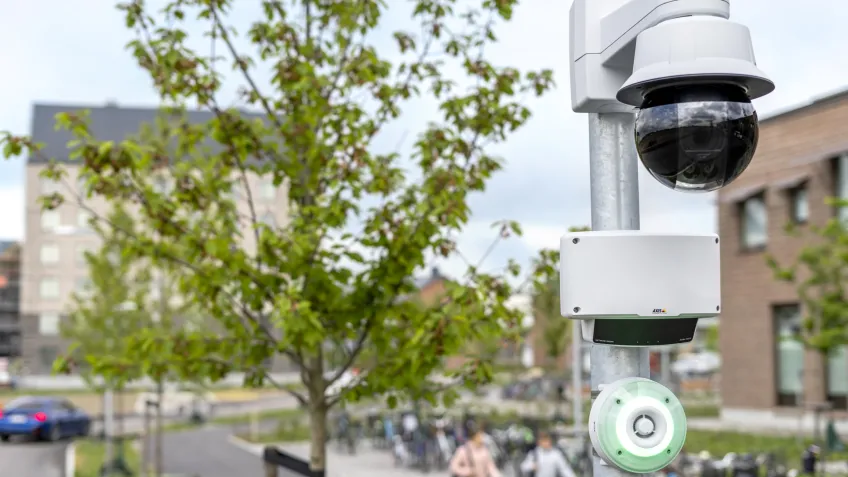
Traditional IoT devices are no strangers to campuses. For example, it’s not unusual to see multiple network security cameras deployed both internally and externally. In these cases, the main use case tends to be security – but this limited view misses out on broader operational benefits.
Rolling out new IoT infrastructure typically involves hardware installation, software integration, and ongoing management. For institutions already operating under tight financial constraints, this can feel like a significant undertaking. However, there are compelling examples of what such investments can achieve.
A good example of this is space optimization. It’s not always obvious when buildings are being used in a way that maximizes utility. University of California, Los Angeles (UCLA) installed IoT sensors across campus to understand how it was being used in the summer months, when fewer classes were taking place and some had moved online. By identifying underused buildings or classrooms, the institution could reduce operational costs, including staffing, security, and energy consumption.

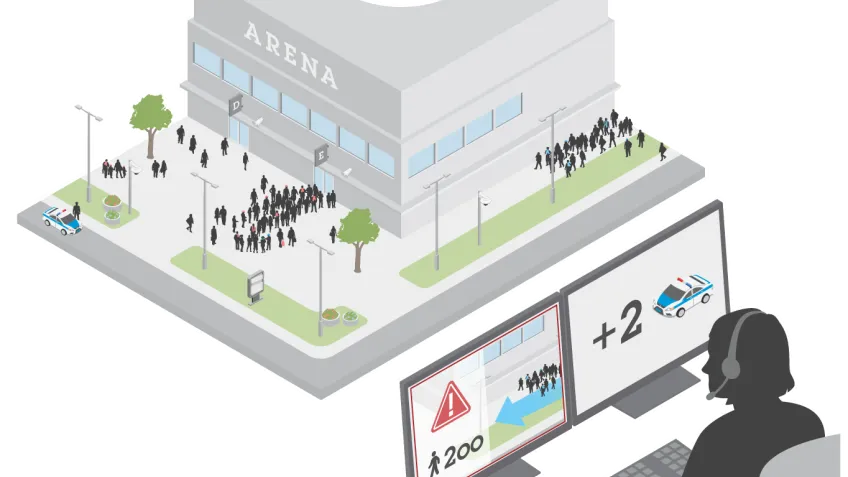
Conversely, IoT technologies can also help manage high-demand environments. At large events, such as university sports games, AI-enabled cameras can monitor crowd movement and provide real-time insights. This allows visitors to make informed decisions—such as choosing shorter queues—while helping organizers improve overall safety and efficiency.
These use cases demonstrate the potential for IoT to improve day-to-day operations for schools. But they also reinforce a common assumption: that realizing these benefits requires entirely new systems and significant upfront investment. However, in reality, this is not always the case.
Unlocking additional value from existing systems
When approached strategically, existing technologies can deliver insights that go beyond their original intent. Access control systems, for example, provide detailed information about when and where individuals enter buildings.
Over time, this data can reveal patterns of occupancy that differ significantly from scheduled timetables. This creates opportunities to optimize how spaces are used, potentially reducing energy consumption or informing future planning decisions.

Similarly, modern video surveillance systems are capable of more than passive recording. With the addition of analytics software, cameras can generate actionable data such as identifying usage trends, monitoring occupancy levels, or detecting bottlenecks in high-traffic areas.
These insights can support a range of improvements for campus operations, including:
- More efficient use of facilities
- Better-informed scheduling decisions
- Enhanced energy management strategies
- Improved student and staff experiences
Importantly, many of these benefits can be realized without the need for large-scale hardware replacement.
Taking a strategy-first approach to IoT
For schools and colleges looking to expand their use of IoT, the most effective starting point is a clear understanding of what is already in place. This involves assessing existing systems and asking key questions:
- What data is currently being collected?
- How is that data being used today?
- What additional insights could be derived with the right tools or integrations?
In many cases, institutions will find that their current infrastructure can support additional use cases with relatively modest enhancements. This might include adding analytics software, integrating systems, or extending functionality through targeted upgrades. Rather than adopting a ‘rip and replace’ approach, schools can often achieve meaningful results by building on their existing investments.
Moving educational institutions in the right direction
There is no one-size-fits-all approach to IoT in education. Each institution will have its own priorities, constraints, and opportunities. However, a common starting point remains: understanding current capabilities, identifying gaps, and exploring how existing investments
can be extended to deliver greater value. In doing so, schools can move beyond viewing IoT as a future investment and instead recognize it as a present opportunity to achieve improvements for campus operations.
