

Mining remains one of the world’s most demanding industrial environments. From underground tunnels and blasting operations to vast open-pit sites filled with heavy machinery, mining companies operate in conditions where safety risks are constant and complex.
At the same time, the industry is under pressure to improve operational efficiency to comply with a growing body of safety regulations. Organizations such as the U.S. Mine Safety and Health Administration (MSHA) and the Canadian Centre for Occupational Health and Safety (CCOHS) alongside regulators including the South Africa’s Department of Mineral Resources and Energy, continue to raise expectations around protection and compliance.
Traditional safety approaches built around manual inspections are becoming harder to sustain in modern operations. With labor shortages happening on a global scale, even mining operations are being challenged to do more with less. This is where connected technologies are beginning to play a larger role.
Intelligent network cameras, analytics, thermal imaging, radar, audio systems, access control, and environmental monitoring technologies are helping mining operators improve situational awareness across their operations. By delivering real-time visibility and response to high-risk environments, these technologies can strengthen safety procedures and help identify risks before they escalate into incidents.
The fundamental principles of safety in mining
Mining safety extends far beyond preventing accidents. At its core, it combines elements of risk management, operational controls, worker training, intruder and perimeter defense, environmental responsibility, and regulatory compliance.
That responsibility begins during exploration and construction, continues throughout active production, and often extends past the point where operations have ceased. Even inactive or closed sites can present significant safety risks.
In many parts of the world, abandoned or inactive mines continue to attract trespassers hoping to access valuable materials or simply explore the site. Yet these environments may still contain hazards such as unstable ground, contaminated water, exposed shafts, or toxic gases.
Mining operators retain responsibility for these sites, making perimeter monitoring an ongoing part of long-term safety planning.
For active mining operations, however, the greatest risks often stem from everyday operational hazards. Human error, proximity between workers and machinery, poor visibility in dim or dusty environments, blasting operations, and equipment failures all contribute to the industry’s risk profile.
According to guidance from MSHA and CCOHS, improving mining safety starts with identifying risks in advance and helping workers stay out of harm's way. It also depends on having clear safety processes, trained personnel with ongoing oversight, effective emergency planning, and a workplace culture where safety is a shared responsibility.
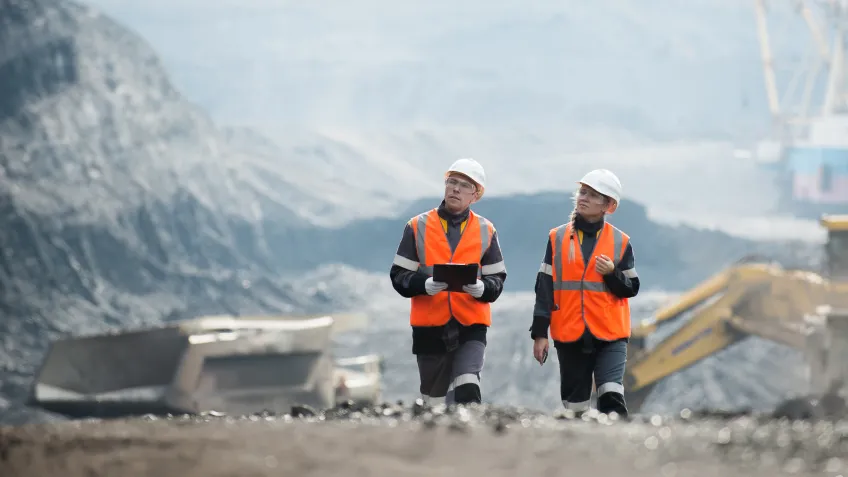
Historically, many of these processes relied heavily on manual supervision and reactive investigation, inevitable leading to blind spots. Cameras were installed primarily to capture images for analysis after an incident had already occurred.
Fortunately, mining operators are moving toward proactive safety strategies supported by connected systems and centralized platforms. Instead of reviewing footage after an event, operators can use analytics and integrated systems to identify and mitigate unsafe behaviors or conditions in real time.
Safety technologies are also being used as educational tools. For example, alerts tied to unauthorized access or unsafe movement patterns can be used as examples in staff training programs.
This approach can also improve adoption among workers and contractors. In environments where surveillance technologies may initially raise concerns around monitoring or disciplinary action, operators can position these systems as tools that support worker safety and ultimately build trust.
The role of technology in improving mining safety
Mining environments present unique operational challenges for safety teams. Large-scale facilities often span remote terrain where workers operate in confined underground spaces. If something does happen, there can be a delay between spotting and reacting to the incident. Network cameras can support live monitoring and post-incident investigation, while analytics help identify events that require real-time attention. Edge-based processing allows data to be analyzed directly on the device, reducing bandwidth and storage demands while enabling faster alerts to improve overall safety in mining.
Aside from visual cameras, there are different types of technologies that support different safety needs. For example, thermal imaging is capable of monitoring heat, smoke, or people in low-light conditions, providing important information in a particular scene. Radars monitor long distances and detect movement in challenging weather or outdoor environments. Access control helps ensure that only authorized and appropriately trained workers enter specific areas while audio systems are used to broadcast warnings or instructions across a site.
The growing implementation of autonomous and semi-autonomous mining equipment also supports the shift to a more proactive approach to safety. Instead of relying on workers to perform tasks in high-risk environments, these can now be completed by robots and operated. This moves workers out of harm’s way, ultimately reducing the likelihood of an incident occurring.
Common mining hazards and how technology can help mitigate them
Monitor for correct personal protective equipment (PPE) usage
Personal protective equipment remains one of the most important safeguards in mining environments. Hard hats, respiratory protection, hearing protection, and high-visibility clothing all help reduce worker exposure to hazardous areas. However, maintaining consistent compliance across large sites with contractors, rotating shifts, and multiple operational zones can be difficult.
Networked solutions help improve visibility into high-risk areas and reinforce safety procedures. Analytics-enabled cameras support PPE compliance efforts by identifying whether workers entering specific areas appear to be wearing required protective equipment. In some cases, deploying advanced analytics may be able to recognize site or customer specific PPE requirements.
Detect unauthorized access to restricted or hazardous areas
Mining sites contain many areas where unauthorized access poses serious risks, including blasting zones, heavy machinery corridors, conveyor systems, processing facilities, and inactive mine sites.
The challenge is not limited to intentional trespassing. Workers can unintentionally move outside designated walkways or enter areas where conditions have changed rapidly. Networked solutions help operators improve awareness around these risks through video analytics, thermal monitoring, and access control systems that detect restricted-area entry.
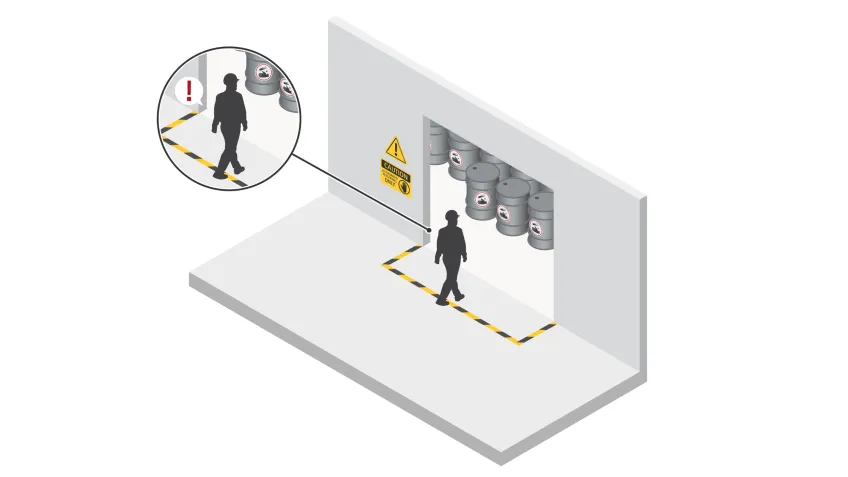
Access control systems further support worker safety by integrating with HR or training databases. This can help ensure workers only enter areas where they hold the required certifications or safety clearances, reducing administrative burden while improving consistency around safety procedures.
Recognize smoke and early signs of fire
Fire risks remain a major concern across mining operations due to the presence of electrical systems, fuel storage, industrial equipment, conveyor systems, and underground infrastructure.
Thermal imaging technologies support earlier detection by identifying abnormal heat signatures or temperature changes before visible flames or smoke appear. This allows operators to trigger evacuation or other emergency procedures quickly.
These technologies are especially valuable in environments where manual inspections are difficult or where operations run continuously. When integrated into broader monitoring platforms, thermal systems can support both operational safety and environmental compliance.
Control exposure to harmful dust and gases
Dust, gases, and airborne contaminants remain ongoing concerns in many mining environments. Exposure to hazardous substances can create immediate risks while also contributing to long-term occupational health issues.
While no single technology can fully address every environmental hazard, connected systems help improve visibility into changing site conditions. Environmental sensors, analytics platforms, and integrated dashboards work with other mining safety systems to support situational awareness across the site.
In some cases, operators may integrate specialized third-party environmental sensors into centralized monitoring platforms to improve oversight around air quality, volatile organic compounds, or other environmental indicators. Increasingly, mining companies are also exploring how analytics and ecosystem technologies support safer re-entry following blasting operations or improving visibility in difficult conditions.
Prevent vehicle collisions with proximity detection
Vehicle-related incidents remain one of the most significant hazards across mining operations. Haul trucks, loaders, forklifts, and contractor vehicles often operate simultaneously in confined or visibility-limited environments where dust, blind spots, and poor lighting can increase risk.
Monitoring systems can help improve situational awareness around vehicle movement and worker safety. Analytics support traffic monitoring and identify congestion points across the site. Thermal imaging and radar technologies also improve visibility where visual or manual systems may struggle.
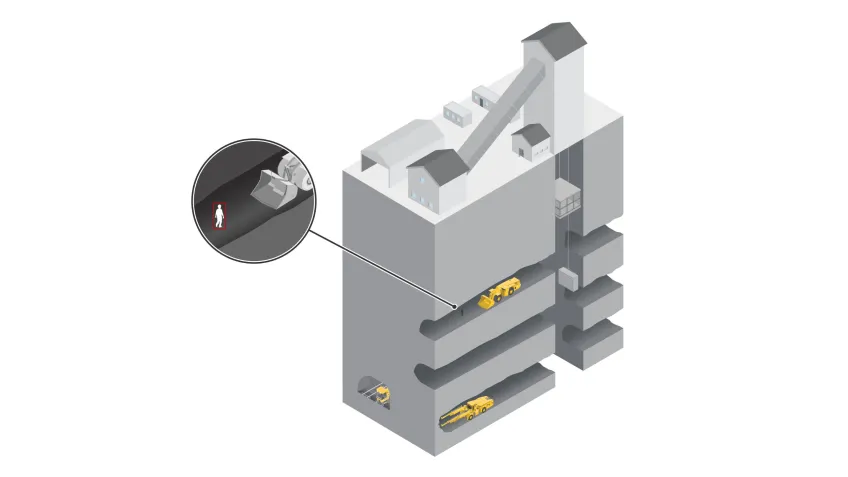
For autonomous or semi-autonomous mining operations, maintaining visibility around pedestrian movement becomes increasingly important. Analytics also help reinforce designated walkways and alert operators when individuals move into dangerous areas.
Identify signs of driver fatigue in real-time
Fatigue remains a major contributor to mining incidents worldwide. Long shifts, remote operations, and physically demanding environments all affect concentration, reaction times, and decision-making.
Technology alone cannot eliminate fatigue-related risks, but connected systems help operators improve awareness around unsafe behaviors. Access control systems help ensure workers meet certification or shift-management requirements before entering specific areas, while monitoring technologies can help identify deviations from normal procedures.
Avoid accidents by monitoring traffic and speed
Vehicle-related incidents remain one of the most significant mining safety risks. Large machinery and workers often share the same environment, where dust, blind spots, and poor lighting make hazards difficult to spot. Connected technologies provide operators with a clearer understanding of traffic flow and vehicle activity. By identifying and alerting on speeding, areas of congestion, or general traffic flow, these systems help reduce collision risks.
Monitor contaminated water levels
Mining operations often rely on water throughout the excavation and processing cycle, making effective containment and monitoring essential. Leaks or overflows from contaminated water storage areas create environmental risks which can be expensive to address. Visual cameras help operators remotely monitor ponds, tailings facilities, and other critical infrastructure, providing visibility into changing conditions without requiring frequent site inspections. Combined with environmental sensors and centralized monitoring platforms, these technologies help operators take action before contamination spreads beyond the site.
Conclusion
Mining safety continues to evolve alongside the broader transformation of the mining industry itself. As operations become more digitalized, automated, and data-driven, traditional approaches to safety management are being supplemented by technologies that improve visibility, situational awareness, and the ability to respond.
The combination of visual cameras, analytics, thermal imaging, radar, audio, and access control technologies help mining operators improve visibility across their sites and identify risks earlier. Safety can be enhanced across different timeframes. From real-time alerts that enable rapid intervention, to near-term detection of emerging risks and accidents before they happen, and post analysis of data supports improved training, procedures, and safety standards long term. When combined with strong safety procedures, training, and a safety-first culture, these tools can support decision-making and help reduce risk across the mining lifecycle.
Ultimately, improving mining safety must go beyond identifying incidents and instead focus on creating environments where risks can be identified and addressed before they escalate. This will help protect workers while supporting more resilient operations.
FAQs
Frequently asked questions about mining safety.
What are the top three most common hazards in mining?
Some of the most common mining hazards include vehicle-related incidents, worker exposure to hazardous environments, and human error linked to fatigue or unsafe operational behavior.
Additional risks can include fires, blasting incidents, poor air quality, unauthorized access to dangerous areas, equipment failures, and environmental hazards such as contaminated water leaks or gas exposure.
What is the role of safety agencies in the mining industry?
Safety agencies establish and enforce regulations designed to protect workers and improve operational safety across mining environments.
In North America, organizations like MSHA oversee mine safety regulations and inspections, while CCOHS regulate broader workspace safety requirements. Other countries operate under their own national mining safety authorities, including Safe Work Australia, the UK Health and Safety Executive, and South Africa’s Department of Mineral Resources and Energy.
International organizations such as the International Labour Organization (ILO), the International Council on Mining and Metals (ICMM), and ISO also help shape global best practices around mining health and safety.
How has technology made mining safer?
Technology has helped improve mining safety by increasing visibility into operations, supporting real-time monitoring, improving communication, and helping operators identify risks earlier. Rio Tinto’s fully autonomous ‘Mine of the Future’ integrates AI, autonomous trucks, and a centralized operations center in Australia. This approach has reportedly cut safety incidents by 50% since 2020.
Connected systems such as network cameras, analytics, thermal imaging, access control, radar, environmental monitoring, and remote operations platforms can support proactive safety strategies while helping reduce worker exposure to high-risk environments.
Why is proactive safety important in mining?
Proactive safety strategies help mining operators identify and address risks before incidents occur.
Instead of relying solely on reactive investigations after an event, proactive approaches use monitoring, analytics, training, and operational controls to improve situational awareness and strengthen decision-making in real time.
Can cameras replace traditional mining safety procedures?
In short, no. Connected cameras and analytics are designed to support mining safety strategies rather than replace existing safety procedures or human oversight. They help to offer additional insights and call attention to activities but must be part of a cohesive people, process, and technology framework.
These technologies can improve visibility and operational awareness, but they work most effectively when integrated into broader safety programs that include training, compliance procedures, maintenance, and emergency response planning.
