

Juggling the demands of one business location is tough enough. But managing two, ten, or even a hundred is a completely different challenge. As your business grows, so can the complexities. What worked for a single site quickly becomes inefficient and stressful when stretched across multiple locations.
This is where a strategic approach to multisite management comes in. It’s not only about replicating the success of your first location. It’s about building a scalable, efficient, and unified system that empowers your entire organization.
This article will guide you through the essentials of effective multisite management, with a focus on cloud-based solutions. We’ll explore the key features, highlight the benefits, and offer insight into industries that would benefit greatly for those managing multiple sites.
By the end, you'll have a clear roadmap to turn your collection of individual sites into a cohesive and powerful network.
What is multisite management?
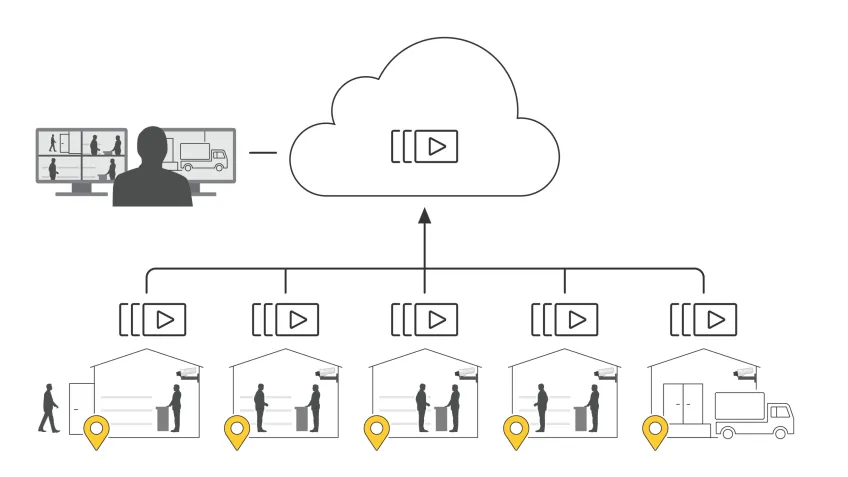
At its core, multisite management is the strategy and process of overseeing all of your business locations from a single, central point of control. It’s the answer to a critical question that growing businesses face: “How do we ensure every location, whether it's a retail store, a branch office, or a warehouse, operates efficiently and consistently under the same company-wide standards?”.
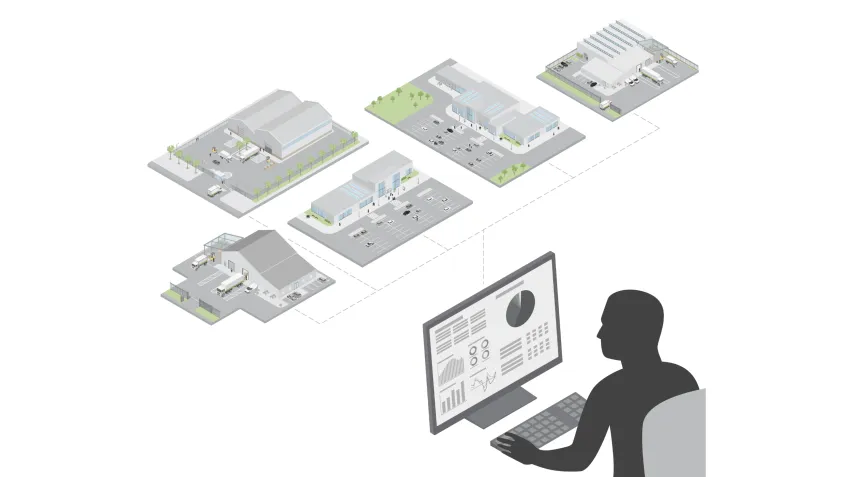
Think of an orchestra conductor. Each musician (or site manager) is an expert at what they do, but they need a conductor to set the tempo, unify their efforts, and ensure they all work together in unison.
Without that central guidance, you don’t have a symphony, you have a cacophony.
Multisite management isn’t just about top-down control. It’s about creating a unified system that delivers three key benefits:
- Centralization: Instead of having siloed operations where each site has its own way of doing things, you bring critical functions together, and gain visibility across all sites for a unified picture. This could involve managing security systems, tracking inventory, or handling administrative tasks from one central hub.
- Optimization: Through on-premises or cloud video management system you can see the performance of all your sites at once, you can make smarter, faster decisions. You can spot trends, identify top-performing locations, and quickly address issues at sites that are falling behind. The system can notify you before something goes wrong for proactive management.
- Standardization: It ensures that your security, operations, and customer experience stay consistent everywhere. You should be able to expect the same level of security and operational excellence regardless of if you're looking into an existing site in California or a new branch in Singapore.
9 features of multisite management systems
A strong multisite management platform includes a range of features designed to simplify operations while improving control and visibility. Below are nine key features that define effective systems.

1. Ensure scalability
Adding a new location should feel closer to plugging in a router than to launching an IT migration. The best platforms let you onboard a site, register its devices, administrate different users and roles with different permissions, and inherit your existing configuration templates in hours, not weeks. It should be just as easy to setup and manage one site as it is to add 100’s of sites
2. Enable remote access management
Remote access should give you the same depth of control you'd have standing in the server room. Can you reboot a device? Push a firmware update? Pull a camera's diagnostic log? If remote access only lets you view dashboards but not act on them, it's monitoring, not management.
This can, for instance, be done through a video management system (VMS) or a device management application.
3. Manage multiple devices
A mid-sized retail chain might have 40 cameras, 15 access control readers, a handful of environmental sensors, and a network switch at each of 20 locations. That's over 1,500 devices. Managing them individually is ineffective and time-consuming. Managing them from a single pane, with bulk update capabilities and automated health checks, is the difference between a security team and a help desk.
4. Consolidate storage
Running local storage systems at every site means maintaining hardware at every site. If a drive fails in a location 300 miles away, someone has to go there. Consolidated storage eliminates that dependency and improves visibility through data sharing, while also addressing redundancy.
5. Centralize remote monitoring and viewing
A single dashboard showing every site's camera feeds, alarm status, and device health is the operational core of multisite management. It gives you situational awareness of all your sites, with an easy and consolidated overview of critical alarms and other analytics events and notifications.
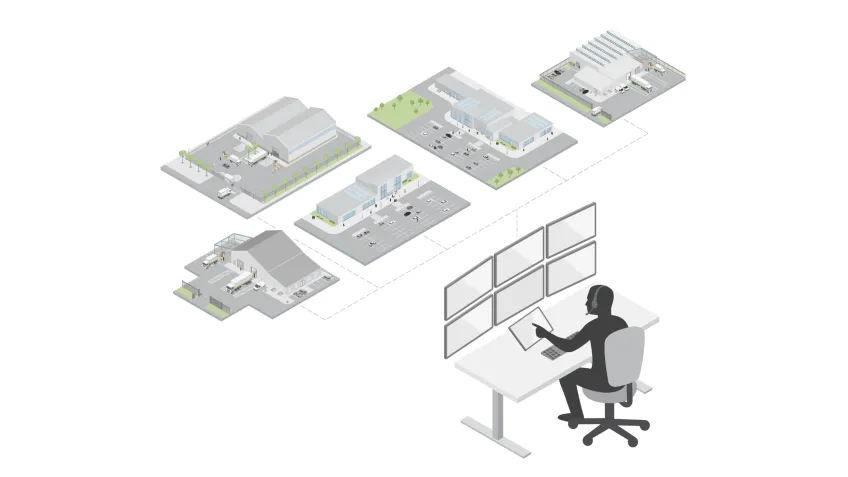
Through remote access you are also able to access the information at anytime from anywhere enabling you in real-time to see the three cameras that detected motion after hours and the two devices that went offline during the night.
6. Improve reporting
Individual site reports tell you what happened at one location. Cross-site reporting tells you what's happening across your organization. Which sites have the highest alarm volumes? Where are response times lagging? Are certain locations consistently failing device health checks?
7. Support decision making
Dashboards full of green status indicators give you real-time information that your system is up and running, but don't always drive decisions. The platforms that best support decision-making flag trends before they become problems and indicate possible business opportunities by correlating data across systems.
8. Streamline alarm management
Handling alarms across multiple locations can be overwhelming. Centralized alarm management prioritizes alerts, reduces false alarms, and ensures faster response times when integrated with cloud based remote monitoring and management tools.
9. Simplify video export
For investigations, audits, or compliance, exporting video footage should be quick and secure. A cloud video management system simplifies video export by allowing authorized users to retrieve footage from any site without complex manual processes.
7 benefits of a multisite surveillance system
When multisite management is applied to surveillance and security, the benefits extend beyond protection. A multisite surveillance system delivers operational and strategic advantages across the organization.
1. Increase efficiency
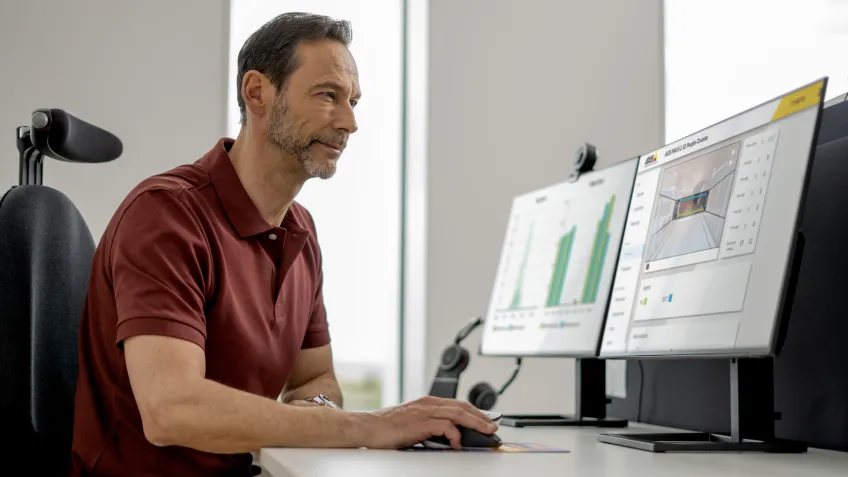
Centralized management reduces duplication of effort. Instead of managing each location separately, teams can oversee all sites through one platform, streamlining workflows and saving time.
2. Lower costs
By leveraging cloud infrastructure and centralized systems, organizations reduce time spent on hardware update and maintenance, and staffing costs. A single multisite manager or operations team can handle tasks that previously required multiple on-site resources.
3. Improve security
With real-time remote monitoring and centralized oversight, security teams can detect and respond to incidents faster. Consistent security policies and having devices updated with the latest firmware across sites reduce vulnerabilities and improve overall protection.
4. Simplify operations
Multisite operations become more manageable when processes are standardized. From device configuration and maintenance to incident response, a unified system ensures consistency and reduces operational complexity.
5. Gain data-driven insights
Aggregated data from multiple locations provides valuable insights. Organizations can analyze patterns, identify risks, and optimize operations using information gathered through multisite management platforms.
6. Support business growth
As businesses expand, multisite management enables seamless onboarding of new devices and locations. The ability to scale quickly without losing control is a major competitive advantage.
7. Enhance incident response
Centralized alarm and video management allow faster, more coordinated responses to incidents. Security teams can assess situations in real time and deploy appropriate actions across all affected sites.
5 Industries that would benefit from multisite management
Multisite management is not limited to one sector. Below are five industries that can significantly benefit from adopting a centralized, cloud-based approach.
Retail chains
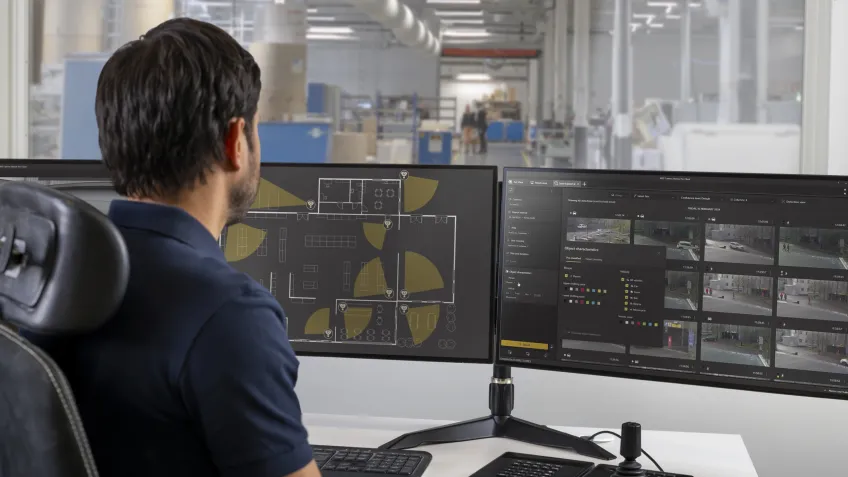
In multisite retail environments, consistency is critical. Retail chains use multisite management to monitor stores, prevent theft, analyze customer behavior, and ensure compliance. Through cloud remote monitoring and a cloud video management system, retail managers can oversee multiple stores, compare performance, and respond quickly to incidents without being on-site.
Large campuses and school districts
Educational institutions often manage multiple buildings spread across large areas. Multisite management enables centralized security monitoring, public address, access control, and incident response. A multisite manager can ensure student safety, monitor facilities, and coordinate responses across campuses using cloud-based remote monitoring and management solutions.
Hotels
Hotel chains rely on consistent guest experience and strong security. Multisite management allows hotel operators to monitor entrances, common areas, and back-of-house operations across properties. With remote monitoring and centralized reporting, hotel managers can maintain standards, improve safety, and optimize staffing across locations.
Construction sites
Construction companies often operate multiple temporary sites simultaneously. Multisite management helps track equipment, monitor safety compliance, and prevent theft. Using cloud-based video management systems, project managers can remotely monitor progress and respond to issues without traveling between sites with mobile surveillance.
Warehouses
Warehouses are critical hubs in supply chains, often spread across regions. Multisite management supports centralized oversight of security, inventory movement, and operations. A multisite manager can use cloud video management systems and analytics to reduce losses, improve efficiency, and ensure smooth multisite operations.
Conclusion
Consider the site in your portfolio that concerns you most. The one where you suspect device firmware is outdated, camera uptime is inconsistent, and alarm handling doesn't match the standards set at your strongest locations.
An effective multisite management platform closes that gap. Within 90 days, that site should experience improved security, increased efficiency, and simplified operations through data-driven insights. All of this, combined with the other values and benefits of multisite management, will ultimately save you money.
That is the practical measure of everything this article has discussed. The value of multisite management is not an abstract improvement in scalability or operational efficiency. It is the measurable reduction in variance between your highest-performing location and your lowest. When that variance narrows to the point where no single site represents a meaningful liability, the platform is doing its job.
