

Investment is not without risk. With often large amounts of money involved, ensuring the reward outweighs the risk could be costly to get wrong.
The same is true of your security system cost as it is with any other large purchase. This is why making such a decision based solely on the initial cost, without truly understanding what else is required, could leave you exposed to greater risk down the line, without you even knowing it.
In this blog post, we will delve into why understanding the total cost of ownership (TCO) is critical for any new security system and provide you with insights into how to calculate TCO, to turn your purchase into a smart investment.
What is TCO?
To first understand what those insights are, it’s important to know what exactly total cost of ownership means. TCO refers to the full cost of acquiring, installing, using, and maintaining a product or service throughout its entire lifecycle.
Rather than focusing only on the initial purchase price, TCO includes additional security system costs such as implementation, operation, maintenance, training, as well as eventual replacement and decommissioning.
When you make that initial purchase, it may not be part of your thinking to factor in potential future costs. However, this opens you up to surprises down the line with installation, implementation and operation costs all under the TCO umbrella.
Even those ‘what if?’ costs that may occur over time. From hardware and software upgrades, product maintenance, to onboarding and updating training requirements. Keeping them in mind at the point of purchase can save you money.
By understanding the total cost of ownership ahead of time, you can better position yourself to make an informed decision, instead of jumping in on the upfront cost.
How much does a security system cost?
When you factor in that an average security system can typically last anywhere from seven to 10 years, that initial cost can be forgotten once those long-term extra costs build up.
In fact, if you were to take a guess at just how much of the initial purchase cost comprises the total cost of ownership, it may surprise you to learn it can be as little as 30%. And that is across the entire lifespan of the system.
With 70% of costs therefore potentially hidden under the surface, that reality can bite hard down the line for someone who bought a system based on camera price alone. This really highlights the importance of considering the indirect security system costs.
Those future expenses and hidden costs can be greatly impacted by the choices you make early in the purchase process. Thinking about the TCO is a surefire way to protect yourself.
So have in mind questions like “What upgrades might I need in future?”, “How many staff might I need to train to use it?”, “What’s the power consumption?”, or “How often should I replace parts?”. Because in five years’ time, you’ll be thankful you did.
Key elements of total cost of ownership
To truly understand the comprehensive security system cost over its lifespan, it's vital to break down the key components that contribute to its total cost of ownership.
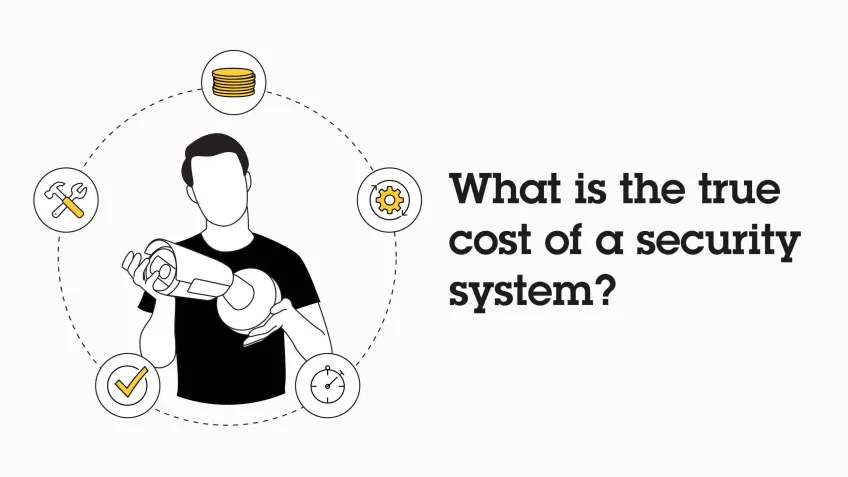
This section will delve into three crucial aspects providing a clearer picture of the investment required:
- Initial acquisition
- Ongoing operational expenses like storage
- Various indirect expenses
1. Initial acquisition costs
When discussing initial security system costs, we typically look at the purchase price of hardware, software licenses, delivery, and installation.
Unfortunately, too many conversations around requirements focus on the cameras alone, without considering the broader requirements of the system as a whole – from energy use to storage needs.
It might be tempting to focus the budget conversation on cameras, rather than where money will need to be spent to operate and maintain those cameras. Yet the security system will need to support your needs for the foreseeable future.
2. Storage costs
Beyond the initial security system cost, the cost to store recorded footage is one of the most significant ongoing expenses. Different regions have different legislations as to exactly how long you need to store footage, so it is worth finding out to avoid complications.
Regulations, such as GDPR and HIPAA, will determine how long footage needs to be stored, thus making storage a considerable factor in overall storage costs.
To avoid being caught out with significant server and electricity expenses after cameras are installed, it’s critical to calculate how the different storage requirements associated with each camera model can impact your total cost of ownership.
It can be a huge risk to purchase cheaper cameras to save money up front, as you will potentially sacrifice that in time with the costs of energy, servers, and storage.
Equally, if you plan to reduce storage costs by shrinking video file sizes, you must choose devices that don't compromise image quality. This can be an issue in, for instance, evidence gathering, to the point that it’s no longer possible to identify a suspect or incident
Remember, compressing video can pixelate or blur the image, and that’s not a saving, that’s a sacrifice. Fortunately, modern cameras often include sophisticated technology to solve this dilemma.
These technologies can reserve crucial forensic detail while lowering bandwidth and storage requirements—and therefore, long-term costs.
They might even help you reduce your TCO further by removing the need for additional external lighting.
It is always worth verifying claims of high-quality footage with low storage requirements before you install the system to ensure it meets your expectations.
3. Indirect expenses
The type of device you choose will influence the expenses far beyond storage. A forecast of the total cost of ownership must also include ongoing expenses for monitoring, maintenance, and electricity use.
Once you crunch the numbers, the costs can start to build up quite quickly but crucially, the devices you choose will have a direct impact on the extent of these figures.
Opting for more economical cameras and devices at the start can result in staggering indirect expenses.
By contrast, choosing higher quality cameras and devices at the outset, you can cut those indirect security system costs in the long-term. This will free up savings which you can use to reinvest in and grow your business faster.
Simulating the total cost of ownership
As we've explored, the true cost of a security system extends far beyond the initial purchase.
To turn that purchase into a smart investment, it's crucial to understand the total cost of ownership. This is precisely where a TCO-simulator, such as the one offered in AXIS Site Designer, can provide valuable insights.
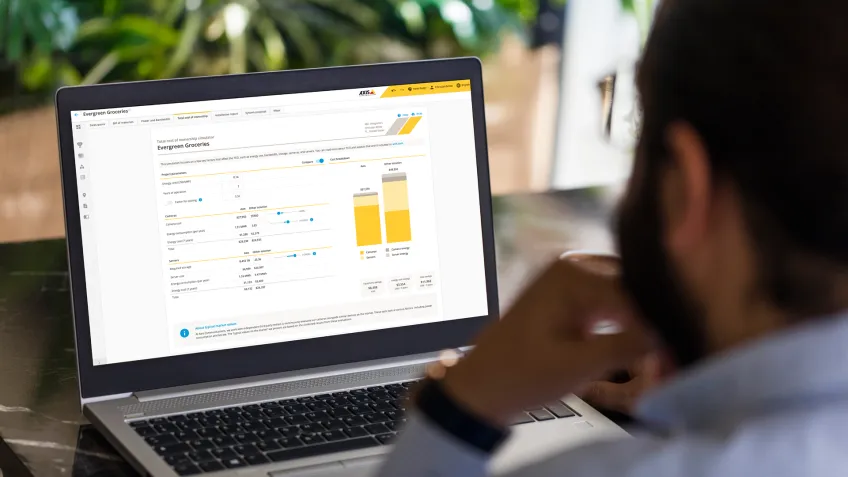
It models key factors like energy costs and device lifespan based on your selected devices and storage requirements, giving you a clear overview of what will drive costs over time.
By also comparing your proposed system against competitor benchmarks, it provides a tangible estimate of your potential long-term savings.
Final words on security system costs
Throughout this blog we have explained that the question ‘How much does a security system cost?’ goes far beyond the initial purchase.
By considering how your decision on which type of camera to buy can impact the chain of future costs, you can shift the purchasing decision into an investment. Achieving this can be as simple as asking yourself just a few questions:
- What camera functionality do I require?
- How much storage will I need if I purchase those cameras?
- How much electricity will be required to run the system in the long run?
- How do the technologies these cameras offer play into the total costs?
In short, taking the time to ask the right questions at the outset – and finding partners who are open to answering those questions.
By understanding how to calculate the total cost of ownership you can avoid any nasty surprises in future electricity, storage, operational or maintenance costs.
Importantly, it will also ensure that you end up with the security system that is right for your specific requirements.
Find out which five steps can help you make the most of your security system investment.
