

When thinking of technology in law enforcement, the image that most likely comes to mind would be police dashboard cameras. We’ve all seen footage of traffic stops or police pursuits, but the reality is that police dash cams serve a deeper purpose than just recording.
In scenarios where tensions can escalate quickly, having an objective witness can go a long way in keeping the peace. Without it, investigations can become lengthy and public trust damaged.
In this blog we explore five key benefits of police dash cams for modern law enforcement agencies. We will also break down the nine must-have features to look for when investing in a system that truly protects your officers and your community.
What is a police dash cam and how does it work?
The cameras themselves are actually just one part of a larger system integrated into a patrol vehicle to provide an objective, digital, and forensic eyewitness of every shift.
Before we look at how they work, it’s important to understand how police dash cams differ from commercial ones. A consumer dash cam is often a simple ‘plug-and-play’ device, primarily used for insurance or safety purposes.
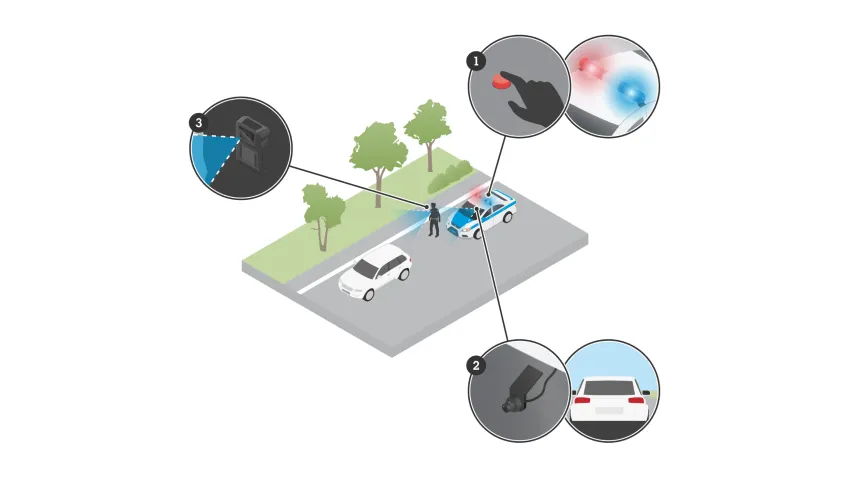
A police dash cam is a highly sophisticated in-car video system, made up of several integrated parts, all designed to capture quality audio and video in any condition:
- Forward-facing camera: This is the primary "eye." It features high-quality optics (often 1080p or even 4K) and advanced sensor technology to handle extreme glare or low-light conditions.
- Cabin camera: This rear-facing camera monitors the car’s interior. It often uses infrared light to capture clear video, even in total darkness.
- Network video recorder: The NVR handles the processes, encryption, and storage of video data.
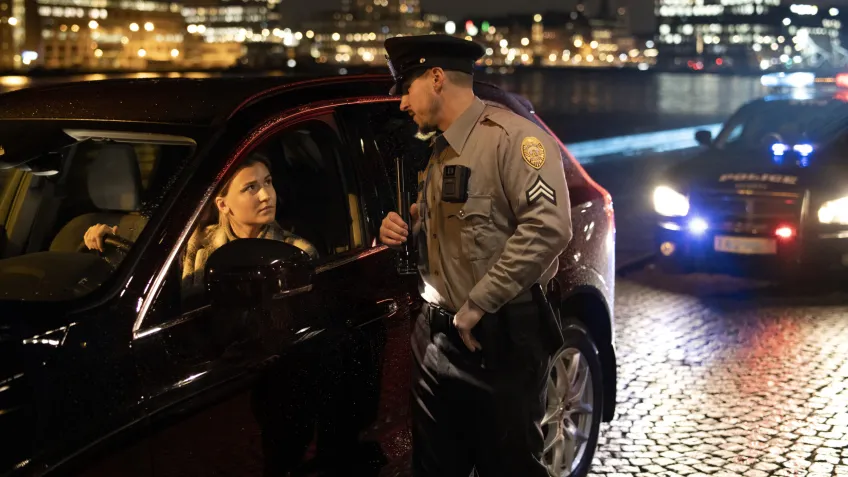
As they are ‘smart devices’ they generally don’t need to continuously record. Instead, they can be activated by event triggers. When an officer manually activates the device, or turns on the emergency lights or siren, the camera automatically begins saving footage.
One of the more advanced features is pre-event buffering. The camera is always "looking," but not saving. When a trigger occurs, the system archives the 30 or 60 seconds of video prior to activation, with many law enforcement agencies adopting 120 seconds.
This ensures that any context leading up to an incident or stop, such as a vehicle swerving, is never lost. Once the shift ends, the encrypted data is wirelessly uploaded to a secure server for evidence management.
The 5 key benefits of implementing a dash cam program
As mentioned before, police dash cams may just be thought of as a tool for recording footage, but their usage goes far beyond that. Here we will look closer at 5 key benefits of adopting a dash cam program:
1. Enhance officer safety and training
Dash cams significantly enhance officer safety through what is known as the "observer effect". This is the behavioral science theory in which the behavior of individuals may change when they know they are being watched. The presence of a digital witness often discourages a suspect’s aggression and naturally de-escalate encounters.
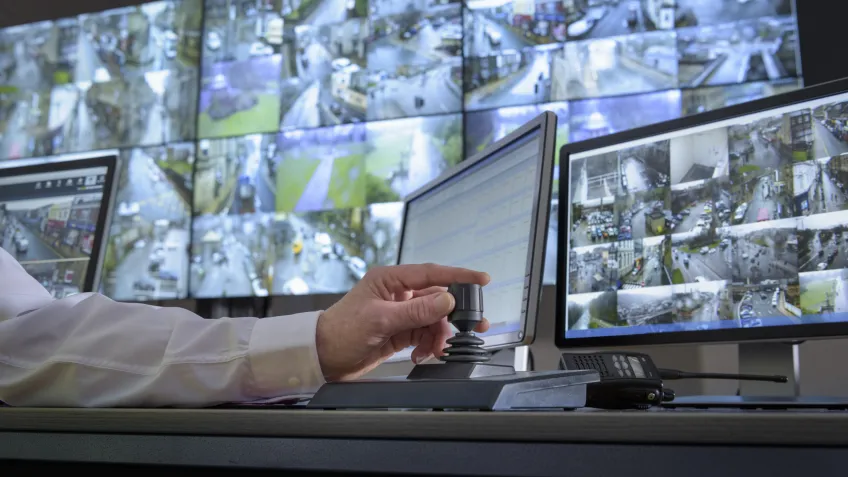
Should situations ever spiral beyond the control of a single officer or crew, integrated GPS provides critical real-time support. Real-time crime centers, like those used by the Las Vegas and Los Angeles Police Departments, utilize live streaming from in-car systems. This allows command staff to access live footage during emergencies and coordinate a precise and well-informed response.
Additionally, the system documents tactical positioning. During high-risk stops, officers are trained to use their vehicle as cover. The dash cam records the officer's movements, ensuring they are following safety protocols, such as maintaining a "reactionary gap" between themselves and the suspect.
In relation to training, dash cam footage allows for after action reviews that are grounded in fact rather than memory.
Training Officers (TO) will often review dash cam footage together with a recruit. They can analyze their tone of voice, their stance, and how they handled complex legal situations.
Departments, such as the LAPD Training Division, also curate a best practices video library of perfect de-escalation or flawless tactical maneuvers to show real-life examples in academies. Conversely, they study "near-misses" to ensure the same mistakes aren't repeated. This practice was expanded following the 2020 Department of Justice Collaborative Reform Initiative.
2. Improve evidence collection and admissibility
The strength of a dash cam lies in its ability to capture details that might otherwise be missed during a high-stress encounter. The systems are integrated with the vehicles, capturing metadata such as GPS coordinates, vehicle speed, and the moment the sirens were activated.
For video to be used in court, it must meet strict legal requirements for authenticity and the chain of custody. Police systems are designed with these in mind:
- Tamper-Proof Encryption: Unlike consumer cameras, police footage is encrypted at the point of capture. This prevents unauthorized viewing or alteration, ensuring the video remains a true representation of the events.
- Digital Signatures and Hashing: When a file is created, the system applies a unique digital fingerprint using a cryptographic hash function like SHA-256 (Secure Hash Algorithm). If even a single pixel were changed, the hash would no longer match, alerting the court to potential tampering
- Automated Chain of Custody: The footage is automatically uploaded to a secure server. Every time the file is viewed, moved, or copied, the system creates an audit log. This proves the evidence has been handled properly from the moment it was recorded until it reached the courtroom.
3. Increase accountability and transparency
Of all the advantages police dash cams bring, few are as directly tied to community trust as accountability. In 2015, the President's Task Force on 21st Century Policing identified transparency and accountability as the first pillar of police legitimacy. Explicitly recommending the adoption of camera systems as a mechanism for achieving both.
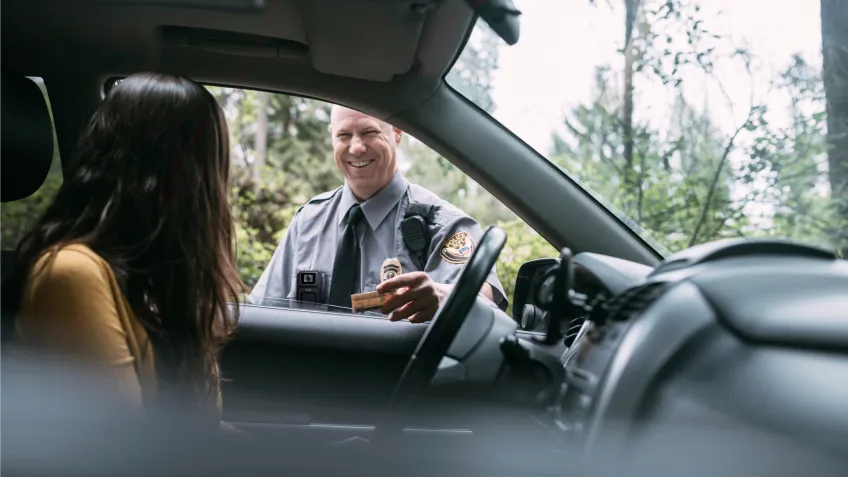
For officers and the public, video footage provides a more objective and verifiable record of an interaction than memory or testimony alone. While no camera captures every angle or nuance, a time-stamped, metadata-rich recording is a strong foundation for review.
This matters most when complaints arise. When a complaint is filed against an officer, dash cam footage allows investigators to review the actual interaction. If the officer acted professionally and within policy, the footage becomes their strongest defense.
Conversely, if an officer's conduct is in question, the video provides undeniable evidence for internal affairs and civilian oversight bodies. The result is a system where accountability works in both directions. Officers are protected from unfounded allegations, and communities can see that misconduct is identified and addressed.
4. Reduce citizen complaints and lawsuits
Police departments across the country face a persistent and expensive challenge: the financial and institutional cost of complaints, misconduct allegations, and civil litigation. What is often underappreciated is how significantly a well-implemented dash cam program can reduce all three.
As mentioned previously, the "observer effect" often de-escalates tense situations from the start, leading to a drop in the number of complaints filed against officers.
For those complaints that do move forward, video provides an objective, unbiased record. It allows departments to swiftly dismiss unfounded allegations, protecting officers from false claims and saving the immense cost and time associated with internal investigations and frivolous lawsuits.
5. Streamline incident reporting and documentation
Dash cam footage can dramatically lighten that load of officer paperwork. Instead of relying solely on memory to recount a complex or stressful event, reviews can be carried out by investigators to ensure their reports are accurate and detailed.
This process makes for stronger cases by creating a direct link between the officer's report and the video evidence. It reduces administrative overhead, minimizes reporting errors, and gets officers back into the community faster.
9 must-have features to look for in a police dash cam system
The features you select will directly impact how effective the technology is in the field. Here are the nine essential capabilities that every modern law enforcement agency should look for.
High-definition video quality
Video quality is vital. If the footage isn't clear, it's not useful. High-definition (HD) or 4K resolution should be essential as it captures the small but critical details, like facial features, vehicle markings, or a suspect's actions. All details that can make or break a case in court.
Wide-angle lens and 360-degree coverage
A wide-angle lens on the forward-facing camera captures a broad field of view, while an additional camera covering the rear of the vehicle provide a full 360-degree picture. This complete coverage ensures you see events unfolding on the periphery, not just what is directly ahead, providing crucial context for any investigation.
Automatic activation triggers
Automatic triggers are a must-have because they ensure the camera starts recording the moment an incident begins. Systems can be configured to activate automatically when the light bar or siren is turned on, the vehicle reaches a certain speed, or even when the car door opens. Ensuring that critical moments are never missed.
Pre-event recording
What happens in the 30 seconds before the sirens are switched on? Pre-event recording functionality answers that question. The system continuously buffers video, so when the camera is triggered, it automatically includes a recording of the moments leading up to the event.
Secure and redundant storage
A reliable system needs a two-pronged approach to storage. Secure, encrypted on-device storage ensures data security is high in the vehicle. Automatic offloading to a centralized or cloud-based storage system provides a redundant backup. This protects the chain of custody and makes the footage easily accessible for authorized personnel.
Integration with body-worn cameras
Dash cams and body-worn cameras shouldn't operate in silos. When these systems are integrated, they create a single, synchronized record of an incident from multiple viewpoints. For example, activating the car's light bar, or accessing the gun rack could automatically trigger both the dash cam and the officer's body cam. This creates a seamless, comprehensive evidence ecosystem that simplifies management and strengthens prosecutorial cases.
GPS and geofencing capabilities
GPS tagging automatically embeds location data into the video file, creating an exact record of the vehicle's position and speed. Geofencing can also be used to automatically turn cameras on or off when a vehicle enters or exits a specific area.
Wireless offloading
Modern systems use secure Wi-Fi or cellular connections to automatically offload video footage when the patrol car returns to the station. This evidence management process is more efficient and far more secure than traditional methods. It minimizes the risk of evidence tampering or data loss, ensuring the integrity of every recording from the car to the courtroom.
Night vision and low-light performance
A large portion of police duties occur at night or in poorly lit areas, making low-light camera performance a critical feature. For a dash cam to be effective, it must be able to produce clear, evidentiary-quality footage regardless of the time of day.
Modern police dash cam systems achieve this through highly sensitive image sensors and advanced processing technologies that maximize available light. These sensors are designed to work in tandem with the vehicle's headlights to illuminate a scene.
This allows the camera to capture sharp, detailed images, ensuring that crucial information like license plates and individual actions are clearly visible even in dark environments.
Understanding the different types of police in-car cameras
While we often use the term "dash cam," an in-car video system is much more than a single camera on the dashboard. It's typically a multi-camera setup designed to capture a complete picture of any event.
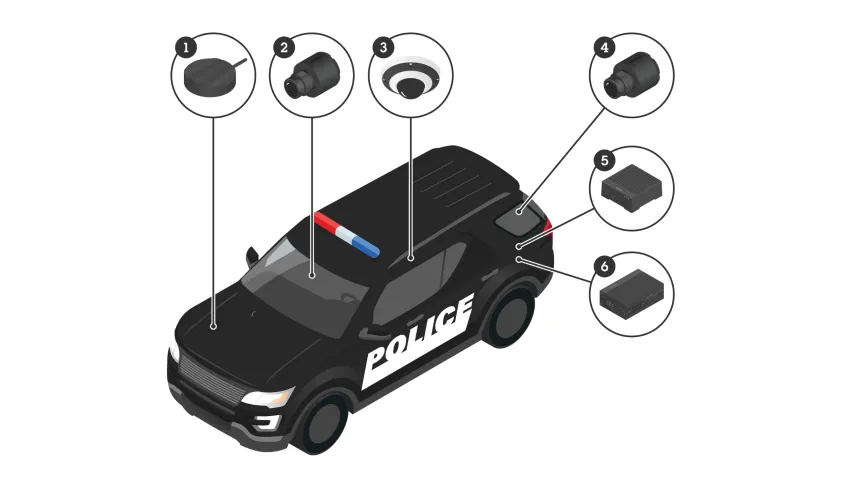
The primary front-facing camera captures the view through the windshield, just like a consumer dash cam. However, law enforcement systems add a rear-seat camera to record the back seat and transport area, as well as optional side cameras to monitor the vehicle's blind spots. Together, these create a comprehensive, panoramic, and tamper-proof record of every angle.
How police dash cams and body cameras work together
Dash cams and body cameras are powerful tools on their own, but they are truly transformative when they work as a team. Think of them as two different perspectives telling the same story. The dash cam provides a fixed, wide-angle view of an incident, showing the overall scene and how events unfolded from the vehicle's perspective.
The body camera, on the other hand, offers the officer's first-person point of view. It goes where the officer goes, capturing close-up interactions and events that happen away from the car.
Conclusion
From protecting officers against false claims to building lasting community trust through transparency, police dash cams are a vital piece of modern law enforcement technology. They provide an unbiased witness for every interaction, streamline the tedious work of documentation, and create a powerful record for training and prosecution.
By choosing a system with the right features, like automatic activation, integrated storage, and crystal-clear HD video, you equip your department with a tool that captures evidence and demonstrates a commitment to accountability. It's an investment that pays dividends in safety, efficiency, and public confidence.
FAQs
Have more questions? Here are answers to some of the most common queries we receive about in-car video systems for law enforcement.
Are police dash cams always recording?
Not always. While some systems can be configured to record continuously, most are set to begin recording automatically when triggered by an event, like turning on the sirens or a sudden change in speed. Many also feature pre-event buffering, which saves the 30-60 seconds of video before the trigger event, ensuring the start of an incident is always captured.
How long is police dash cam footage stored?
Storage duration depends entirely on departmental policy and local regulations. Non-evidentiary footage (like a routine patrol) might be stored for a few weeks or months, while video tied to a specific incident, complaint, or open case is typically retained for several years or even indefinitely, depending on the severity of the event.
Can police officers turn off their dash cams?
This is governed by departmental policy. Generally, officers are not permitted to manually turn off their dash cams during a traffic stop or other official interactions. Systems are designed to be tamper-proof, and there are usually automatic triggers in place to ensure they are recording during critical events. However, policies may allow officers to deactivate them in sensitive situations, such as conversations with a confidential informant, to protect privacy.
What is the difference between a consumer and a police dash cam?
The key differences are durability, security, and features. A consumer dash cam is a simple, forward-facing camera designed for personal use. A police in-car system is a rugged, multi-camera solution built to withstand the rigors of police work. It includes features like automatic activation, pre-event recording, secure and encrypted storage, and integration with other systems like body cameras—all of which are essential for evidence management and chain of custody.
Do police dash cams record audio?
Yes, they do. In-car systems are equipped with high-fidelity microphones to capture audio both inside and outside the vehicle. Departmental policies, along with state and local laws, dictate when audio recording should be active. Often, officers are required to inform individuals when they are being recorded. This audio is just as critical as the video for providing full context to an interaction.
