

Rail networks are dynamic environments where people, technology, and infrastructure must work together seamlessly. Effective modern surveillance needs to help operators understand what is happening across the network to allow them to make better informed decisions, and create safer, more confident journeys for passengers and staff.
The right onboard cameras solutions can provide valuable visibility wherever it is needed. In this blog, we explore how rail surveillance supports everyday operations and long-term security, with use cases that show its role in creating safer, more efficient, and more resilient rail networks.
Rail surveillance: From basic CCTV to AI-powered systems
The history of rail security began with simple CCTV systems. These early setups were passive, primarily used to record footage for later review after an incident occurred. While a foundational step, they required constant human monitoring to be effective in real-time and offered little in the way of proactive security. These early setups were passive, primarily used to record footage for later review after an incident occurred. While a foundational step, they required constant human monitoring to be effective in real-time and offered little in the way of proactive security.
The evolution to digital and network-based systems marked a significant advancement in train surveillance, allowing for higher-quality video and remote access. However, the most transformative shift has been the recent integration of AI in rail.
Today’s smart railway solutions are helping operators better understand what they are seeing. AI-powered video analytics can automatically detect threats, analyze behavior, and even predict potential issues before they disrupt service.
Core components of an effective rail surveillance system
A modern rail surveillance solution is a sophisticated ecosystem of hardware and software designed to withstand the demanding conditions of a railway environment. Each component plays a critical role in capturing, analyzing, and managing video data to deliver reliable performance.
Select the right cameras for your needs
Onboard cameras must be built to withstand the demanding conditions inside and outside train cars. Choose durable, compact devices that can handle constant vibration, temperature changes, dust, and moisture while delivering reliable video in challenging environments.
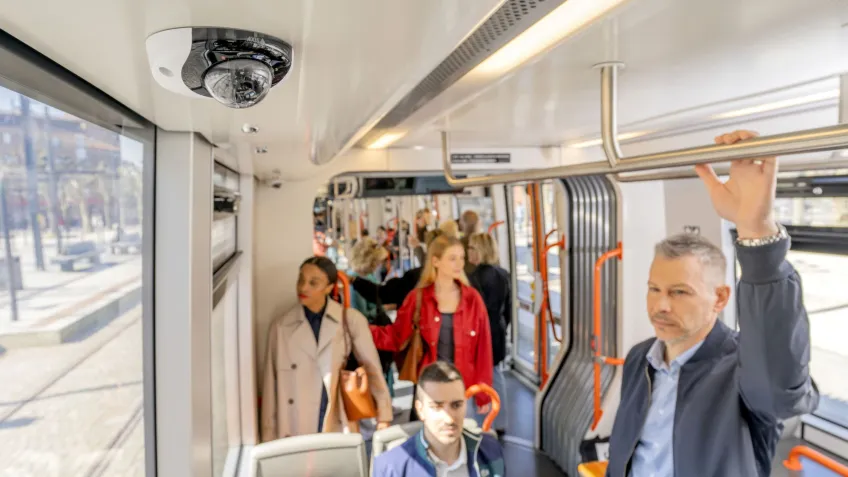
For passenger areas, cameras with wide-angle views can help monitor more of the carriage and support situational awareness. Cameras installed outside the train should provide clear images in changing light and weather conditions, helping operators monitor doors, platforms, and trackside activity.
Features such as low-light performance, wide dynamic range, audio, and remote health monitoring can further improve security while simplifying maintenance across the fleet.
Understand the role of video management software
Video Management System (VMS) is a powerful software platform that brings all your video feeds together into a single, intuitive interface.
For rail operations, it's crucial that the VMS can integrate with other systems, such as access control or emergency communication systems, to create a unified security environment.
Ensure resilient and reliable data storage
Continuous video recording generates enormous amounts of data. An effective rail surveillance system requires a storage solution that is both reliable and scalable.
Many operators use a hybrid approach, with ruggedized onboard storage for continuous recording on the move and network-attached storage (NAS) or cloud-based solutions for long-term retention and centralized access.
This ensures that critical footage is never lost and can be easily retrieved for incident investigation or operational analysis.
What are the benefits of onboard rail surveillance?
Daily safety, security, and operations are just some of the areas improved through implementing a reliable onboard surveillance program. Here are just a few of the areas that can benefit from such an implementation.
Enhance passenger and operator safety
Visible cameras act as a powerful deterrent to crime and disorderly conduct, creating a safer environment for passengers and staff.
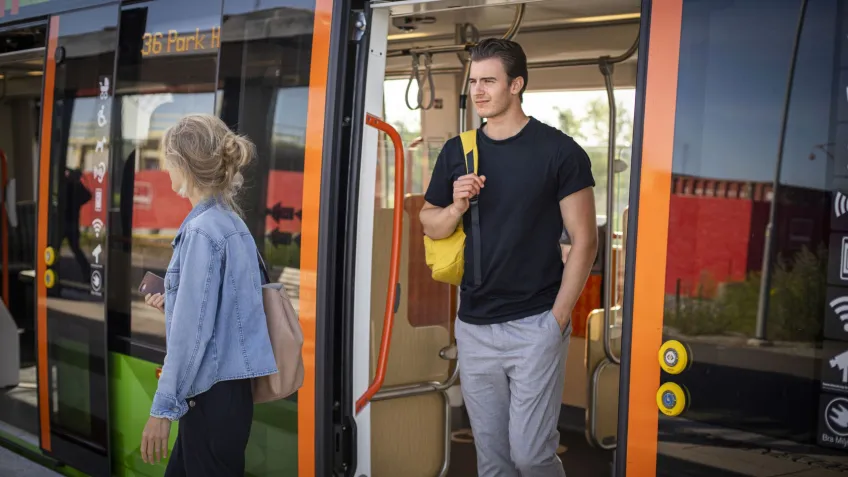
In the event of a medical emergency or a safety incident, control room operators can view the situation in real time, assess what is happening, and dispatch the appropriate response with greater speed and accuracy.
Improve incident response and provide valuable evidence
When an incident occurs, whether that’s a passenger dispute or a serious accident, high-quality video footage is invaluable. It provides an irrefutable and objective record of events that helps investigators understand exactly what happened.
This evidence is crucial for resolving liability claims, addressing staff conduct, and applying corrective actions to prevent future occurrences. Quick access to this data significantly accelerates the incident investigation process, reducing downtime and associated costs.
Optimize operational efficiency and maintenance
Onboard cameras are a powerful tool for operational improvement. For example, forward-facing cameras can record track conditions, helping maintenance teams identify potential issues like vegetation overgrowth or damaged components before they cause a failure.
Monitoring passenger flow and dwell times at stations can provide data to optimize schedules and reduce delays, leading to a more efficient and reliable service.
Prevent theft, vandalism and trespassing
A reliable onboard video system helps deter theft and vandalism while providing clear evidence when incidents occur. Cameras positioned inside train cars can monitor passenger areas, doors and ticketing zones, while exterior cameras help protect equipment and identify unauthorized activity around the train.
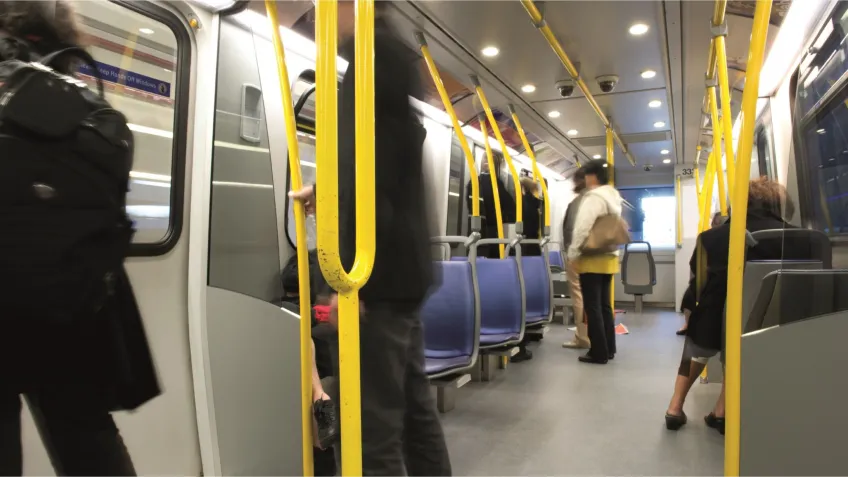
Choose cameras with discreet, tamper-resistant designs, and strong low-light performance to maintain image quality throughout the day and night. Intelligent video analytics can alert operators to suspicious behavior, loitering or unauthorized access, enabling a faster response and helping prevent incidents before they escalate. High-quality recordings also support investigations and insurance or legal claims when necessary.
What are the use cases for AI and analytics in rail surveillance?
AI has turned rail surveillance from a passive monitoring tool into a proactive security and operational necessity. By teaching systems to recognize specific objects, behaviors, and patterns, video analytics automates the detection of threats and provides insights that were previously impossible to obtain.
Automate threat detection and alerts
Onboard cameras with intelligent video analytics can help operators identify potential threats without requiring constant manual monitoring. They can detect events such as unauthorized access, people in restricted areas, objects left behind, or unusual activity around doors and platforms.
When an event is detected, the system can send real-time alerts to the appropriate personnel, enabling a faster response. Automated detection also helps operators focus on the most important incidents, while recorded video provides context for verifying alerts and supporting follow-up investigations.
Analyze patterns for proactive security
AI excels at identifying patterns in massive datasets that would be invisible to the human eye. In a rail context, this capability can be used for proactive security. For instance, by analyzing passenger flow data over time, the system can identify unusual crowding patterns that may indicate a security risk.
By recognizing deviations from normal operational patterns, analytics can help predict potential equipment failures or safety hazards before they cause service disruptions.
Integrate with other security systems
The true power of AI is realized when it is integrated across multiple systems. An AI-enabled VMS can act as the central hub for your entire security operation.
For example, when an emergency alarm is activated, the system can automatically display video from the relevant camera, helping operators quickly assess the situation and coordinate an appropriate response.
Integration with vehicle location and fleet management systems can also link recorded footage to a specific train, carriage, and time, making incidents easier to investigate and manage.
Detect pantograph defects before they cause damage
AI-powered visual monitoring helps rail operators identify pantograph defects before they cause overhead-line damage, service disruptions, or costly repairs. High-speed cameras and line-scan technology capture detailed images as trains pass at speeds of up to 300 km/h. Image processing and AI analytics can then detect wear and tear, missing parts, cracks and unusual movement in carbon strips and other components.
This allows for condition-based maintenance, where teams can repair or replace parts based on their actual condition rather than fixed inspection intervals. Early intervention helps reduce train delays and lowers maintenance costs by getting ahead of extensive damage, such as wire drop-downs.
Pantograph monitoring cameras need high frame rates, high resolution, and reliable motion handling to capture clear images of fast-moving equipment in varying conditions. Cameras installed onboard trains must also have the correct railway certifications for factors such as vibration, temperature, electromagnetic compatibility, and fire safety.
Conclusion
By moving beyond passive recording to embrace the power of AI and advanced analytics in onboard cameras and rail surveillance, you can create a truly intelligent system. One that helps you to see and understand what's happening, allowing you to act faster and more effectively.
From enhancing passenger safety on board to ensuring any wear and tear to the carriage is spotted before it becomes a problem, the applications are as diverse as the challenges you face.
Investing in a comprehensive surveillance solution provides the real-time awareness and actionable data needed to protect your passengers, your assets, and your operations, ensuring your railway is prepared for the future.
