

Technology advancements unlock incredible new capabilities. It allows for more powerful security, streamlined operations, and smarter infrastructure. But with that power comes significant complexity. This creates a growing challenge for the teams who must manage, maintain, and secure these advanced systems around the clock.
Thanks to cloud computing, managed services have long been a staple for large enterprises, but organizations of all sizes are now turning to this model as a smarter way to handle their needs. As such, it's worth taking a closer look at what managed services actually involve, and how they can support your business.
Across this blog, we are going to explore what managed services are, walk through the key benefits of working with a managed service provider (MSP), highlight the types of services available, and which organizations stand to gain the most from this approach.
What does "managed services" mean?
Managed services are digital services where you partner with a specialized company who takes ongoing responsibility for keeping specific parts of your system up and running, available, reliable, and up to date. A quite straightforward arrangement that is different from more traditional and reactive, "break-fix" ways of working. Which could often lead to unpredictable costs and downtime without addressing the underlying cause.
The provider of the services can be by both the manufacturer of the devices and a Managed Service Provider . The best results are usually found where there is a collaboration between them. This approach gives you two key benefits.
First, the manufacturer takes on added responsibility for anything device related. This can include tools for smooth integrations and troubleshooting services to ensure optimal device performance and availability. Second, you get an MSP that continuously monitors your systems. They perform preventative maintenance, addressing potential issues before they become problems.
This, in turn, frees you up to focus more where you’re needed, leaving the experts to ensure things are up to date and running smoothly.
How do managed services work?
The partnership begins by focusing on your business objectives, not just your existing system. A Managed Service Provider (MSP) works with you to understand your operational workflows, security requirements, and long-term goals.
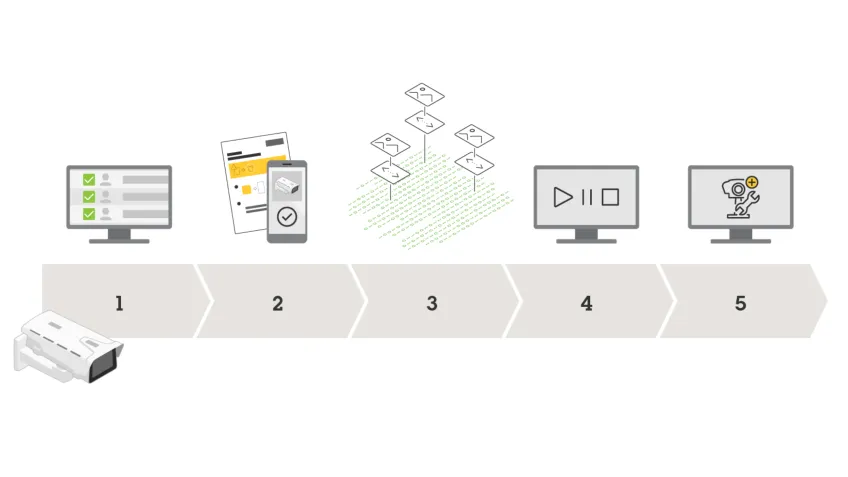
The aim is to align the service's capabilities with your specific needs, whether that's ensuring regulatory compliance or managing a multisite operation.
It’s important to define the partnership, detailing the precise scope of services, performance benchmarks, and guaranteed system uptime. It clarifies the responsibilities for both parties within the context of a remotely managed service.
Once the services are agreed upon, the provider begins the onboarding process and gets remote access. From then on, the provider takes full responsibility on agreed services, shifting the operational burden from your team to theirs.
The services are available either through a Software as a Service (SaaS) model where certain services are managed digitally through the cloud, or a Video Surveillance as a Service (VSaaS) model where the entire system is cloud-based
Key benefits of using a managed services model
The full value of a managed services model isn't always immediate. Instead, its benefits emerge and compound over time. These advantages will touch nearly every part of your operation. You will see a direct impact on your costs, your security posture, and even the daily focus of your team.
Control upfront costs
A managed services model restructures technology spending by shifting costs from capital expenditures (CapEx) to operational expenditures (OpEx). This approach moves an organization from making large, upfront investments to paying a consistent subscription fee.
This model helps mitigate unforeseen costs that can arise from hardware failures, emergency repairs, or urgent software updates. As a result, budgeting becomes simpler and more predictable.
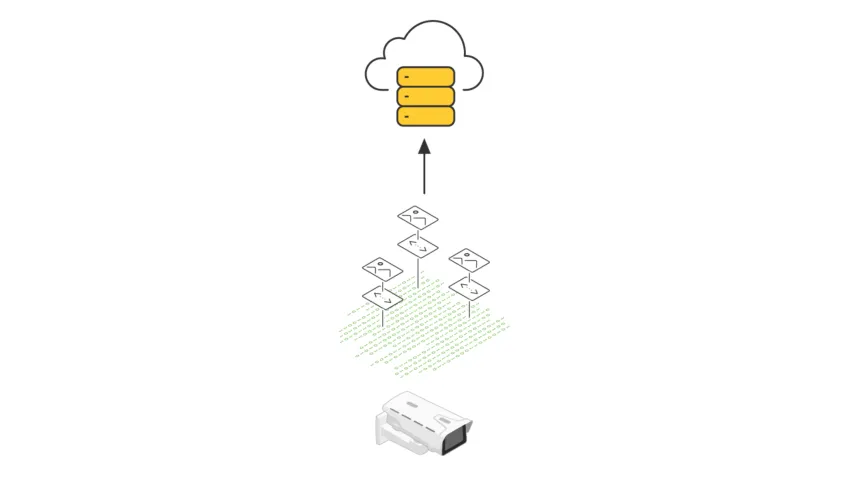
For instance, an organization managing its own video surveillance storage must account for the purchase and ongoing maintenance of servers. With a managed service for media to cloud storage, the provider handles all maintenance, updates, and system reliability.
The subscription is based on usage, which allows capital that would have been spent on hardware and maintenance to be used for other business priorities.
Gain access to expertise and experience
Physical security technology is constantly evolving. A true managed service built on a SaaS model ensures your system never becomes outdated. The provider’s expertise in network video, access control, and cybersecurity is embedded directly into the platform.
This approach is designed for scalability and requires minimal hands-on management from you. The provider handles all the back-end complexity and continuous updates, allowing you to benefit from a state-of-the-art solution without the operational overhead.
This expertise often goes beyond the scope of a generalist IT department and is focused entirely on the security ecosystem.
For instance, when adding a new camera or door controller to the network, a managed service handles the secure device onboarding. This process involves applying the latest configurations and security protocols.
Using a provider's institutional knowledge for these tasks ensures the system is configured for optimal performance and security, removing the need for dedicated training of internal staff on specific security hardware.
Increase efficiency and operational uptime
A security system's value is directly tied to its operational status. The primary objective of a managed services provider is to deliver services that add tangible value to your operation. This goal is built on three main principles. Ensuring optimal system uptime, guaranteeing peak performance, and maintaining robust cybersecurity.
This is achieved through proactive maintenance and health monitoring. By using these methods, potential issues such as failing hard drives or outdated firmware can be identified and resolved before they result in a service interruption.
This model represents a shift from a reactive to a proactive maintenance posture, where issues are prevented rather than simply fixed after a failure.
Enhance your security and compliance
Maintaining a secure and compliant security system in the face of evolving digital threats requires dedicated effort. A managed services provider prioritizes cybersecurity, implementing robust measures that can be challenging for organizations to manage internally.
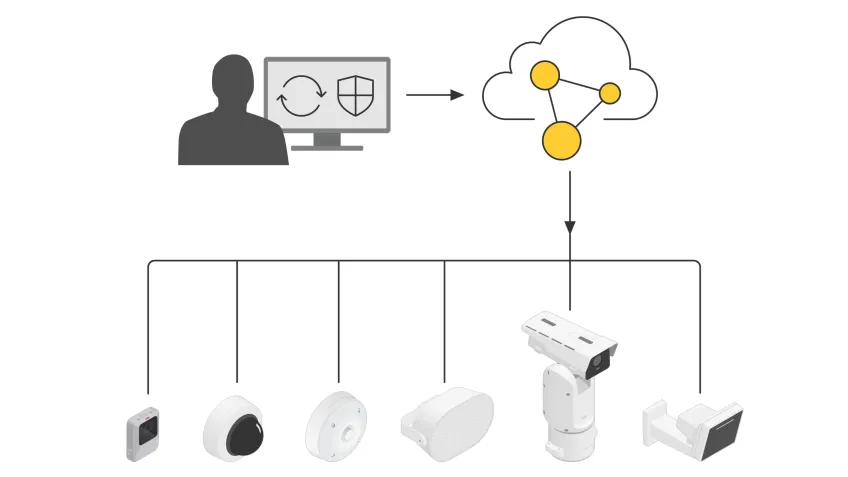
These measures range from hardening devices against cyberattacks to managing user credentials across the system.
Effective user and access management is a critical component of both security and regulatory compliance. A managed service can enforce policies to ensure only authorized individuals are able to access sensitive information or make system changes.
This process creates a clear and auditable trail of user actions, which simplifies the process of demonstrating compliance with industry regulations and internal corporate policies.
Scale resources on demand
An organization's security requirements often change over time. These changes can include facility expansions, the opening of new locations, or an adaptation to different operational requirements.
A managed services model offers the flexibility to scale security resources up or down. This scalability avoids the need for major capital investments or the hiring of new personnel to manage the system.
For example, if an organization needs to add ten new cameras, a provider can integrate them into the existing system and adjust the cloud storage plan.
Conversely, if a part of an operation is downsized, the service subscription can be modified to reflect the reduced scope. This model allows a security system's resources to align with the current needs of the business.
What are the different types of managed services?
The term is broad by design. Different organizations need different things. Here are the categories most relevant to companies managing physical security, IT infrastructure, or both.
User and access management
Every time someone joins, changes roles, or leaves your organization, their system access needs to change with them. Sounds simple, but in practice, it's one of the most common sources of security risk.
A managed approach handles the full lifecycle. New hires get the right access on day one. Role changes trigger automatic permission updates. Departures result in immediate credential revocation. For a retail operation with seasonal staffing swings across dozens of stores, this discipline is nearly impossible to maintain manually.
Secure device onboarding
Every camera, controller, and sensor connecting to your network is both an asset and a potential vulnerability. The onboarding process determines which one it becomes.
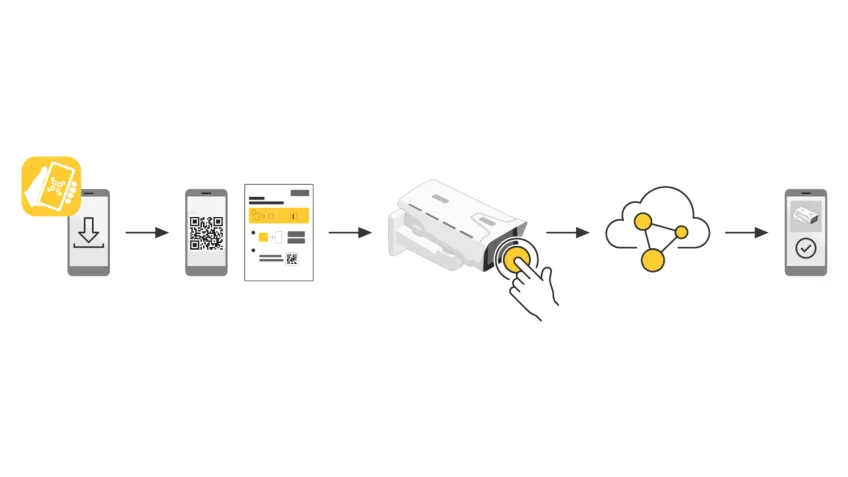
Too often, field technicians install devices with default passwords and outdated firmware. Managed onboarding standardizes the process. Every device receives current firmware, a unique credential set, and a configuration aligned with your security policies before it touches your network.
Media to cloud storage
If you're running surveillance across multiple sites, you're generating enormous volumes of video. Managing that data is more complex than most people expect. Managed Services can help to reduce cost with network bandwidth usage optimizations based on monitoring
A managed storage service handles the entire pipeline. Relevant video moves from on-site recorders to secure cloud storage automatically. The provider manages infrastructure, monitors data flow, and ensures footage is accessible when you need it.
Live operations
Some environments need more than automated alerts. They need trained operators actively watching feeds, verifying alarms, and coordinating responses in real time.
For critical infrastructure, large campuses, and high-security facilities, a managed live operations service functions as a remote command center. Operators monitor your environment 24/7, prioritize events by severity, and follow your escalation protocols.
Device management
No matter how many devices you have, they all need to be online, updated, and performing correctly. Manually tracking device health across a distributed environment is a full-time job most teams don't have bandwidth for.
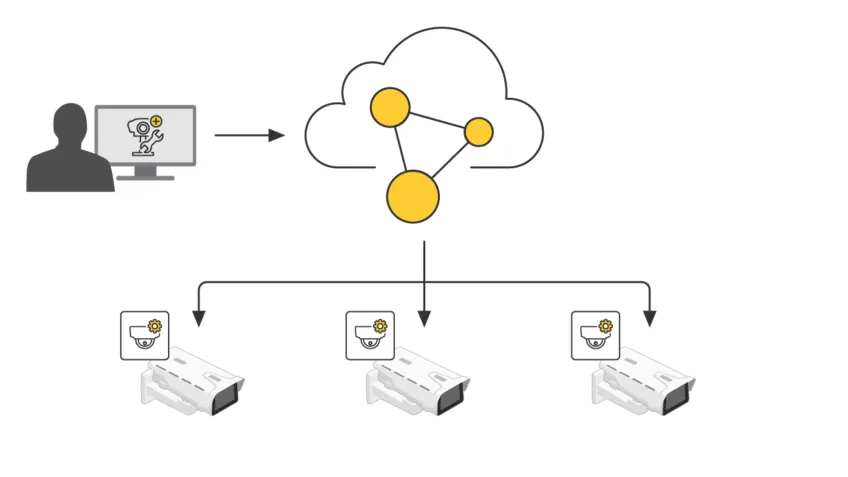
A managed device service monitors every endpoint for uptime, firmware status, storage capacity, and connectivity. When firmware updates are released, they're tested and deployed across your fleet on a managed schedule. You see a clean dashboard. Your provider does the work behind it.
Who should use managed services?
While managed services can provide value to a wide range of organizations that depend on technology, the most immediate benefits are typically realized by those in specific situations.
- Small and mid-sized businesses often feel it first. In a build versus buy decision you could reduce your time to market by buying managed services instead of building and maintaining them yourself.
- Large enterprises tend to use managed services more strategically. Their internal teams are most valuable working on transformation and innovation, instead of routine maintenance. Offloading operational tasks frees senior engineers to focus on projects that move the business forward.
- Multisite organizations face a distinct challenge. Maintaining uniform security standards and device configurations across multiple locations is extraordinarily difficult for distributed teams. A centralized MSP applies the same policies everywhere.
FAQs
Learn about the frequently asked questions about managed services.
What is an example of a managed service?
A common example of a managed service is a scenario where a company with multiple cameras across different locations engages a provider to manage its entire surveillance system.
In this arrangement, the provider's responsibilities would include monitoring camera uptime and deploying firmware updates, often scheduled during off-peak hours to minimize disruption.
The service would also typically cover the management of cloud video storage and data retention policies, concluding with the delivery of monthly system health reports to the client.
What is the difference between managed services and outsourcing?
Traditional outsourcing is usually project-based. You hire a firm to complete a network installation, then part ways. Managed services are ongoing. Your provider takes continuous responsibility for defined and agreed upon functions.
What is the difference between a managed service and cloud service?
A managed service, delivered as a SaaS solution, turns raw cloud infrastructure into a complete, ready-to-use product. The provider handles all backend configuration, security, and monitoring, freeing your team from the burden of managing the underlying technology.
How much do managed services cost?
Pricing depends on scope, device count, and environmental complexity. Most providers use a subscription model with a fixed monthly fee. This can be structured per device, per user, or per site.
