

Mining has always been an industry defined by extremes, due to the remote locations, hazardous conditions, and high-value assets involved. But in recent years, the level of risk has evolved. As a result, a new approach to physical and digital mining security is critical for ensuring resilience.
What was once primarily a matter of physical protection has expanded into a far more difficult challenge. Digital vulnerabilities and geopolitical pressures now cross paths with traditional security concerns.
Today, securing a mining site requires a complete understanding of how physical, operational, and cyber risks converge in modern operations and how they can be managed in environments that are, by their nature, difficult to control. Only then can the future of mining be secured.
The unique security challenges of the mining industry
Unlike most industrial sectors, mining operates within particular environmental, geographical, and even political constraints. Sites are frequently located in remote regions, where infrastructure is limited, and access is difficult. This isolation alone creates an inherent vulnerability. If an incident occurs, a quick response is often not possible.
The physical environment also compounds these challenges. The combination of dust, vibration, extreme temperatures, and humidity can degrade security systems. In some environments, the presence of combustible gases and dust also have a direct effect on the design of security equipment. This must tick both boxes of operating reliably in harsh conditions while meeting strict industry regulations.
At the same time, mining operations are continuous and expansive. This results in dynamic rather than fixed perimeters which can span vast areas which include extraction zones, processing facilities, storage areas, and transport routes. Maintaining consistent visibility across such terrain is difficult, particularly when coupled with a workforce that is both large and transient. Contractors, temporary workers, and third-party suppliers often move through these environments with varying levels of access, complicating efforts to enforce consistent mining security protocols.
Overlaying this is the value of what is being protected. Minerals, base metal components, fuel, explosives, and heavy equipment are expensive, but also relatively easy to divert into secondary markets. The combination of valuable materials, expensive equipment, and large, remote sites makes mining operations attractive targets for both opportunistic thieves and organized criminal groups.
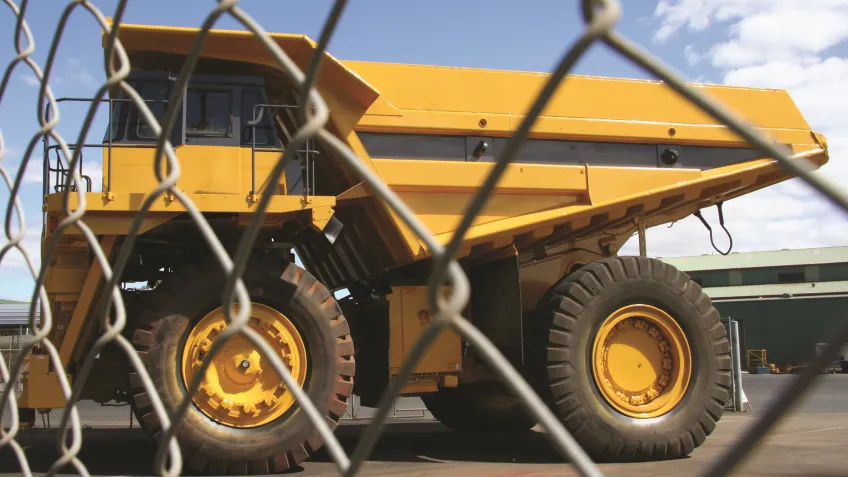
Increasingly, however, the most significant issues can be caused by digital transformation. Systems that were once isolated are now connected to broader IT environments, driving overall IT/OT convergence. While this has improved efficiency and visibility, it has also expanded the attack surface area and introduced new vulnerabilities, especially when it comes to IoT devices.
5 security threats to mining operations
It should come as no surprise that the threats facing mining operations today are as varied as the environments in which they operate. Some are longstanding; others are relatively new and brought about by technological or political changes.
What unites these threats is their potential to disrupt operations in ways that are both costly and, in some cases, dangerous.
Combat the risk of illegal mining
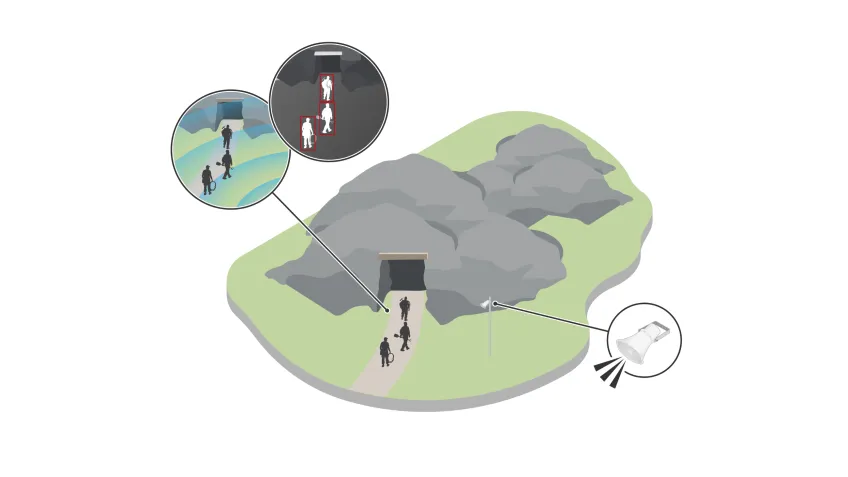
Illegal mining remains one of the most persistent challenges for operators to tackle. Often this activity occurs at the fringes of legitimate activity, allowing informal or criminal groups to extract resources and channel them into shadow supply chains. As a result, illegal mining can be difficult to detect and even harder to eliminate. Organized gangs often adapt quickly when authorities intervene, to ensure their operations continue undisrupted. In addition, these may provide income for local communities, which makes it difficult to address through security measures alone.
Prevent internal and external theft
Theft, both internal and external, is another concern. High-value materials such as ore and concentrates are vulnerable to threats at multiple points in the process, such as transport. ‘Skimming’ is a common occurrence, especially when there is limited monitoring of vehicles entering and leaving sites.
Secure valuable assets and equipment
Additionally, fuel, a critical and costly input, is often siphoned or misreported, while equipment and spare parts can disappear through a combination of opportunism and organized schemes.
The involvement of insiders, whether employees or contractors, makes it easier for criminals to cover their tracks.
Mitigate threats of sabotage and vandalism
Beyond theft lies the risk of disruption. Sabotage and vandalism, which can be driven by labor disputes or activism, can halt production with surprising ease. In an industry where downtime carries significant financial consequences, even minor incidents can have outsized effects.
Protect against unauthorized access
Access remains a key challenge as mining sites have multiple entry points, large workforces, and constant movement of vehicles and materials. This creates opportunities for unauthorized persons to enter certain areas.
Whether through simple trespassing or more sophisticated exploitation of access systems, such breaches can serve as entry points for both physical and digital threats.
Essential security technologies for the mining sector
In response to these challenges, mining companies are turning to technology as a means of extending human oversight across environments that are otherwise difficult to monitor.
Deploy intelligent video surveillance
Video surveillance, for instance, has evolved from a passive recording tool into an active component of security strategy. Modern systems combine devices such as radar with high-resolution imaging from visual and non-visual (for example, thermal) cameras with AI-powered analytics.
This enables the identification of suspicious behavior, movement in restricted areas, and even airborne threats such as drones and triggers alerts in real time. These devices can be fixed or mobile to provide operators with internal and external images.
When integrated with remote monitoring centers, they allow operators to maintain visibility across multiple sites at the same time, reducing reliance on on-site personnel.
This intelligent approach to risk management prioritizes and identifies early warning signs to reduce timelines for investigation and intervention.
Control access with modern systems
Access control systems have undergone a similar transformation. The use of biometric authentication digital credentials, and integrated management platforms has increased to provide more control over who can enter specific areas and when. Crucially, these systems also generate data that can be analyzed to aid investigations into incidents or refine existing security policies.
Secure the perimeter from intrusion
As mentioned, perimeters are dynamic and changing due to constant drilling and exploration. This has increased the complexity of perimeter protection. Rather than relying solely on physical barriers, operators are deploying layered systems that combine radar, cameras, and intelligent fencing.
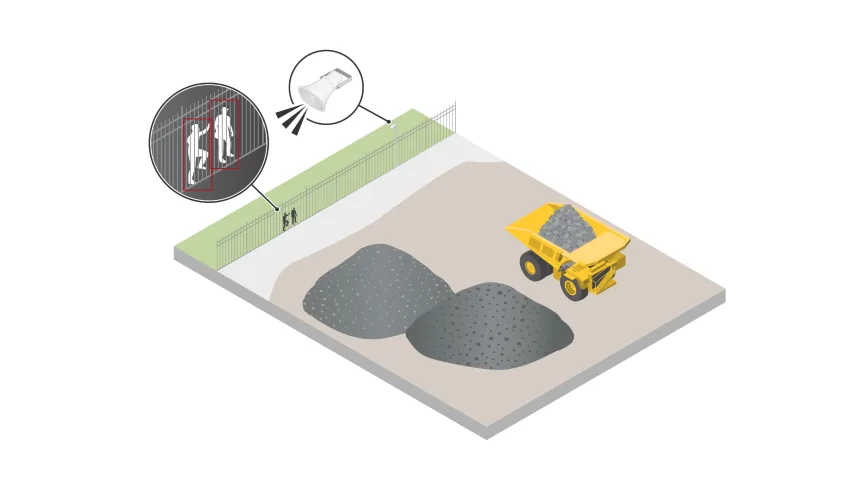
These systems can distinguish between different types of intrusion and, when linked to surveillance tools, provide a more responsive approach to threat detection.
Enhance security of off-site parking areas
Elsewhere, technologies such as license plate recognition are being used to manage access control at unmanned entry and exit points and monitor vehicle movements around the site. This helps to prevent unauthorized transport of materials, allowing security staff to intervene if unusual activity is detected. Drones and unmanned aerial vehicles extend this capability further, offering a way to survey large or inaccessible areas quickly and efficiently.
Taken together, these tools contribute to a broader shift away from reactive security models, which respond to incidents after they occur. Instead, proactive approaches that seek to anticipate and prevent them are becoming more commonplace.
The critical role of cybersecurity in mining
If physical mining security has long been the foundation of mining operations, cybersecurity is now its indispensable counterpart.
As operational technology (OT) becomes more connected to IT systems, cyber incidents can move beyond the digital world and directly affect physical operations.
Protect operational technology from cyber threats
Industrial control systems, which manage everything from ventilation to automated machinery, are particularly vulnerable. Many were designed in an era when connectivity was limited, and as a result, they often lack the safeguards expected in modern networked environments.
As these legacy systems become more updated, they present attractive targets for cybercriminals. Although some devices can be patched, this is often a costly and time-consuming exercise.
The implications are significant as successful attacks could halt production, manipulate equipment behavior, or put sensitive data at risk. Ransomware, in particular, has emerged as a growing concern with outsized financial, reputational, and operational consequences. In 2023, Alamos Gold, a Canada-based mining company, fell victim to a BlackBasta ransomware attack. Unfortunately, this wasn’t an isolated incident with Rio Tinto and Fortescue Metals also falling victim to attacks within the same year. In most cases, motivation is financial but can also be geopolitical in nature.
Secure sensitive geological and operational data
Data, too, is a valuable asset. In addition to employee data that can be sold on the dark web, geological surveys, exploration data, and proprietary algorithms are attractive to criminals. Their theft or exposure can have long-term consequences, extending beyond immediate financial loss.
In addition, the methods for attacks are becoming more creative and sophisticated. Cybercriminals are using advanced technologies such as AI to automate and scale attacks, leaving even the most mature organizations struggling to keep up.
Train personnel on cybersecurity best practices
Addressing these risks requires an expanded approach that considers more than just technical measures. While network segmentation, intrusion detection, and continuous monitoring are essential, people remain a critical part of any cybersecurity strategy.
Employees and contractors must be equipped with the knowledge and practices needed to operate securely within a digital environment and identify when there is a problem. There is also a work culture element which encourages internal reporting of unusual activity. Without this, even the most advanced systems can be undermined.
Moving towards an integrated security strategy
Mining companies can no longer treat physical security and cybersecurity as separate challenges. Both need to be part of the same strategy which begins beyond the perimeter, extends through access control and surveillance, and incorporates cybersecurity measures.
It is supported by intelligence such as data collected from sensors, systems, and human sources to better inform decision-making.
Equally important is resilience. In environments where disruption is not a question of ‘if’ but ‘when’, the ability to respond and recover quickly is critical.
This may involve removing redundant communication systems and decentralized control structures and implementing contingency planning that anticipates a range of scenarios.
Ultimately, effective mining security is defined by the way different technologies and strategies are combined. It is a continuous process supported by intelligent risk management, shaped by an evolving landscape and informed by a growing understanding of how different risks intersect.
FAQs
Here are some of the most frequently asked questions about mining security.
How do you secure a remote mine site?
Securing a remote mine site requires a layered approach that takes the unique challenges of the area into consideration, such as connectivity and power availability. The most impactful solutions combine physical and digital security measures.
This includes perimeter protection, surveillance, access control, and remote monitoring, supported by reliable communication systems such as satellite connectivity. It also uses alternative power sources such as solar panels to ensure uptime and continuity.
What is the biggest security risk in mining?
There is no single ‘biggest’ risk, but the convergence of physical and cyber threats is increasingly significant. The integration of IT and OT systems has expanded the attack surface, making operations vulnerable to both traditional security incidents and sophisticated cyberattacks.
How does technology improve mine safety and security?
Technology enhances visibility and response through real-time monitoring, automation, and data analytics. Tools such as thermal, radar, and visual cameras equipped with analytics help operators detect incidents faster and make more effective decisions to prevent or mitigate the impact.
How do you prevent illegal mining?
Preventing illegal mining requires a combination of surveillance, intelligence, and collaboration. Technologies such as drones and remote monitoring can help detect unauthorized activity, while community engagement and regulatory enforcement address underlying social and economic drivers.
